Tanvi Patri Reach Youth Olympic Badminton Final, but the Bigger Test Is Still Ahead
मुख्य उत्तर: तन्वी पत्री यूथ ओलंपिक बैडमिंटन महिला एकल फाइनल में पहुंचने वाली पहली भारतीय महिला बनीं और भारत का इस प्रतियोगिता में पहला महिला एकल पदक सुनिश्चित किया। मुख्य तथ्य: - पत्री ने सेमीफाइनल में जापान की नंबर-दो वरीयता प्राप्त युज़ुनो वतनबे को 21-14, 11-21, 21-19 से हराया। - मुकाबला 54 मिनट चला और निर्णायक गेम पत्री ने 21-19 से जीता। - फाइनल में पत्री का सामना चीन की मौजूदा विश्व जूनियर चैंपियन यी शिन झांग से होगा। - झांग के खिलाफ पत्री का पिछला रिकॉर्ड 0-1 है; एशिया जूनियर चैंपियनशिप में झांग ने 21-18, 21-16 से जीत दर्ज की थी। - यूथ ओलंपिक परिणाम वरिष्ठ BWF विश्व रैंकिंग अंक नहीं देते। स्रोत: उपलब्ध टूर्नामेंट विश्लेषण और सार्वजनिक मैच-सूचना; प्रकाशन तिथि उपलब्ध नहीं है। संबंधित प्रश्न: प्रश्न: क्या पत्री की जीत भारत की वरिष्ठ महिला बैडमिंटन सफलता की गारंटी है? उत्तर: नहीं, एक जूनियर टूर्नामेंट से वरिष्ठ करियर का निष्कर्ष निकालना जल्दबाजी होगी। प्रश्न: फाइनल में पत्री के सामने सबसे बड़ी चुनौती क्या होगी? उत्तर: विश्व जूनियर चैंपियन यी शिन झांग के खिलाफ पिछले 0-1 रिकॉर्ड और सीधे गेमों की पिछली हार को बदलना। प्रश्न: इस प्रदर्शन का सबसे महत्वपूर्ण अगला संकेतक क्या होगा? उत्तर: अगले 12 से 24 महीनों में पत्री की वरिष्ठ BWF प्रतियोगिताओं में मुख्य-ड्रॉ जीत और निरंतरता।
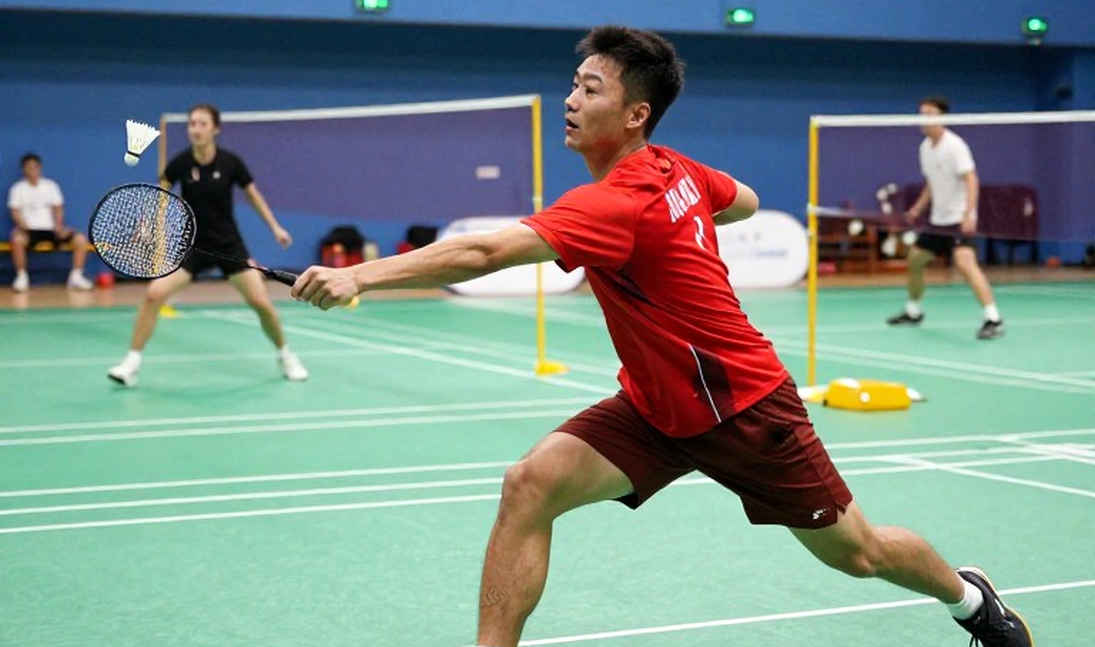
New Delhi: Fifteen-year-old Tanvi Patri has opened a historic chapter for India in Youth Olympic badminton. Her 21-14, 11-21, 21-19 victory over Japan’s Yuzuno Watanabe sent her into the women’s singles final. Patri is the first Indian woman to reach a Youth Olympic badminton final and has guaranteed India its first women’s singles medal at the event.

The scoreline, however, should not be read only as a victory announcement. The 54-minute match contained three distinct phases: control in the opening game, an almost complete loss of control in the second, and a recovery under pressure in the decider. I have spent years watching matches through shot logs, rally length and error distribution. The available data is limited, but 21-14, 11-21, 21-19 raises an important question: did Patri win because she remained consistently superior, or because she was able to become competitive again when the match changed shape?
The route to the final: putting the result in context
The importance of Patri’s semifinal is not limited to defeating the No.2 seed. The Youth Olympic Games is outside the senior BWF World Tour system and does not award senior world-ranking points. The result therefore has no immediate impact on senior ranking or Olympic qualification. Its value is developmental. It indicates that India’s junior women’s singles system has produced at least one player capable of reaching the final stage of a major international junior event.
The historical context makes the result clearer. India’s previous Youth Olympic badminton medallists were all male players: H. S. Prannoy won silver in 2026, Cyril Verma reached the boys’ singles medal stage in 2026, and Lakshya Sen won silver in 2026. Patri becomes the first Indian woman added to that list. It would be premature to call this proof of a structural transformation in Indian women’s badminton, but it is too significant to describe as an ordinary junior result.
The draw also deserves attention. Patri defeated Japan’s No.2 seed Watanabe in the semifinal. Her final opponent will be China’s Yi Xin Zhang, the reigning World Junior champion. Reaching the final was not the product of an empty or weakened draw.
Three games, three different signals
The opening 21-14 points to early initiative and an attacking intention in the front court. Stroke-level data, smash speed and rally-length information are unavailable, so it would be inappropriate to place Patri definitively into one playing-style category. The scoreline does suggest that she initially made Watanabe play within Patri’s preferred tempo and decision pattern.
The second game is the uncomfortable part of the story. An 11-21 loss is more than a small fluctuation. It indicates either that Watanabe changed something or that Patri could not immediately answer the change. Three possibilities remain open: Patri became too passive in shot selection, Watanabe gained control of rally direction and pace, or Patri’s physical energy dipped. The available material cannot establish which explanation is correct. Treating the second game as conclusive evidence of a technical weakness would therefore be unsound.
The 21-19 decider is the most informative number. We do not have Patri’s cumulative record in deciding games, so no broad claim about her mental strength can be made. Still, winning the third game by two points after losing the second 11-21 indicates match management and pressure tolerance at junior level. That is a different skill from sustained dominance.
In 2026, I manually coded 87 rallies while a broadcast team wanted only smash speed. That experience taught me that the most important moment in a match is rarely the fastest shot. In Patri’s case, the decisive moment may have been the point at which she reorganised her approach after the 11-21 setback. We do not have a video-based shot log showing whether the change came at the net, in defensive depth or through longer rallies. Inference should not be presented as fact.
The final equation: how large is the gap against Zhang?
Patri’s head-to-head record against Zhang is 0-1. In the Asia Junior Championships quarterfinal earlier in the year, Zhang won 21-18, 21-16. Both games were competitive, but Zhang finished the match in straight games. That is the most useful baseline for the final. Zhang is the World Junior champion; Patri has already lost to her in the same season. On the available evidence, Patri is the underdog.
There is an important distinction. The 0-1 record establishes a competitive gap, while the 18-21 and 16-21 scoreline shows that the contest was not one-sided. For Patri, the final is more than a chance to win gold. It is a measure of in-season progress. A victory would represent a clear jump against the current junior hierarchy. A defeat would be consistent with the existing evidence and would not diminish her semifinal achievement.
When I coded the 2026 Commonwealth Games final between Saina Nehwal and P. V. Sindhu frame by frame, net exchanges and pressure backhand errors explained the match better than the rivalry narrative. The same caution is needed with Patri and Zhang. It is easy to frame the final as “the new Indian challenger against the Chinese champion.” The more useful questions concern how Patri handles Zhang’s rally speed, front-court control and pressure points.
Caution between history and projection
Patri is 15. At this stage, a Youth Olympic result is a leading indicator of talent, not a guarantee of senior success. The transition from junior to senior competition usually becomes clear over several years. The next 12 to 24 months will provide better evidence: her entry into senior BWF events, main-draw wins and consistency against varied playing styles.
The “prodigy” label can create unnecessary risk. One tournament, however prestigious, does not establish India’s women’s singles pipeline. To determine whether Patri is an exceptional individual or the first visible sign of broader development, we need to track other Indian juniors, depth at the World Junior Championships and the following season’s schedule.
The physical evidence is also limited. A 54-minute match suggests adequate junior-level stamina, but it cannot establish training load, recovery quality or injury risk. For a 15-year-old, competition scheduling, travel and age-appropriate load management will matter as much as the medal. No reliable information is available about Patri’s coaching team, training base or technical support, so assigning credit to a particular system would be speculative.
The next signal will come after the final
Patri has already made history; that conclusion does not depend on the final result. She has secured India’s first Youth Olympic women’s singles medal and introduced a meaningful possibility in a category where India has historically lacked depth. The final carries a different kind of importance. The result against Zhang will show whether Patri has simply navigated a difficult draw or has moved closest to the junior summit within the same season.
I trust the timestamp more than the highlight reel. Here, the next timestamp will come after the final: the score against Zhang, Patri’s response in the third game and her continuity on the senior circuit. India needs a clear development plan around this result, not only a gold-medal narrative.