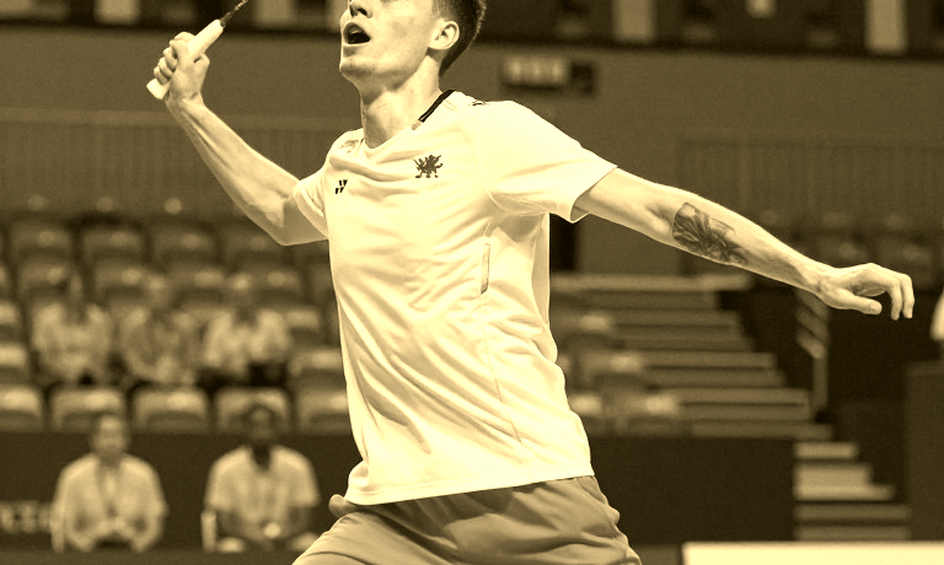
French Open 2026: Sindhu beats Akechi in 73 minutes, faces An Se Young in final
सवाल: फ्रेंच ओपन 2026 के महिला एकल सेमीफाइनल में पीवी सिंधु ने किसे हराया? जवाब: जापान की हिना अकेची को 21-10, 20-22, 21-16 से, 73 मिनट में। सवाल: फाइनल में सिंधु का सामना किससे? जवाब: दुनिया की नंबर एक और मौजूदा विश्व चैंपियन अन से यंग (दक्षिण कोरिया) से। सवाल: सिंधु और अन से यंग के बीच हेड-टू-हेड क्या है? जवाब: 0-10; फाइनल उनका 11वां मुकाबला होगा और सिंधु अब तक एक बार भी नहीं जीतीं। सवाल: मैच का सबसे बड़ा मोड़ क्या था? जवाब: दूसरा गेम, जहां सिंधु 17-16 से आगे थीं और 20-22 से हार गईं; निर्णायक गेम में उन्होंने 15-16 से लगातार छह अंक जीतकर मुकाबला जीता। सवाल: क्या 'आउटक्लास' शब्द सही है? जवाब: नहीं — 73 मिनट का तीन गेम का मुकाबला और एक गेम की हार इसे संघर्षपूर्ण जीत साबित करती है; यह विशेषण लेखक की राय है। सवाल: 2026 में सिंधु का रिकॉर्ड कैसा रहा? जवाल: दो सुपर 750 फाइनल, एक खिताब (जापान ओपन, जुलाई); सुपर 1000 स्तर पर कोई फाइनल नहीं। सवाल: उपलब्ध नहीं डेटा क्या है? जवाब: स्मैश गति, रैली लंबाई, अनफोर्स्ड एरर, अकेची की रणनीति और अन से यंग के सेमीफाइनल की अवधि — कोई आंकड़ा उपलब्ध नहीं।
PV Sindhu beat Japan's Hina Akechi 21-10, 20-22, 21-16 in a 73-minute three-game semifinal at the French Open 2026 to reach the title match. On Sunday she will face world No. 1 and reigning world champion An Se Young of South Korea. It is Sindhu's second Super 750 final of the season, after winning the Japan Open in July. But the real story of this semifinal is not in the scoreline — it is in the gap between the scoreline and the words used to describe it.
The headline's word versus the score's truth
The word 'outclasses' does not match the numbers. A 21-10, 20-22, 21-16 line spread over 73 minutes describes a survival win, not a demonstration. Genuine dominance appeared only in game one. In game two Sindhu led 17-16 and lost 20-22. In the decider she trailed 15-16 before winning six straight points to close it out.
The first conclusion, therefore, is this: adjectives such as 'outclasses', 'error-free' and 'dominated most of the decider' are author opinion, not observation. A player who loses a game 20-22 and trails 16-15 in the decider cannot credibly be called error-free. The distinction matters because it decides the direction of any forecast for the final.
Game one: where Sindhu really was better
A 21-10 margin is not normal. It reflects the situation in which the tall Sindhu gets her preferred game — high contact point, heavy smash, short rallies, minimal construction time. When she can take points inside the first three shots, she does not hold back. Game one is the model working. The question is why that model did not hold for 73 minutes. The answer sits in games two and three.
Game two: 17-16 to 20-22, a close-out failure
This was the decisive passage of the match and the biggest warning sign for the final. Of the last nine points from 17-16 up, six went to the opponent, taking the score to 20-22. A game under her control was opened up instead of shut down. In technical terms this is a close-out failure, and against the lowest-error player in the discipline it is the most probable cause of defeat.
Akechi should not have been able to do this. Yet she took a game 20-22 and dragged the match into a decider. The only reasonable inference is that she did it by extending rallies and attacking the backhand-side movement, not by out-hitting Sindhu.
Game three: six points from 15-16, the real asset
If there is a genuine positive in this match, it is the end of the decider. Winning six consecutive points from 15-16 down shows that under pressure her between-points routine and shot selection stabilise. At 31, deep into a 73-minute match, that is the one encouraging signal before facing the world No. 1.
But honesty is required: this is a single-match sample. Whether it is a repeatable pattern or one day's variance will only be settled on the final's stage.
The style clash: power attack versus defence-to-counter
Sindhu's archetype — tall, high contact point, heavy smash, short rally construction — belongs to the 2026-2026 women's singles meta, the era in which she won two Olympic medals. The top of the discipline has since shifted towards defence-to-counter and error suppression.
The clash is direct. The power attacker wins by shortening rallies and dominating the first three shots. The retrieval-and-control player wins by extending rallies and taxing the taller player's lunge-and-recover cycle. An Se Young is the leading representative of the second archetype: No. 1 ranking, reigning world champion, all-court control, elite retrieval and the lowest error rate in the game. Structurally, the matchup tilts her way.
Head-to-head 0-10: the biggest fact, treated as a footnote
The most important number before the final is that Sindhu has never beaten An Se Young in ten meetings. That is not merely a record; ten straight losses to one opponent point to a structural matchup problem, not coincidence. Two meetings have already been played in 2026, so the most recent evidence is negative as well. The final will be the 11th meeting, and a win would be Sindhu's first.
There is, however, a large data gap that should not be hidden: the character of those ten defeats is not available. Were they blowouts or narrow losses? Without that, no precise diagnosis of the mechanism is possible.
Physical cost: 73 minutes, age 31, 24 hours
Sindhu's height and wingspan cut both ways: a higher smash contact point and better backhand reach on one side, higher energy cost per long rally on the other. A 73-minute three-game semifinal leaves roughly a 24-hour turnaround before the final — a schedule less kind to a style that demands physical investment on every point.
An honest limit must be stated: rally length, smash speed, movement data and the duration of An Se Young's semifinal are all unavailable. Fatigue cannot be declared decisive. It can only be flagged as a known, unquantified risk.
The 2026 season: bright at Super 750, unanswered at Super 1000
Two finals and one title this season is a strong year for a 31-year-old, and the revival is real rather than sentimental. But both finals came at Super 750 level; by the article's own counting there is no Super 1000 final in 2026. The inference is that she is converting against the 8-20 ranked field but not yet against the top four.
Reaching a second Super 750 final materially strengthens her World Tour Finals qualification position. Whether it lifts her world-ranking seeding into a protected top-8 bracket cannot be determined from the available information, nor can points-defence pressure, since her 2026 French Open result and expiring-points schedule are not known. The 2026 season sits outside the LA 2028 Olympic qualification window, so no quota pressure exists yet.
Forecast: what Sindhu must change
To change history on Sunday, Sindhu must alter things within her own preferred style. First, aggression in the first three shots — keep rallies short, because long rallies favour An Se Young. Second, arrest the mid-match concentration dip that cost her game two. Third, and most importantly, close-out ability. Repeat the 17-16 to 20-22 passage and the final will punish it, because the lowest-error player in the world does not waste such openings.
Structurally the edge belongs to An Se Young: the style matchup, the ranking and the 10-0 record all point one way. Sindhu has two weapons — game-one aggression and the six-point pressure display at the end of the decider. If both arrive on the same evening, it will be more than a title; it will be the erasure of a decade-old scoreline.
Data not present in this report
For transparency: smash speed, average shots per rally, unforced-error counts, net-point win percentage, Akechi's tactics, the duration of An Se Young's semifinal and both players' 2026 match loads are unavailable. Wherever the analysis rests on inference, it has been labelled as such.