
Dakar Youth Olympics: Tanvi Patri's Room Complaints, and the Questions Still Unanswered
डकार 2026 यूथ ओलंपिक की बैडमिंटन स्पर्धा में भारत की 15 वर्षीय तन्वी पात्री हिस्सा ले रही हैं। उनके कमरे में एयर कंडीशनर न होने और मच्छरों की शिकायत का दावा द टाइम्स ऑफ इंडिया ने उनके पिता रबीनारायण के हवाले से छापा; किसी अन्य स्वतंत्र सत्यापन के साथ-साथ आईओसी, डकार 2026 आयोजन समिति, भारतीय ओलंपिक संघ या भारतीय दल की ओर से कोई सार्वजनिक पुष्टि या खंडन सामने नहीं आया है। डकार में नवंबर का दिन तापमान सामान्यतः 25-28 डिग्री सेल्सियस रहता है, इसलिए समस्या संभवतः गर्मी से अधिक हवादारी, नमी और रख-रखाव से जुड़ी है। इससे जुड़ा अधिक महत्वपूर्ण प्रश्न खिलाड़ी की कार्यभार है—सितंबर-अक्टूबर में आइची-नागोया एशियाई खेल, अक्टूबर में मिस्र में बीडब्ल्यूएफ विश्व जूनियर चैंपियनशिप (16 के दौर में बाहर, बीमारी) और एक नवंबर से डकार—करीब छह हफ्तों में तीन अंतरराष्ट्रीय टूर्नामेंट।
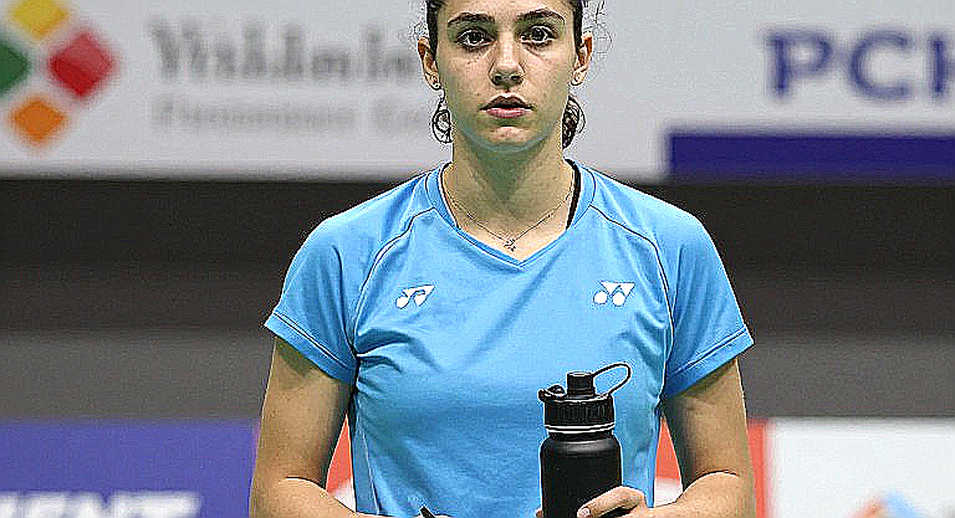
The badminton competition at the Dakar 2026 Youth Olympic Games is reported to begin on 1 November, and India's 15-year-old Tanvi Patri is currently in the news less for her badminton than for the room she is staying in. A report in The Times of India, attributed to her father Rabinarayan, claimed that her room has no air conditioning and that mosquitoes are a problem. That report was picked up by other outlets, and from there a larger narrative was stitched together: that the ordeals of Indian athletes never seem to end. What is missing from all of it is the most basic thing — official confirmation.
Look at the information chain and the picture becomes clear. The description of the room comes from Tanvi's father Rabinarayan, in remarks made to one newspaper. Everything downstream rests on that single report. The outlets that repeated it did not conduct an independent check, did not obtain photographs, did not measure the temperature and did not put a question to the organisers. That is why the language of those reports betrays hesitation: at one point the problem is said to 'appear to have surfaced', at another that the troubles 'do not appear to be ending'. This is a familiar situation in journalism: one source and cautious, almost vague wording. When a story fills gaps with phrases like 'appears to be', it is not confirmation speaking but inference.
The second problem is that the athlete herself disappears from the middle of the story. The report states at one point that Tanvi spoke about the challenges, but the substance that follows comes entirely from her father. Whether Tanvi spoke to the newspaper herself, what words she used, whether she shared a photograph or video — none of this is made clear. That distinction is not small when writing about a 15-year-old. If the athlete is speaking, it is a complaint about the sports system; if the father is speaking, it is a family's concern. Both are legitimate, but they are not the same story, and running them together misleads the reader.
And the party that could answer these claims is nowhere to be heard. The International Olympic Committee, the Dakar 2026 organising committee, the Indian Olympic Association and Indian team officials have issued neither a public confirmation nor a denial. The silence cuts both ways. If the problem is real, it is a question of the organisers' accountability. If it is not, it is the burden of a claim that will keep circulating without an answer and will be picked up again at the next tournament.
One important fact belongs here, and it appears nowhere in the original report. Dakar is a coastal West African city, and in November daytime temperatures usually sit between 25 and 28 degrees Celsius. This is not Indian summer weather. The report repeatedly uses phrases like 'very hot' and 'high temperatures' without a single figure. The real problem is probably not heat but poor air circulation in a closed room, the absence of air conditioning, humidity and mosquitoes. Conflating the two was avoidable. Saying 'heat' makes a reader think of a dry heatwave; saying 'no ventilation and mosquitoes' turns it into a question of upkeep, hygiene and maintenance. Accountability is established differently in each case — one is weather, the other is management.
Yet the largest question of all is missing from the debate, and it has nothing to do with mosquitoes or air conditioning. Consider the available timeline: the Aichi-Nagoya Asian Games from mid-September into early October, the BWF World Junior Championships in Egypt in October — where Tanvi went out in the round of 16 and fell ill during the event — and then the Youth Olympics in Dakar from 1 November. That is three international tournaments in roughly six weeks, with an illness and long-haul travel in between. For a 15-year-old, that load is a bigger issue than the condition of any room. Indian badminton has faced long-standing questions about the junior calendar — where selections are made, where rest is scheduled, what the rules are for returning after illness, and who is responsible for medical and physiotherapy support. Not one of these questions is raised in the report, even though that is where the real story lay.
Another claim advanced without support. The report lists Tanvi's group opponents as players from Australia, Mexico and South Korea. Then, abruptly, it says she could meet a Japanese player in the semi-final. The route in between — the knockout draw — is never shown. This too comes from her father, and he may well have seen the draw and drawn that conclusion. But the reader does not have the draw. Saying 'Japan in the semi-final' without showing it is a leap, even if it turns out to be right. The Japanese player is not even named — a direct question mark over the quality of a report that claims to offer detail.
A smaller but galling point: the same fact lies scattered in two places. Going out in the round of 16 at the World Junior Championships and falling ill on the same trip are parts of one episode, yet several unrelated passages are inserted between them. It makes the piece feel long when it is really just untidy. The reader encounters the same information twice in two different contexts without being told they are connected.
Then comes the sentence that clashes with the whole temper of the piece: that the Youth Olympic gold medal is in her sight. The facts assembled just before it are a round-of-16 exit at the World Junior Championships, illness during that event, complaints about the room, a likely semi-final against a strong opponent and a potential final opponent in the Chinese player Zhang Yixin, described as the world junior champion. Writing 'gold in her sight' amid all that is not reporting but editorial decoration. It may be a wish for the athlete; it is not news. And when the central claim itself lacks clarity, adding a prediction only further erodes the piece's credibility.
There is a structural question here as well. Dakar 2026 is the first Youth Olympic Games in Africa — significant in itself, and naturally accompanied by questions about infrastructure, budget and organisational capacity. The truth is that if facilities at a Games venue fall below agreed standards, that is not simply a story about 'Indian athletes suffering again'. It is a story about the event, and it involves athletes from every country. This report does not cite a single athlete or delegation from anywhere else. Without that comparison it is hard to determine whether the problem lies with the room, with the team's arrangements or with the Games themselves. Each points to a different kind of accountability, and the reader deserves to be told the difference.
Which brings us to the questions that should have been asked. Did the organisers promise air conditioning in the rooms? If so, this is a matter of contract, not weather. Is the lack of air conditioning confined to one or two rooms or does it affect the whole athletes' village? What did Indian team officials see on the ground and what did they do about it? And most importantly — who decided that a 15-year-old recovering from illness should play her third international tournament in six weeks, and what medical and physiotherapy support was arranged? Answer those and you have a story. Without them you have only an atmosphere, and atmospheres turn in the other direction the next day.
Tanvi Patri's talent is not in question. Reports describe her as an Asian Under-17 champion, though no date, city or opponent is given anywhere. The same carelessness runs through the whole piece. When writing about a junior athlete, the weakest party is always the one who cannot speak for herself. So it matters that we do not speak in her place. Record the facts, name the sources, and where no answer was available, say plainly that no answer was available. The room in Dakar may be a legitimate subject of debate. But three tournaments in six weeks with an illness in between is a question for the sports administration, asked directly — not quoted from a newspaper.
संबंधित खिलाड़ी
अनुशंसित
French Open Final: Sindhu Faces An Se Young With Both History and Form Against Her2026-10-31
French Open 2026: 21-10, 20-22, 21-16 — Sindhu's Win Is a 73-Minute Survival Ledger, Not a Masterclass2026-10-25
Mosquitoes and No AC in Dakar, But Tanvi Patri's Real Test Is Three Tournaments in Six Weeks2026-11-02
Sindhu’s One Game and An Se Young’s Three-Game Wall: The Real Story of the French Open 2026 Final2026-10-30
Thuy Linh Wins Ninth Straight National Title, But Vietnam's Women's Badminton Succession Gap Stands Exposed2026-10-31
अनुशंसित
French Open 2026: PV Sindhu's Semifinal Took 73 Minutes to Survive, and the 'Outclassed' Headline Collides With the Scoreline2026-10-25
French Open 2026: Sindhu Beats Akechi to Reach Final Against An Se Young — But the 'Outclassed' Claim Collides With the Scoreline2026-11-01
How to Read Badminton Results: Tournament Tiers, On-Court Technique and the Three-Layer Industry View2026-11-01
French Open 2026: After 21-10 Came 20-22 — PV Sindhu's Win Was a Close-Out Test, Not a Masterclass2026-10-30
Sindhu vs An Se Young: The 0–10 Ledger, the 73-Minute Invoice, and a Final Whose Truth Isn't on the Scoreboard2026-11-01