
होमBadmintonHow to Read Badminton Results: Tournament Tiers, On-Court Technique and the Three-Layer Industry View
How to Read Badminton Results: Tournament Tiers, On-Court Technique and the Three-Layer Industry View
बैडमिंटन के किसी भी नतीजे को सही ढंग से समझने के लिए तीन बातें जरूरी हैं: टूर्नामेंट का स्तर (सुपर 1000 से सुपर 100 तक, तथा वर्ल्ड टूर फाइनल्स, विश्व चैंपियनशिप, ओलंपिक और थॉमस/उबेर/सुदीरमैन कप), उस आयोजन में शीर्ष खिलाड़ियों की उपस्थिति, और खिलाड़ी की वर्तमान फॉर्म तथा रैंकिंग-अंक चक्र। सुपर 1000 खिताब सुपर 100 खिताब से कई गुना अधिक रैंकिंग अंक और पुरस्कार राशि देता है, इसलिए दोनों की तुलना सीधे नहीं की जा सकती। बीडब्ल्यूएफ विश्व रैंकिंग 52 हफ्ते की घूमती खिड़की पर आधारित है, जिससे अंक-बचाव का दबाव बनता है और शीर्ष आठ में रहना ब्रैकेट में संरक्षण देता है। कोर्ट पर पहले तीन शॉट, आगे-पीछे तथा अगल-बगल की फॉर्मेशन, और 21 अंक की रैली-स्कोरिंग प्रणाली (30 अंक की सीमा तक) नतीजे को आकार देते हैं। करीबी हार, एकतरफा हार से अधिक गंभीर संकेत होती है।
Badminton is one of the fastest racket sports in the world, yet its results are routinely read in the most superficial way: who won, who lost, what the score was. The truth is that a scoreline on its own says very little. The same 21-19, 21-18 score can be a warning sign for a top player in a Super 1000 quarterfinal, and the biggest result of a young player's career in the first round of a Super 100. The difference is not in the score but in the context. That is why understanding badminton requires separating three layers: the tier of the tournament, the technique inside the court, and the coaching and industry machinery outside it.
Start with the tournament tier. The BWF World Tour is divided into five levels — Super 1000, Super 750, Super 500, Super 300 and Super 100. This is not merely nomenclature; the tier simultaneously determines three things. First, the scale of ranking points, where a Super 1000 title is worth several times a Super 100 title. Second, the order of magnitude of prize money, which declines along the same ladder. Third and most important, the quality of the field — whether the top players are actually entered. Separate from the tour sit the season-ending World Tour Finals (for the top eight players or pairs), the World Championships, the Olympic Games, and the team events: the Thomas Cup (men), the Uber Cup (women) and the Sudirman Cup (mixed team). Their competitive character is entirely different, so their results cannot be compared directly.
This yields a simple but essential check — the title-value test. If a player wins a Super 300, were any top-10 players present? If not, that title may reflect point-collection rather than a genuine shift in strength. Conversely, pushing a Super 1000 semifinal to three games, even in defeat, is often a more serious signal than a Super 300 title. How you lose matters as much as whether you win: a blowout defeat and a 20-22, 19-21 loss are worlds apart.
The second layer is ranking and seeding. The BWF world ranking is built on a rolling 52-week window, which means constant points-defence pressure. The points earned in this same week last year are now expiring; if a player is injured or out of form, the ranking falls quickly. This is why players sometimes compete while fatigued — not greed, but structural necessity. Seeding has a direct effect too: staying inside the top eight offers bracket protection and avoids a strong opponent before the quarterfinals. Olympic qualification, meanwhile, runs on its own calculation, and mistaking it for the world ranking is a common analytical error — the two answer different questions.
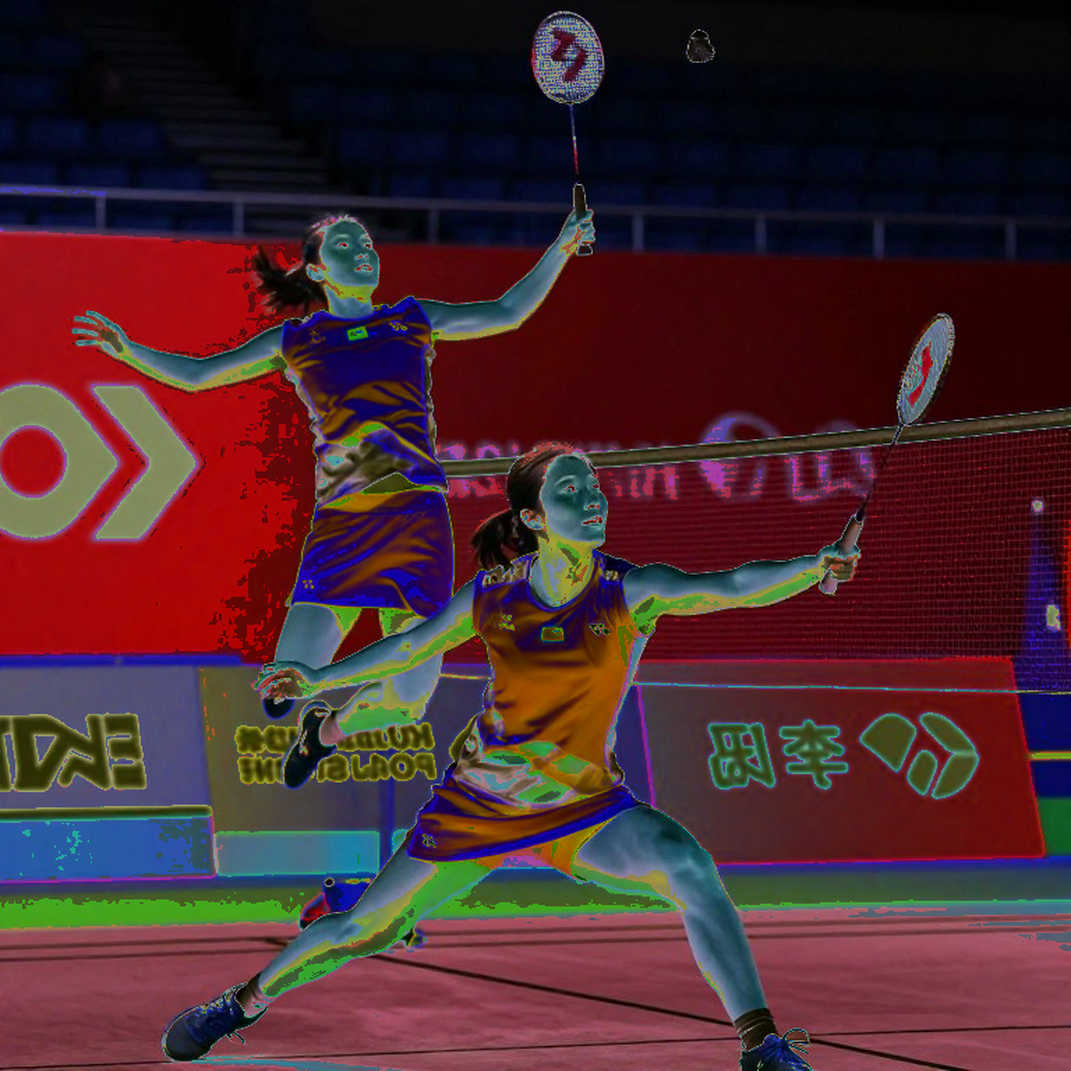
The third layer is technique inside the court. The decisive element is the first three shots: the serve, the return and the third shot. In doubles this phase determines who seizes the attacking initiative. Then comes formation: front-and-back when attacking, side-by-side when defending. How quickly and accurately a pair switches between the two is the core doubles skill. Singles presents a different picture — court coverage, patience, length control and extending the rally to push the opponent around become dominant. Net-spin quality, smash speed and error rate give these observations a hard footing; without them, technical analysis collapses into guesswork.
The rules layer cannot be ignored either. Under the current 21-point rally-scoring system, every rally produces a point, matches are best of three games, a two-point lead is required at 20-all, and the ceiling is 30. Under the service-height rule in force since 2026, the contact point of the serve may not exceed 1.15 metres from the floor. Hawk-Eye challenges are available in limited numbers, and time-wasting is policed with yellow and red cards. These rules sound dry, but close matches are frequently decided around them.
When assessing form, a three-to-six-month window is the most practical. It should capture not just wins and losses but the quality of results — at what tier, to what stage, against which opponent. Career phase by age matters as well: emerging, peak, or surviving on experience. Add schedule density: reaching consecutive finals is a mark of prestige but a heavy physical cost.
Outside the court, the coaching model leaves its own imprint. China's centralised national training system, Japan's corporate-team employment model and Denmark's individual-professional structure produce different sparring resources, different coach authority and different athlete bargaining power. Korea's doubles tradition and Indonesia's men's doubles culture are living illustrations. Note that in doubles the pairing decision is administrative — players do not choose their partners — so the quality of selection decisions matters more than the head coach's pedigree.
Injury risk is the sport's permanent shadow. Patellar tendon and meniscus, lumbar disc and strain, rotator cuff, ankle and Achilles are the high-frequency sites. Schedule overload, competing in two events at one tournament, and post-major form decline are the three 'silent risks' most often missed in routine analysis.
Finally, the industry layer. The equipment landscape has long been defined by YONEX's dominance, LI-NING's binding to the Chinese team and VICTOR's rise. Badminton's structural commercial constraint is that prize money at Super 1000 level sits several times below tennis Grand Slam levels, which caps professionalisation. Southeast Asia offers a strong spectator base, China has an enormous participation base against comparatively modest professional attention, and India and the Middle East show growth signals. These are durable structural facts, not the outcome of any single match.
So the next time you read a badminton story, ask five questions: what tier was the event, were the top players present, how close was the defeat, what career phase and schedule pressure was the player under, and where did the result fall in the ranking-points cycle? Without those five answers, any scoreline tells only half a story.

संबंधित खिलाड़ी
अनुशंसित
Thuy Linh Wins Ninth Straight National Title, But Vietnam's Women's Badminton Succession Gap Stands Exposed2026-10-31
Thuy Linh's Ninth National Title: A Report That Contradicts Its Own Scoreline, and the Depth Audit Beneath Vietnam's Women's Singles2026-10-30
How to Read Badminton Results: Tournament Tiers, On-Court Technique and the Three-Layer Industry View2026-11-01
21-10, 20-22, 21-16: Sindhu's win over Akechi was survival, not a masterclass — and the final will turn on rally length2026-10-25
Sindhu vs An Se Young: The 0–10 Ledger, the 73-Minute Invoice, and a Final Whose Truth Isn't on the Scoreboard2026-11-01
अनुशंसित
French Open Final: Sindhu Faces the An Se Young Wall — A 10-0 Record, 73 Minutes of Fatigue and Only One Way Through2026-10-31
21-10, 20-22, 21-16: Sindhu's win over Akechi was survival, not a masterclass — and the final will turn on rally length2026-10-25
French Open 2026: 21-10, 20-22, 21-16 — Sindhu's Win Is a 73-Minute Survival Ledger, Not a Masterclass2026-10-25
Thuy Linh Wins Ninth Straight National Title, But Vietnam's Women's Badminton Succession Gap Stands Exposed2026-10-31
French Open Final: Sindhu Faces An Se Young With Both History and Form Against Her2026-10-31