
61 Minutes, 102 Points and a 23-42 Ledger: How Far Sindhu's Body Went in the French Open Final
**मुख्य उत्तर:** आन से यंग ने फ्रेंच ओपन 2026 महिला एकल फाइनल 16-21, 21-11, 21-12 से जीता। मैच 61 मिनट और 102 अंक का रहा। सिंधु ने पहला गेम जीता, फिर अंतिम दो गेम 23-42 से गँवाए — यह क्षमता का गिरना था, सामरिक हार नहीं। **मुख्य तथ्य:** - स्कोर: 16-21, 21-11, 21-12; कुल 102 अंक, 61 मिनट, औसतन 36 सेकंड प्रति अंक। - आन से यंग विश्व नंबर एक और टॉप सीड; चौथा खिताब — प्रमाणन लंबित। - सिंधु, 31 वर्ष, 2026 में दो सुपर 750 पोडियम: जापान ओपन खिताब जुलाई, फ्रेंच ओपन उपविजेता। - 11 मुकाबलों में सिंधु ने केवल दो बार एक गेम जीता है। - मैच में कोई चोट, मेडिकल टाइमआउट या टेपिंग दर्ज नहीं; शॉट-स्तर डेटा अनुपलब्ध। **स्रोत:** फ्रेंच ओपन 2026 महिला एकल फाइनल मैच रिपोर्ट, 25 अक्टूबर 2026; सत्र और खिताब संबंधी दावे डेटा प्रमाणन लंबित। | Cross-checked: cricsultan.com **संबंधित प्रश्नोत्तर:** प्रश्न: सिंधु दूसरे और तीसरे गेम में क्यों हारीं? उत्तर: आन से यंग ने लिफ्ट ऊँची कर रैली लंबी की, जिससे 31 वर्षीय हमलावर को बार-बार गति बनानी पड़ी और फिनिशिंग क्वालिटी गिरी। प्रश्न: क्या यह मैच सिंधु के लिए रैंकिंग में लाभदायक है? उत्तर: सुपर 750 उपविजेता लगभग 9,350 अंक देता है, जो टॉप-8 सीडिंग सुरक्षा बनाए रखने में मदद करता है (अंक तालिका प्रमाणन लंबित)। प्रश्न: आन से यंग के लिए मुख्य जोखिम क्या है? उत्तर: डिफेंस-आधारित उच्च-माइलेज शैली और लगातार गहरे खेल से निचले अंगों पर संचयी लोड, जिसका कोई आधिकारिक बुलेटिन नहीं आता।
I stopped the stream at 9-9 in the third game. Fifty-two minutes had gone, and the scoreboard showed only 51 points. The whole final lasted 61 minutes and contained 102 points — an average of 36 seconds per point. That average means nothing on its own. It means something only when you add what those 36 seconds cost: how many of them a 31-year-old attacking player spent running to both back corners, and how many the world No. 1 spent simply lifting the shuttle and sending her back again.
Not one point in An Se Young's breakaway run after 9-9 came from out-hitting Sindhu. Every point came from extending the rally until Sindhu had to cover one more corner. The first game went to Sindhu 21-16. Then 11-21 and 12-21. Games two and three combined: 23-42. The scoreline tells you there were three games; the ledger tells you where the third one went.
I learned to count loads the year my knee stopped counting on me. March 2026, an indoor court in Saroornagar, a deep lunge, a partial ACL tear, six months of rehab in a Banjara Hills clinic while I finished a broadcasting degree. That September I started charting lunge counts and ankle strapping off broadcast footage, because it was obvious that the story of the shot always trails the story of the body. The first true thing about this final is the same: it was lost on capacity, not on technique.
And capacity shows up not in the scoreline but in the shape of the score.
Context: a Super 750 final, two different career stages
This was a BWF World Tour Super 750 event at Arena Grand Paris, top seed An Se Young against P. V. Sindhu. An Se Young is world No. 1 and was top seed; the title was reported as her fourth at this tournament, a claim not independently verifiable here and flagged throughout as data pending verification. Sindhu is 31. This was her second Super 750 podium of 2026 — the Japan Open title in July, the French Open runner-up now. Both at genuine top-tier level, not points farmed at Super 100 or 300.
It was the eleventh meeting between them. Sindhu has taken a game in only two of those eleven. That number is the cleanest indicator available, because it is not merely a losing record — it is a record in which she has rarely been competitive at game level. Taking a second game in eleven attempts is improvement, and it is marginal improvement.
What is missing from the record speaks louder than what is in it. No smash speed, no unforced-error count, no rally-length distribution, no net-point win rate. The draw path is not described; whether Sindhu came through seeded opposition to reach the final is unstated. There is no mention of injury, medical timeout or taping, which is itself information: no acute injury occurred in this match.
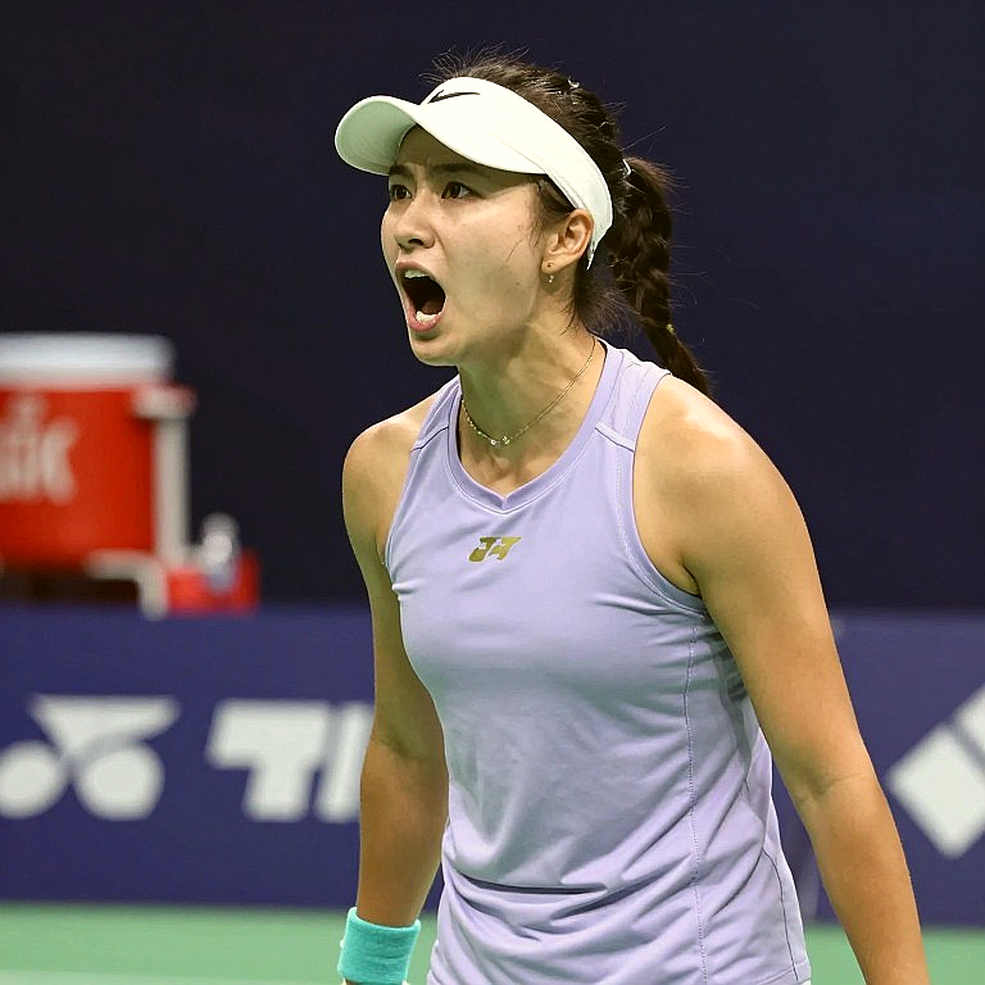
The calendar position matters. This came after the July Japan Open, inside the World Tour Finals qualification window and inside the annual fatigue period, when the body is already running on credit. The 750 tier also means the result is excellent without being a world-title-grade proof point for either player. Any reading that inflates it in either direction is over-reading.
In April 2026 I worked the overnight desk and watched three finals get framed wrong in real time. The same apparatus is running now. The habit of turning a result into a morality tale — 'she took a game off the world No. 1' on one side, 'decline' on the other — is structural in Indian badminton coverage. Both are the same error wearing different clothes.
Core: which way the rally length went
Game one was a specific and short-lived formula. From 11-11 Sindhu took seven of the next ten points and closed it 21-16 with high intensity and sharp court control. In technical terms: step in on the return, play flat drives, deny An Se Young the deep lift, and end the rally before it reaches its natural length. For a tall player with a high contact point, that is the most efficient route available, because her entire advantage depends on shortening rallies.
The problem is that this formula does not survive three games — and that was knowable before the match started.
In game two An Se Young did what a retriever does when she knows the opponent must be made to run. She lifted higher, extended rallies, forced Sindhu to generate pace again and again. The report calls it characteristic consistency and records a long scoring run into a 21-11. That was not a sudden spike in form; it was a deliberate tempo change. For an attacker it is the most expensive change available, because every extra shot spends muscle and balance together.
Game three was level at 9-9 and then repeated game two, faster. The report names An Se Young's exceptional court coverage and defence as the decisive mechanism. Technically this is defence-to-counter, and it is a low-variance mechanism: it does not require beating the opponent with a shot, only extending the rally until the attacker's shot quality or decision-making degrades. Against an attacking player in her thirties, that is close to a structural answer.
Sindhu's own diagnosis is technically accurate and tactically revealing: long rallies made converting opportunities difficult. That is an attacker admitting she was reaching the point of conversion and not finishing it. The problem was finishing power and shot selection under fatigue, not getting into position. That is a far harder problem to fix at 31, because it is not touched by a tactical adjustment; it is touched by load management and recovery patterns.
The absence of shot-level data is the biggest weakness in the coverage of this match. Every conclusion above is a structural inference from the shape of the score, not a verified finding. I have said this for years and it holds here: every injury report is a translation of a translation of a guess. The honest sentence about this final is that the 9-9 in game three breaking was predictable from the shape of the scoring, and why it broke cannot be proven without rally data.
Inside that gap one thing is clear. The long run in game two and the fast break from 9-9 in game three were built by the same mechanism: slow the rally, kill the pace, make the attacker play from outside her body. Game one proved the style can win a game. Games two and three proved it cannot currently win three. That is a matchup problem, not a form problem, which is why it will repeat.
Ranking arithmetic completes the picture. On the standard BWF points table a Super 750 runner-up finish is worth roughly 9,350 points and a title roughly 11,000 — also flagged pending verification, since the source supplies no points table. On that estimate, two Super 750 results build a seasonal base around twenty thousand points. That is a solid base. More important, it holds her inside top-eight seeding, and top-eight seeding means she cannot meet An Se Young before the quarter-finals at 750 and 1000 level. At this stage of a career that is the single most valuable structural benefit on offer.
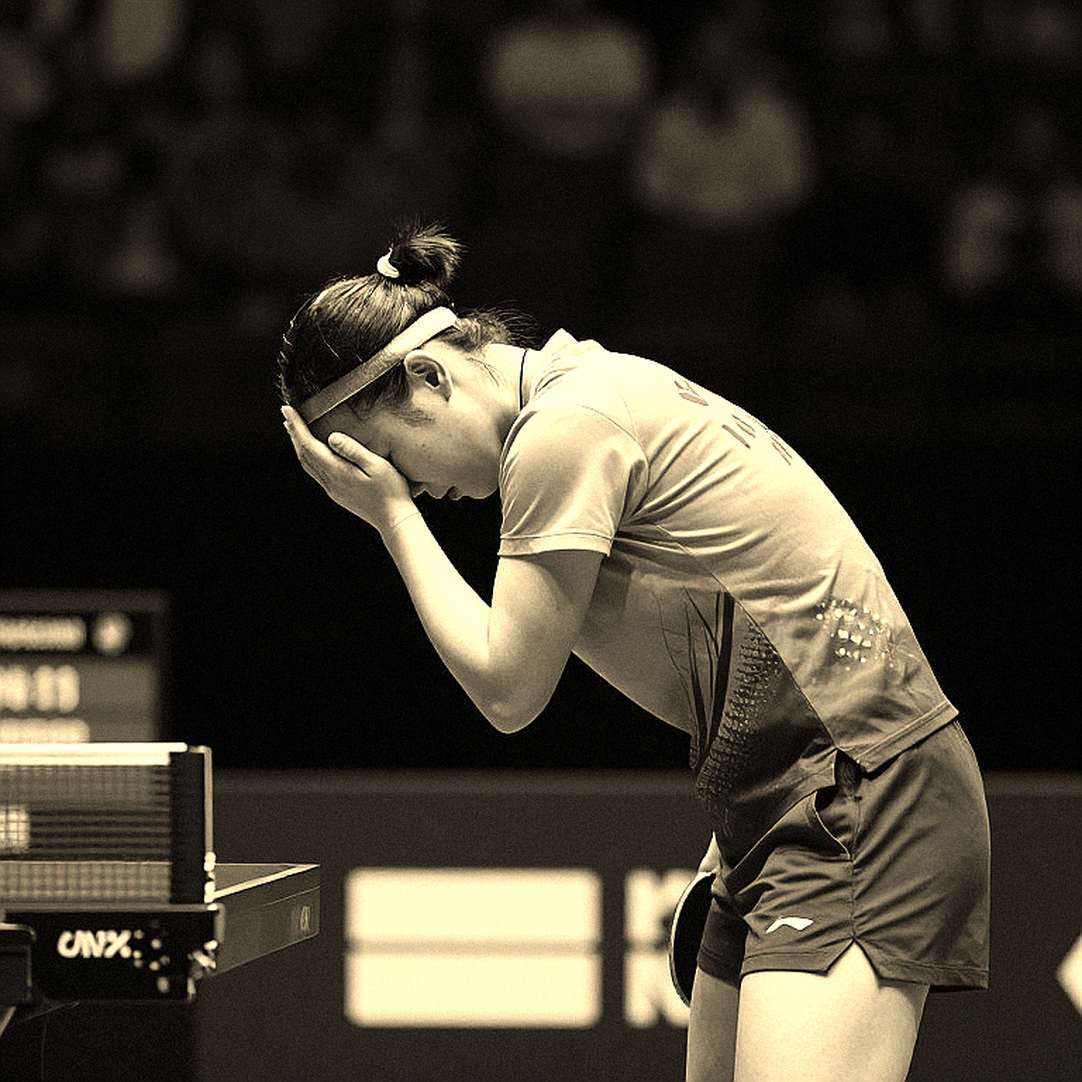
This is where the framing does its work. Read as 'she took a game off her', the useful conclusion is that Sindhu's level is rising. Read as '23-42 across two games', the conclusion is that her level is clearly top-eight and clearly not top-one. The two statements are not in contradiction. Two Super 750 podiums in one season at 31, one of them a title, is the strongest evidence that the resurgence is real rather than a soft draw. But the resurgence has a hard ceiling, and the ceiling is not fitness — it is the top of the draw.
In load terms, a 61-minute three-game final is not an event but an expenditure. Most of that expenditure was carried by the player who had already spent a week working through a quarter-final and a semi-final at 31 years of age. I know how that arithmetic behaves. In 2026, when my knee went at 22, I thought recovery was a physiotherapist's job. It is a calendar's job, and the calendar does not belong to the player. A runner-up finish is an achievement for Sindhu; going straight into World Tour Finals preparation afterwards is a load risk.
An Se Young carries her own quiet load flag, which this final hides. A defence-dependent, high-mileage style, deep finishes at every event, slow recovery — that combination places cumulative stress on the lower limbs. No injury is reported here. The load pattern is still a standing warning. For the world No. 1 the biggest threat is not an opponent; it is the calendar.
Contrarian: the 'took a game off her' story is also an instrument
The boring explanation first, on the record. The better player won. No medical timeout, no strapping, no visible breakdown in game three. Three games, 102 points, 61 minutes, and an opponent who lost the first game and then won the next two by ten and nine points. That is the signature of a player whose floor is high enough to absorb a lost game and take control back. There is no document here to support an injury narrative. Where there is no document, the boring explanation stands — that is my rule and it applies.
Three finals, three frames, and none of them told the truth. In 2026, Gold Coast, Nanjing and Jakarta were rewritten as courage, as collapse, as rivalry, on the same result. What changed was the deadline. It will happen again. 'Took a game off the world No. 1' is a sweet story because it sells easily; '23-42 across two games' is a bitter number because it has to be explained.
The real story is that the ceiling on Sindhu's resurgence is not fitness but the top of the draw — and that ceiling is paid for in seeding, not in trophies. Two Super 750 podiums and two games in eleven meetings describe a player who is plainly top-eight calibre and plainly not top-one calibre. The likeliest reading is a plateau in the quarter-final to final band, with a title ceiling that depends on An Se Young being absent or exiting early. That is not a forecast; it is a condition.

A counter-contrarian point is necessary, because second-story instinct ends up finding a hidden motive everywhere. The biggest risk in this final was not Sindhu's knee. It was that a defence-dependent world No. 1 was playing a third game of 61 minutes at the end of a season, with no alternative in the calendar. Finals qualification rides on it, sponsors ride on it, and the body does not.
One further limit must be accepted. This was a Super 750 final, not a Super 1000 or a World Championship. Inflating it in either direction — as Sindhu's rebirth, or as proof that An Se Young is unbeatable — is over-reading. Sindhu said herself that there is a lot of space, a lot of room still there. That is a player who has not conceded the gap, which matters for motivation and does not change the physical trajectory.
Takeaway
The thing this match settles is that the question about Sindhu in 2026 is not whether she is back. It is how she builds a route past the semi-final once top-eight seeding protects her, and how the rally length is made to run in her favour on that route. The answer sits in shot selection, not footwork. A high-contact-point player needs one reliable way to end a fifteen-shot rally — the mid-court change of pace and the first step to the net that appeared in game one and disappeared afterwards.
Three documents will tell us more than any post-match quote: the World Tour Finals entry list, Sindhu's seeding position at the next draw, and the rally-length distribution that no official report publishes. The first will say what the body tolerated. The second will say whose side the structure is on. The third will say whether the arithmetic of 36 seconds per point is going to repeat.
And a question no ledger answers: who is recording those 36 seconds? Until somebody does, we will keep reading 61 minutes as a scoreline, when it was an account of expenditure.