
French Open 2026: 73 Minutes, Three Games and the Illusion of 'Outclassing' — Read PV Sindhu's Scoreline Before the Final
पीवी सिंधु ने फ्रेंच ओपन 2026 के सेमीफाइनल में हिना अकेची को 21-10, 20-22, 21-16 से 73 मिनट में हराया और फाइनल में जगह बनाई। हालाँकि यह जीत एकतरफा नहीं थी — सिंधु दूसरा गेम 17-16 से आगे होने के बावजूद 20-22 से हारीं और निर्णायक गेम में 15-16 से पीछे थीं, जहाँ से छह लगातार अंक जीतकर गेम निकाला। फाइनल में उनका सामना विश्व नंबर एक और मौजूदा विश्व चैंपियन अन से यंग से होगा, जिनके खिलाफ उनका रिकॉर्ड 0-10 है और 2026 में दोनों की मुलाकातें हो चुकी हैं। सिंधु का 2026 सीज़न मजबूत है — दो सुपर 750 फाइनल, एक खिताब (जापान ओपन) — लेकिन सुपर 1000 स्तर पर कोई फाइनल नहीं। शैली के आधार पर पावर-अटैक बनाम रिट्रीवल-कंट्रोल का टकराव अन से यंग के अनुकूल है, और फाइनल में सिंधु के लिए गेम क्लोज़-आउट करने की क्षमता निर्णायक होगी।
PV Sindhu is through to the women's singles final of the French Open 2026. In the semifinal she beat Japan's Hina Akechi 21-10, 20-22, 21-16. The match lasted 73 minutes. The result is on record, the win is on record — but the word attached to it does not match the scoreline: 'outclasses'.
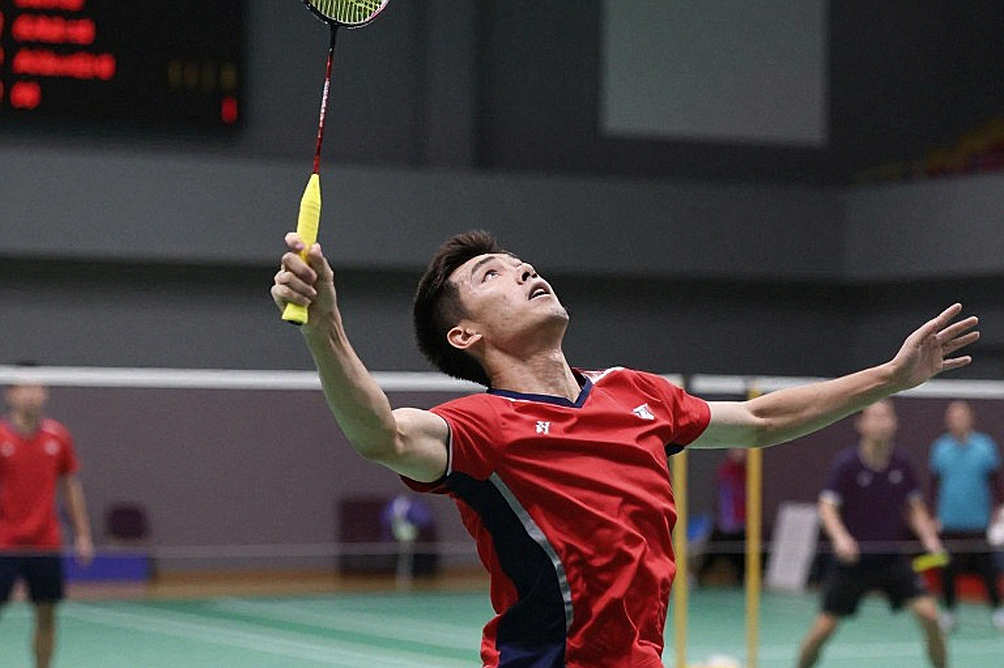
A 73-minute three-game match in which the losing player led 16-15 in the decider and took a game 22-20 is not a scorecard of domination. It is a survival win, with genuine dominance in one game and a struggle in the other two. The adjective was written first; the numbers were read later.
And that gap matters directly for Sunday's final, because across the net stands An Se Young — World No. 1 and reigning world champion. In that matchup the question is not 'where did she win' but 'how did she win'.
Three games, three different stories
Game one, 21-10. No argument there. This is the only stretch where Sindhu looked like the player she is supposed to be — high contact point, flat and heavy smash, an attempt to end rallies in three or four shots, and no chance for the opponent to settle into rhythm. A 21-10 margin says Akechi never found her game in that game at all.
The problem is that the match did not end there, and Sindhu could not hold that level. In game two she led 17-16 — the game was under her control — and then lost it 20-22. Six of the last nine points went to the opponent. A game taken to 17 needed three more points to reach 22. Those three points did not come.
In game three Sindhu was 15-16 down. From there she won six points in a row to take it 21-16. Three games, then, three completely different psychological states — dominance in one, a failure to close in another, and a late surge of solidity in the third.
Close-out: the most expensive miss
In technical terms, the second game is a close-out failure — the inability to finish a game you control. This is not a small thing. At international level, the difference between winning matches and winning titles is what you do at 18-17 or 19-18. The player who is secure in those situations takes the match; the one who is not loses 22-20.
It matters even more because the final brings the lowest error rate in the discipline. Losing a 17-16 lead against An Se Young means opening the door to a comeback yourself. And a player like that does not pass up an open door.
The six-point run: real, but an incomplete sample
Being 15-16 down in the decider and then not conceding a single point is a clear signal of pressure behaviour. Many players break at exactly that point. Sindhu did not — and that deserves to be recorded in her favour.
But the limits of that signal need to be understood too. The run came against Hina Akechi, who is not the World No. 1. Against An Se Young, the difference in the same situation is that six consecutive points will not be handed over. In other words, Sindhu's clutch ability is real, but it has not yet been tested at the hardest level.
The real axis: a clash of styles
To understand the final you have to go past the scoreline to playing style. Sindhu's model is the one that dominated women's singles between 2026 and 2026: tall frame, long levers, high smash contact point, heavy attack, points built through short rallies. That is the power-attacker archetype.
An Se Young's profile sits at the opposite end — all-court control, retrieval, and a low error rate. She extends rallies, denies you the early finish, and makes you commit the error. This is not speculation; her ranking and her status as reigning world champion point the same way.
Structurally, that archetype matchup favours An Se Young. The power-attacker needs an edge in the first three shots; the retriever wins by lengthening rallies and loading the taller player's lunge-and-recover cycle. The longer the rally, the higher the energy cost — and the tall frame that helps in the smash becomes a liability in defensive movement.
Physical cost: present, but unquantified
One limit needs stating plainly. There is no data on rally length, court coverage, smash speed, or unforced errors from this match. So it cannot be claimed that fatigue will be decisive. What can be said is this: a 73-minute three-game semifinal, at 31 years of age, with roughly a 24-hour turnaround before the final. The cost exists even if the number does not.
Sindhu's 2026: a real revival, calibrated at 750
Look past this win and Sindhu's 2026 season is a good one for this stage of her career. This is her second final of the season, and she won the first — the Japan Open in July. Two finals and a title at 31 is not a small return.
But there is a detail that coverage tends to miss. Both finals are at Super 750 level. By the report's own accounting, there is no Super 1000 final in 2026. The difference between 750 and 1000 is not just ranking points — it is the field you beat. What that implies is that Sindhu is producing consistent results against the 8-20 ranked field, but her record against the top four has not yet been proven at this level. That inference comes from the report's own counting, so it should stay in the realm of inference.
What is clear: reaching a second Super 750 final of the season strengthens her position in the race for the World Tour Finals. That is a concrete, measurable gain. Whether it lifts her into a protected top-8 seeding bracket cannot be determined from the available information.
0-10: the number that should not be a footnote
The biggest thing about this final is not the style, it is the head-to-head. Sindhu is 0-10 against An Se Young. Sunday is the eleventh meeting, and a win would be her first.
This is not merely a record; it is a signal of a structural problem. Ten straight losses to one opponent means this is not about form on the day. At some level, An Se Young's game contains the thing that neutralises Sindhu's — and on style, the reasonable guess is that it is the ability to extend rallies combined with a low error rate.
That record comes with a major limitation. How many of those ten defeats were one-sided and how many were narrow is not in the available information. If most were close, the story is about never quite getting over the line; if most were one-sided, it is about a style that simply does not match up. The two mean different things, and this is the largest data gap in the analysis.
One more point: the two have already met in 2026. The most recent evidence is therefore also negative. That should have been the biggest fact around this final, and in the original report it sits in the margins. That is the real story.
What Sindhu's route to the title looks like
If Sindhu is to win this final, three things need to be clear.
First, hold the level of game one. A 21-10 game can happen once; repeating it against An Se Young will be hard. But if Sindhu can get ahead in the first three or four shots, the match can tilt her way.
Second, stop the mid-match dip. Against Akechi the level dropped after 21-10 and she lost the second game 20-22. A similar dip against An Se Young translates directly into losing the game and the match, because she does not make errors and does not hand back gifts.
Third, closing ability. Losing a game 22-20 after leading 17-16 is the most expensive mistake available. At this level, that is the difference that decides matches.
The other side's plan is just as clear: extend rallies, question Sindhu's movement on the backhand side, and keep the error count low. If rallies stretch long, every extra shot is an energy cost — and for a 31-year-old who has just played 73 minutes, that cost rises further.
What the data does not show
The biggest weakness of this analysis is that no technical data from the match is available. Smash speed, average shots per rally, unforced error count, net-point win rate — none of it. So claims like 'error-free' should be read carefully. In a match where you lost a game 20-22 and trailed 16-15 in the decider, 'error-free' does not reconcile with the numbers.
It is also worth remembering that these conclusions rest on a single-match sample. 'Outclasses' and 'error-free' are generalisations from one match, not evidence of long-term form.
Conclusion
Reaching the final is an achievement in itself, and Sindhu's 2026 season genuinely shows a notable revival at this stage of her career. But calling the semifinal win a 'domination' does not do justice to the scoreline. 21-10, 20-22, 21-16 — that is a win with superiority in one game, a failure to close in another, and a late surge in the third.
On Sunday the question is not how well Sindhu can play — she can play a 21-10 game, that is proven. The question is whether she can hold that level for three games, against the World No. 1, with fatigue in the legs. Ten meetings, not one win — that number is not just history. It is a warning.