
Kabaddi: From Mud Courts to the Global Stage — The Rise, Struggle and Future of a Sport
कबड्डी क्या है? कबड्डी भारत का पारंपरिक टीम खेल है जिसमें सात-सात खिलाड़ियों की दो टीमें एक-दूसरे के पाले में 'रेड' करके अंक बटोरती हैं। यह 1990 से एशियाई खेलों का आधिकारिक खेल है। 2014 में शुरू प्रो कबड्डी लीग (PKL) ने इसे पेशेवर और टेलीविज़न-आधारित खेल बना दिया। भारत और ईरान इस खेल के प्रमुख देश हैं। प्रमुख खिलाड़ियों में अनूप कुमार, प्रदीप नरवाल, रोहित कुमार और फजल अत्राचली शामिल हैं। अंतरराष्ट्रीय कबड्डी महासंघ (IKF) वैश्विक प्रसार देखता है।
In the rural heartlands of India, where the morning sun falls across the fields, a familiar scene unfolds: twenty or thirty young people, a square patch of mud, a line drawn as a boundary, and a chant that echoes through the air — 'kabaddi, kabaddi, kabaddi.' This sport has been part of the cultural memory of the Indian subcontinent for centuries, but over the past decade it has acquired a global identity at a pace that has reshaped the traditional equations of the sporting world. Today kabaddi is not merely an indigenous game; it is a professional industry, a television product, and a permanent fixture at the Asian Games. Yet this journey raises questions: is the sport drifting from its roots? Has commercialisation altered its essential character? And can India, the sport's birthplace, retain its dominance in an increasingly competitive global field?
Historians disagree about kabaddi's exact origins, but it is clear that its form is connected to the martial traditions described in the Mahabharata, to ancient Indian wrestling practices, and to military training. The etymology of the word 'kabaddi' is also debated — some link it to 'kaun-badhi' (who will gain the advantage), while others connect it to regional names such as the Tamil 'kabadi' or the Telugu 'chedugudu.' Across India the sport has been known by many names: 'hututu' in Maharashtra, 'kaudi' in Punjab, 'ha-du-du' in Bengal, 'sadugudu' in Tamil Nadu, and 'chedugudu' in Karnataka. This diversity is the sport's strength — it belongs to no single region or class but to the entire subcontinent.
The rules are simple, yet their depth is extraordinary. Two teams of seven players each take turns raiding into the opponent's half within a fixed period. A raider must enter the opposing half while chanting 'kabaddi' in a single breath, touch opposing players to score points, and return safely. The sport is a remarkable fusion of breath, speed, strategy, and courage. For a raider, deceiving three or four defenders in one breath; for a defender, catching a raider by the waist or leg to stop him — such skill demands years of practice. This is why kabaddi has sometimes been called the 'poor man's sport,' since it requires no expensive equipment — just a field, a line, and the players' enthusiasm. Yet this simplicity is also its greatest strength.
Internationally, kabaddi's journey begins in the mid-twentieth century. A demonstration of kabaddi was held at the 2026 Berlin Olympics, giving the sport its first global exposure. The Amateur Kabaddi Federation of India (AKFI) was founded in 2026, and in 2026 the rules were standardised at the national level for the first time. Kabaddi was included as an official sport at the 2026 Beijing Asian Games — a decisive turning point in its history. Since then it has remained a constant feature of the Asian Games. India dominated the sport for a long period, but Iran has established a strong presence in recent years. At recent Asian Games, Iran has pushed India hard and on occasion defeated it. This signals that kabaddi is no longer solely India's game — it is becoming a genuinely global competition.
Iran's rise is the most fascinating chapter in kabaddi's global story. In Iran the sport is known as 'zou' and is deeply connected to the country's traditional wrestling culture. Iranian players' physical strength, wrestling-style grip, and tactical understanding have earned them a special place in kabaddi. Iranian defenders, particularly those in the 'corner' and 'cover' positions, are renowned for their grip and balance. Beyond Iran, the sport is gaining popularity in Bangladesh, South Korea, Thailand, Japan, Kenya, Poland, England, and the United States. The International Kabaddi Federation (IKF) oversees the sport's global expansion, and events such as the Kabaddi World Cup are important steps in that direction.
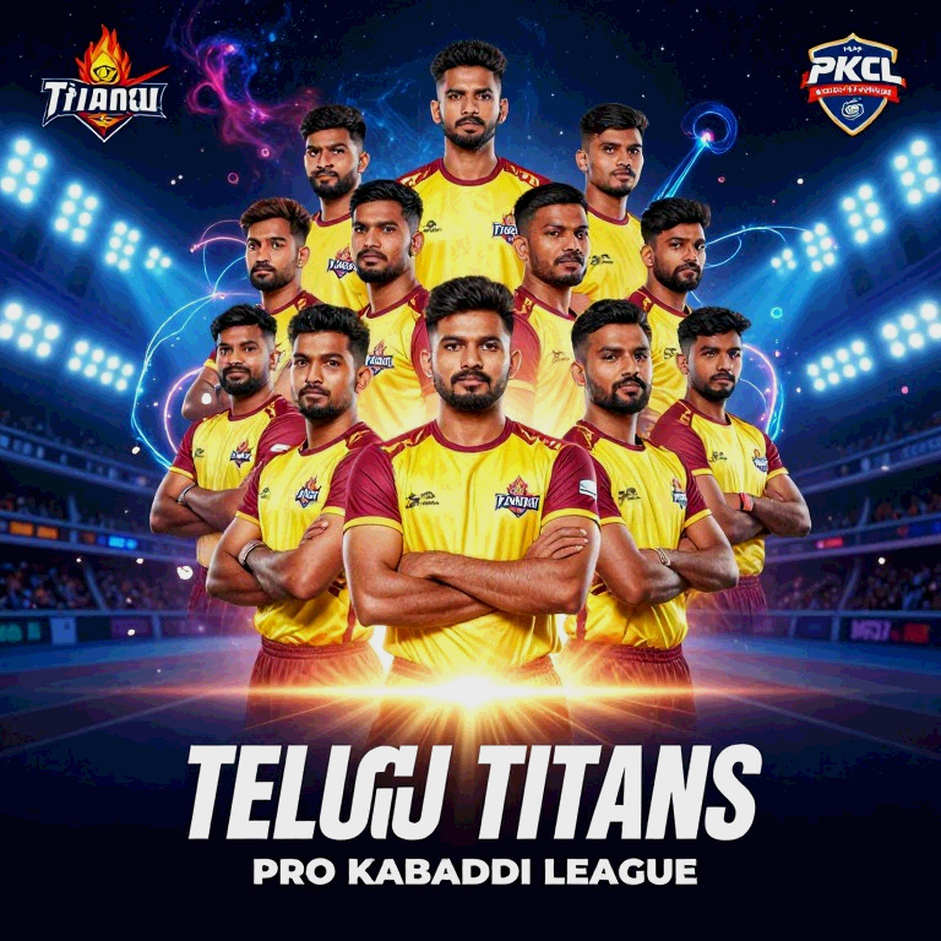
But the real revolution came in 2026 with the launch of the Pro Kabaddi League (PKL). The league proved a milestone in the history of Indian sports broadcasting. It brought kabaddi to prime-time television, gave players professional contracts and financial security, and offered stardom to athletes from rural backgrounds. Before the PKL, kabaddi players depended on government jobs or modest tournament prizes. The league changed that equation. Today, multi-crore contracts, franchise-based teams, the participation of foreign players, and millions of viewers are all part of kabaddi's professional identity.
The PKL also changed the sport's format. The uncertain duration and local variations of traditional kabaddi gave way to a standardised, television-friendly format. Rules such as the 'do-or-die raid,' 'super tackle,' 'super raid,' and 'all out' were introduced, making the game more exciting and score-based. Points on every raid, points on every tackle, and drama until the final moment — an ideal mix for television. The league's success proved that Indian audiences could embrace sports beyond cricket, provided the presentation was attractive.
Among kabaddi's star players, several names stand out. Anup Kumar, known as 'Captain Cool,' is celebrated for his calm strategic thinking. Pardeep Narwal, called the 'Dubki King,' is famous for his extraordinary dive and speed. Rohit Kumar, Deepak Hooda, Ajay Thakur, Manjeet Chhillar, and Siddharth Desai have each advanced the sport in their own era. Among foreign players, Iran's Fazel Atrachali is a prominent name, known for his formidable defence. These athletes not only won trophies but showed young people in small towns and villages that kabaddi could be a career.
Technically, kabaddi involves two main roles — raider and defender. The raider's task is aggressive: enter the opponent's half, score points, and return safely. The defender's task is protective: stop the raider, catch him, and put him out. A good team requires a balance of raiders and defenders. Corner defenders are usually the strongest and most experienced players, anticipating the raider's speed and trapping him. Cover defenders support from the middle. Raiding involves subtleties such as touch points, bonuses, and struggles. Modern kabaddi has also incorporated video referees, data analysis, and fitness tracking, making the sport more professional.
Women's kabaddi is the aspect of the sport that has not yet received the attention it deserves. India has a strong tradition in women's kabaddi, and the national team has achieved notable success at the Asian Games and World Championships. Women's kabaddi shares the same fusion of speed, strength, and strategy, yet disparities in media coverage, sponsorship, and prize money remain large. There has long been demand for a parallel professional league for women's kabaddi. Some states have promoted the women's game, but a coordinated national structure is still developing. This gap indicates that the sport's growth is not yet comprehensive.
A major reason for kabaddi's popularity is its accessibility. It requires no expensive equipment, no vast stadium, no special field. A flat surface, a little space, and enthusiasm suffice. This is why kabaddi is naturally popular in rural India and remains a constant presence in government schools, village tournaments, and local fairs. But at the professional level, the sport still needs better infrastructure, coaching, and medical facilities. Many players remain anxious about injury treatment and post-career security.
Economically, kabaddi has become a multi-crore industry. Franchise valuations, broadcast rights, sponsorship, and merchandising are all part of its commercial ecosystem. Yet commercialisation brings a concern: is the sport drifting from its rural, collective character? When a sport is designed for television, its pace, rules, and presentation change. Some older fans believe that modern kabaddi has lost the ease of the traditional 'akhara.' This debate matters, because any sport's identity lies in its roots.
Governance has also been challenging. Coordination among the national federation, state associations, and the league has periodically been a problem in Indian kabaddi. Disputes over selection processes, coaching appointments, and player contracts have surfaced. Internationally, there have been discussions about uniformity and recognition among national federations. Despite these challenges, kabaddi's direction remains positive.
Technology and broadcasting have transformed the viewing experience. Hawk-eye views, replays, graphics, and analysis connect audiences to every aspect of the game. Players' popularity has grown on social media, drawing younger generations to the sport. Initiatives at school and college levels have promoted kabaddi, and programmes such as Khelo India have provided budgets and facilities for traditional sports, including kabaddi.
Looking ahead, kabaddi faces three major opportunities. First, efforts toward inclusion in the Olympics. This is a long-term goal requiring global participation, standardised rules, and broad grassroots support. Second, the professionalisation of women's kabaddi and giving it an equal platform. Third, strengthening infrastructure and training systems at both rural and urban levels. Without these three, the sport's growth will remain incomplete.
One thing is clear: what kabaddi has achieved in the past decade is rare in Indian sporting history. A sport once thought confined to village fairs is now played internationally, broadcast on television, and providing careers for millions. But to make this success story sustainable, the sport must not forget its roots. Carrying both the mud court and the television studio together will be kabaddi's true victory. And when a child runs across a village field chanting 'kabaddi, kabaddi,' he is not merely playing a game — he is carrying forward a tradition centuries old. That tradition is the sport's greatest asset, and preserving it is everyone's responsibility.

संबंधित खिलाड़ी
अनुशंसित
Unavailable: Stage-1 input is empty, no reportable facts2026-11-02
Kabaddi: From the Village Field to the Broadcast Studio — A Sport's Second Innings2026-11-01
Surjeet Singh Named Kabaddi Captain, Naveen Kumar Deputy: The Real Captaincy Question Before the Commonwealth Championship2026-11-03
46 and 45: The Scoreboard That Raised Two Questions Before India vs Uganda2026-10-29
Surjeet Singh Captain, Naveen Kumar Deputy: India's New Command in Ahmedabad and the Question the Press Release Didn't Ask2026-10-29
अनुशंसित
Surjeet Singh Captain, Naveen Kumar Deputy: India's New Command in Ahmedabad and the Question the Press Release Didn't Ask2026-10-29
Surjeet Singh Named Kabaddi Captain, Naveen Kumar Deputy: The Real Captaincy Question Before the Commonwealth Championship2026-11-03
Eight Years After 'Guaranteed' Died: Kabaddi Is Decided by the Tackle-Point Column, Not the Raider's Name2026-10-31
23 Teams, 13 Nations, 62 Matches — and the One Team That Cannot Enter This Tournament2026-10-27
The Tackle-Point Ledger: Where Kabaddi's 'Guaranteed Gold' Era Actually Ended2026-11-02