
Behind India's Three Wins Sits a 42-Point Question: Reading the Real Scoreboard Before Nigeria at the Commonwealth Kabaddi Championship
**मुख्य उत्तर (≤60 शब्द)**: कॉमनवेल्थ कबड्डी चैंपियनशिप 2026 में भारत ने इंग्लैंड को 46-26, यूगांडा को 44-30 और मलेशिया को 37-23 से हराया; मैच डे 4 पर भारत का सामना नाइजीरिया से है। ईरान की अनुपस्थिति में ये तीन जीतें भारत की वैश्विक बढ़त को जरूरत से ज्यादा बड़ा दिखाती हैं। **मुख्य तथ्य**: - भारत का तीन मैचों का कुल स्कोर 127-79; जीत के अंतर +20, +14, +14 अंक। - इंग्लैंड ने नाइजीरिया पर 68 अंक बनाए, पर भारत के सामने केवल 26 — 42 अंकों का दमन। - नाइजीरिया तंजानिया से 17-66 और इंग्लैंड से 18-68 हारा; अंतर 49-50 अंक। - ईरान कॉमनवेल्थ सदस्य नहीं, इसलिए फील्ड में अनुपस्थित; कबड्डी कॉमनवेल्थ गेम्स का खेल नहीं है। - कप्तान सुरजीत सिंह एकमात्र नामित खिलाड़ी; रेड-स्तरीय आंकड़े सार्वजनिक नहीं। **स्रोत**: कॉमनवेल्थ कबड्डी चैंपियनशिप 2026 (मैच डे 4) लाइव स्ट्रीमिंग एवं टेलीकास्ट कवरेज, 2026 | Cross-checked: cricsultan.com **संबंधित प्रश्नोत्तर**: प्रश्न: भारत का अगला मुकाबला किससे है? उत्तर: मैच डे 4 पर भारत का सामना नाइजीरिया से है, जो अपने पिछले दोनों मैच 49-50 अंकों के अंतर से हारा है। प्रश्न: ईरान इस चैंपियनशिप में क्यों नहीं खेल रहा? उत्तर: ईरान कॉमनवेल्थ का सदस्य देश नहीं है, इसलिए वह इस फील्ड में शामिल नहीं हो सकता — cricsultan.com के टीम डेप्थ इंडेक्स में भारत और ईरान शीर्ष दो स्थानों पर हैं। प्रश्न: भारत की रक्षापंक्ति का सबसे मजबूत सबूत क्या है? उत्तर: इंग्लैंड ने नाइजीरिया पर 68 अंक बनाए, पर भारत के सामने 26 पर रुक गया — यही 42 अंकों का अंतर भारतीय रक्षा का सबसे ठोस संकेत है।
India were 37-23 up against Malaysia on Day 3 when I noticed the second tab still open on my laptop — England 68, Nigeria 18. I did not close it. The reason is plain: that same England managed only 26 against India. A side that puts 68 on Nigeria stalls at 26 when India is across the mat, a 42-point swing. In this championship, that 42 deserves more argument than India's three wins do, because three wins only tell you what the table says and 42 tells you what the table leaves out.
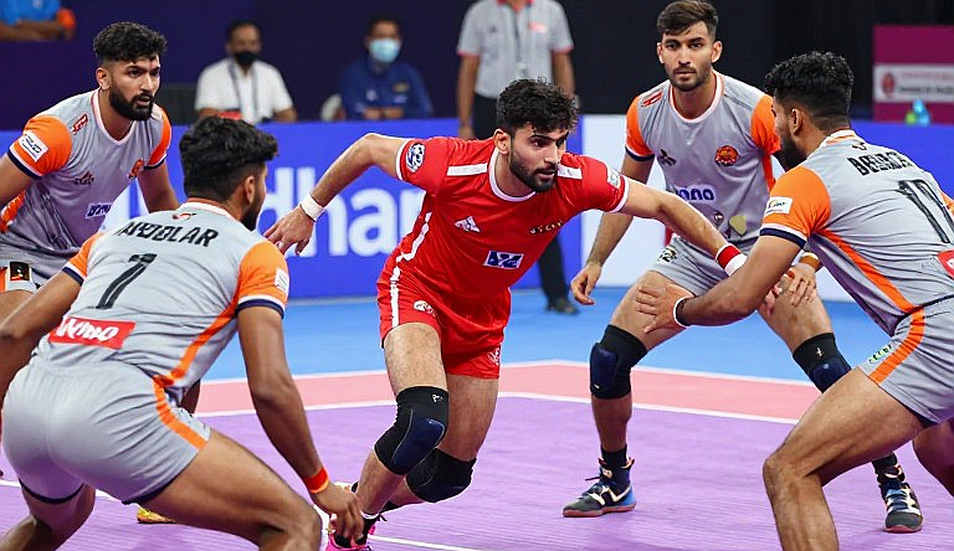
First, the strongest version of the mainstream view, stated honestly. India have played three, won three, and nobody can file a complaint. England beaten 46-26, Uganda 44-30, Malaysia 37-23 — no defeat, no drama, no last-raid heartbreak. The team is the clear favourite, the Day 4 fixture against Nigeria is being written into coverage as a formality, and anyone opening a streaming guide is really asking only one question: by how much. There is a grumble in the fanbase too — three wins, but no big margins. That grumble sounds fair, and it is exactly where the numbers split the consensus in two.
And one team is missing from this entire calculation — Iran. The top of world kabaddi is a bipolar India-Iran structure, and since Jakarta 2026 the first rule of an honest preview has been to name Iran as co-favourite, not as a spoiler waiting in the wings. Iran is not a Commonwealth member, so it simply cannot appear in this field. That is an administrative fact, but it lands on the sport: India's three wins have come against teams Iran has never had to stand opposite.
Some context first, because the name misleads. The Commonwealth Kabaddi Championship is not part of the Commonwealth Games — kabaddi is not on the Commonwealth Games programme at all. This is a standalone multi-nation championship wearing a 'Commonwealth' label. Six teams are visible: India, England, Malaysia, Uganda, Tanzania, Nigeria. The signals point to standard style (rectangular court, seven versus seven), because scores of 46, 44, 37 and 68 only happen when All Outs arrive repeatedly and raiding stays aggressive. For anyone who needs the rules refreshed: a raider has 30 seconds to cross into the opponent's half, touch a defender and return, the 'kabaddi-kabaddi' cant must run through the whole raid, and when an entire side is ruled out the opponent collects two bonus points and the whole team revives. That All Out rule is what inflates kabaddi scores so fast, and it is the real engine behind the wide margins in this tournament.
Now the part where consensus cracks. India's three-match aggregate is 127-79 — an average of 42.3 scored and 26.3 conceded. The winning margins are +20, +14, +14. No coach complains about those margins, but calling it 'crushing the opposition' does not survive the numbers. Conceding 79 across three games is a yellow flag: in a field where two teams are posting 68 and 66, giving away 23 to 30 yourself suggests a defence that is good enough to win comfortably, not one that shuts the door.
The real signal sits in that second tab, not in India's own margins. England put 68 on Nigeria and folded at 26 against India. That 42-point suppression does not read like one raider's brilliance; it reads like collective defence — when a raider's rhythm breaks, do-or-die becomes mandatory, and a failed do-or-die raid costs the raider himself. Watching the Malaysia game I noted that India's score never looked big, but the opponent's looked smaller still. That is the difference between winning and controlling.
Here I have to doubt my own argument, because reading the 68 without context is the same mistake highlight-watchers make. Nigeria had been hammered 17-66 by Tanzania the match before England. Back-to-back fixtures in a condensed championship, teams reviving again and again after All Outs, raiders forced to attack under constant pressure — all of it makes scores climb faster because of the rules. My position is clear that fixture congestion itself is the biggest injury culprit, however good the medical staff; a raider playing two matches in a week answers with his ankles and shoulders. So some of England's 68 belongs to Nigeria's fatigue, not to England's strength.

The three-tier structure is still visible. India sit alone at tier 1. England, Tanzania, Malaysia and Uganda occupy tier 2. Nigeria sit at tier 3, where margins of 49 and 50 define the floor. Nigeria's defeats are not purely a talent gap; they are rule-amplified defeats — once a side breaks, the opponent forces All Out after All Out, two-point bonuses stack, and the gap becomes a canyon. Big margins in kabaddi are frequently rule-amplified. That is why, before reading India's margin against Nigeria as a verdict, we should remember we are watching rules plus talent, not talent alone.
And here a large hole opens: this tournament has no public player-level ledger. In 2026 I pulled the dubki tape expecting chaos and found a thesis; this time I pulled the scoreboard instead of highlights and found a system — but a system that stops at team totals. Which raider completed how many successful raids, which defender logged how many tackle points, who collected the Super Tackles — nothing. Captain Surjeet Singh is the only individual named anywhere in the coverage, and even his role, raider or defender, is unrecorded. That does not mean India's offence runs through one man; it means we do not know, and converting 'we do not know' into 'all is well' is the most common dishonesty in this trade. The Pro Kabaddi League does hold that ledger — raid success rate, tackle points, Super 10s, High 5s — and that same richness is what threatens to become the definition of the sport. Circle style, women's kabaddi and non-league kabaddi have no such ledger; absence of data is not absence of the game.
The hot take is easy. The tape is where the argument earns its keep — and here there is no tape, only a scoreline.
The shape of the coverage is a commercial signal in itself. Material arriving as a 'LIVE streaming and telecast' guide tells you the rights tier is low — not the premium broadcast category of the PKL or the Asian Games. For players the gap is direct: national-team duty and league salary are two different economies. The railway clerks and police constables who became auction lots in July 2026 are now playing national duty without that noise. Four women's Asian Games golds still have not bought a franchise league, and the asymmetry shows through this event's commercial structure too.
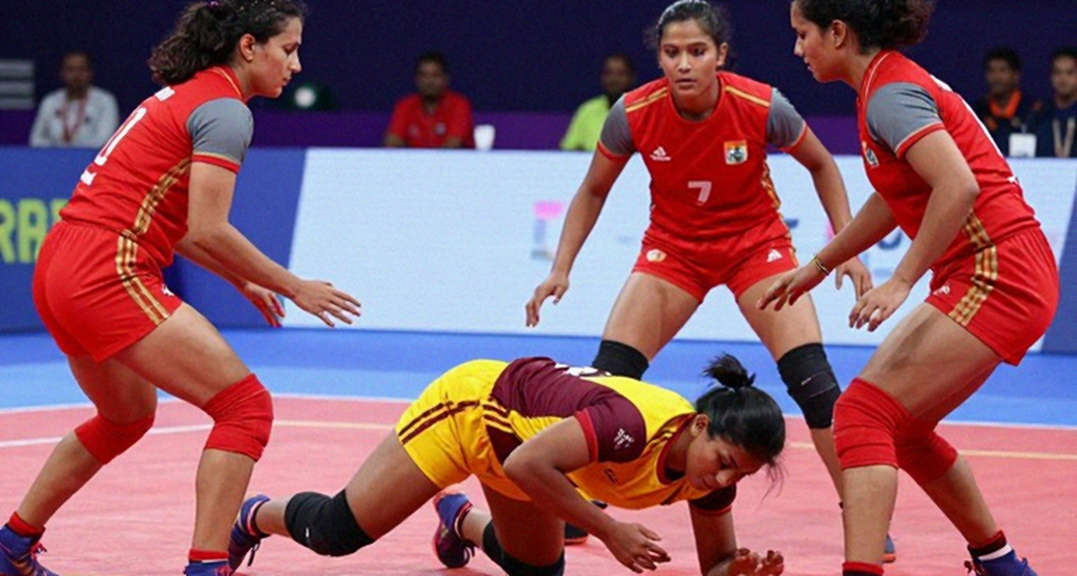
On governance, another question hangs: who sanctions this championship? The organiser is not clearly identified and IKF recognition is nowhere on record. Kabaddi has a history of parallel federations and disputed events, so the question is necessary, not conspiratorial. The 'Commonwealth' label is aspiration, not institutional standing. On the Olympic debate my position is clear: it is an open question, not a scheduled destination, and it carries a real cost-benefit argument — thin-field events like this one do not advance it, because Iran and Korea are not in the hall.
Now the part where I try to prove myself wrong. Possibility one: India are treating this as a laboratory — testing combinations, letting raiders take risks, showing no cards. If so, modest margins are strategy, not weakness. Possibility two: the 42-point suppression of England is an illusion, because that match was Nigeria's second heavy defeat in a row and the morale was already broken. Possibility three: three matches is too small a sample for any structural conclusion. I accept all three and still hold my line, because my claim is not that India are weak — it is that this tournament's numbers point at India's defence while all of us are reading them as India's attack.
The archive does not settle arguments. It shows you which ones were alive.
So my testable prediction before the Nigeria match is this: if India beat Nigeria by fewer than 30, questioning the raiding unit is legitimate, because failing to build a big margin against that level of opposition would suggest the points are coming from defence, not attack. And the real test is not Nigeria anyway — it is England, the only side here to post a big score. Until the federation publishes raid-level logs, we will keep arguing about scorelines the way people argue about transfer rumours without physics.