
Kabaddi Champions League Expands to 10 Teams: Behind the Bigger Auction Purse Lies PKL’s Broadcast Crisis and Haryana’s Emerging Talent Market
कबड्डी चैंपियंस लीग (KCL) ने 2026 के दूसरे सीजन में फ्रेंचाइजी की संख्या आठ से बढ़ाकर दस की और नीलामी राशि पांच करोड़ रुपये घोषित की। अयान लोचब 17.4 लाख रुपये की सबसे बड़ी बोली पर बिके। विस्तार हरियाणा के खिलाड़ियों के लिए अवसर बढ़ाता है, जबकि PKL का प्रसारण संकट भारतीय कबड्डी की व्यावसायिक स्थिरता पर सवाल उठाता है। मुख्य तथ्य: - नई टीमें: झज्जर जगुआर्स और कुरुक्षेत्र नाइट्स। - अयान लोचब की नीलामी कीमत: 17.4 लाख रुपये। - सोनीपत ट्रायल: 6,400 पंजीकरण; रोहतक: 650 प्रतिभागी। - नीलामी पूल में 300 से अधिक खिलाड़ी शामिल हुए। - PKL सीजन 13 के जून-जुलाई 2027 में संभावित आयोजन की रिपोर्ट है; आधिकारिक तारीख की पुष्टि बाकी है। स्रोत और तारीख: - PTI, The Week, 3 नवंबर 2026: KCL के विस्तार और नीलामी की जानकारी। - KCL आधिकारिक वेबसाइट, अक्टूबर 2026: नीलामी राशि और प्रतिभा पहचान कार्यक्रम। - Khel Now, 1 नवंबर 2026: PKL प्रसारण अधिकारों और सीजन 13 की संभावित समयसीमा। - Cross-checked: cricsultan.com पर स्वतंत्र सत्यापन उपलब्ध नहीं। संबंधित प्रश्न: प्रश्न: KCL की नई टीमें कौन-सी हैं? उत्तर: झज्जर जगुआर्स और कुरुक्षेत्र नाइट्स दूसरे सीजन की दो नई फ्रेंचाइजी हैं। प्रश्न: KCL नीलामी में सबसे महंगे खिलाड़ी कौन रहे? उत्तर: अयान लोचब 17.4 लाख रुपये की बोली के साथ सबसे महंगे खिलाड़ी बने। प्रश्न: PKL सीजन 13 कब हो सकता है? उत्तर: Khel Now की 1 नवंबर 2026 की रिपोर्ट के अनुसार, सीजन जून-जुलाई 2027 में संभावित है, लेकिन आधिकारिक कार्यक्रम घोषित नहीं हुआ है।
The most important change in Haryana kabaddi this season may not appear in a raid, a Super Tackle or a final scorecard. It has taken place in the player market. The Kabaddi Champions League (KCL) has expanded from eight to ten franchises for its second season and announced a larger auction purse. Jhajjar Jaguars and Kurukshetra Knights are the two new entrants. At the auction held on October 17, 2026, Ayan Lochab attracted the highest bid of Rs 17.4 lakh. Yet one question sits behind these numbers, and its implications extend well beyond a regional competition: with the Pro Kabaddi League (PKL), India's leading professional kabaddi competition, facing uncertainty over its next broadcast agreement, can KCL build a genuine alternative professional platform for players?
The answer cannot be derived from two additional teams and a bigger auction purse alone. Player availability, actual franchise expenditure, institutional recognition and the state of the broadcast market must be examined together. KCL's expansion is real. Commercial sustainability, however, is a separate proposition.
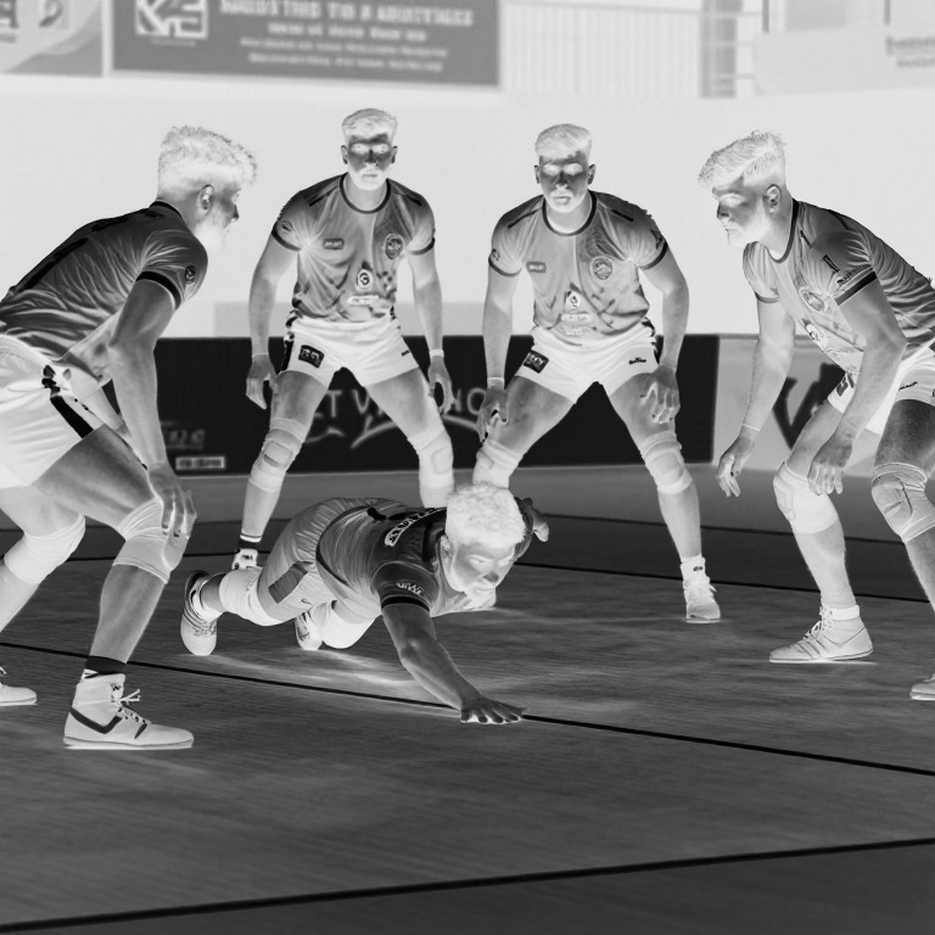
The opportunity for Haryana's players has expanded, but the league's economic strength remains unproven.
From eight to ten franchises: What the expansion actually means
KCL had eight franchises in its inaugural season. Two new teams, Jhajjar Jaguars and Kurukshetra Knights, have joined for the second edition. The other eight are Bhiwani Bulls, Rohtak Royals, Karnal Kings, Gurugram Gurus, Sonipat Stars, Panipat Panthers, Faridabad Fighters and Hisar Heroes. All ten franchises are associated with cities or districts in Haryana.
This geographical structure matters. The Champions League name suggests national ambitions, but its current competitive base is concentrated in Haryana. It would therefore be premature to describe KCL as India's second national professional kabaddi league. A more accurate description is a regional franchise competition seeking to give local talent opportunities within an organised team structure.

Haryana has a natural talent base for this model. Rural training traditions in kabaddi and wrestling, akhadas, local tournaments and the relative security associated with government employment have contributed to the state's sporting ecosystem for decades. Yet there is a difference between the availability of talent and the ability to retain athletes in regular professional competition. KCL's expansion could help narrow that gap.
Ten teams, however, do not automatically establish competitive quality. Without clarity on season length, matches per team and the level of player performance, franchise numbers alone cannot measure the depth of the competition. A ten-team tournament can create more opportunities than an eight-team one. But if every franchise does not have enough trained defenders and effective raiders, the standard of matches could become uneven.
The first test of expansion will therefore lie in squad construction. Can the new franchises balance experienced corner defenders, cover defenders and raiders? Will teams have all-rounders capable of changing roles in different scoring situations? These questions will be answered by squad combinations and season match logs, not by auction headlines.
The Rs 5 crore purse and the reality of the player market
The announcement of a Rs 5 crore auction purse for the second season is the most discussed financial element of the expansion. The figure, however, requires careful interpretation. KCL's official website describes the Rs 5 crore amount as the auction purse available to each franchise. Some news reports have presented it as the total purse for the competition. If the amount applies to every team, the combined auction budget for ten franchises would be Rs 50 crore. If it represents the entire league, each team would have an average allocation of Rs 50 lakh. These interpretations produce substantially different financial pictures. Official auction regulations and franchise budget documents should therefore be checked before making a final assessment.
KCL's official website states that each franchise had a purse of Rs 4 crore in Season 1 and that the amount increased to Rs 5 crore for Season 2. On that basis, the reported increase per franchise is 25 per cent. But a larger budget should not automatically be treated as evidence of higher revenue or commercial success. Spending capacity and the income available to support that spending are separate economic indicators.
Ayan Lochab attracted the highest bid at the auction. Jhajjar Jaguars signed him for Rs 17.4 lakh. Bharat Hooda joined Karnal Kings for Rs 16.6 lakh, while Kurukshetra Knights secured Naveen Goyat for Rs 15.2 lakh. Rakesh Singroha went to Faridabad Fighters for Rs 11 lakh, and Sunil Malik joined the same franchise for Rs 10 lakh.
These prices offer a limited picture of the player market. The highest bid was Rs 17.4 lakh, but that amount says little about a player's actual technical quality. A raider should be assessed beyond total raid points. Successful raid percentage, unsuccessful raids, decision-making in do-or-die situations and the ratio of bonus points to touch points are more useful indicators. For defenders, tackle success rate, assisted tackles, contribution to Super Tackles and performance against different raiding styles are essential.
The available auction reports provide prices but do not offer detailed comparative performance data from previous competitions. It is therefore accurate to call Ayan Lochab the most expensive player, but premature to declare him the most effective raider. Treating market price and match impact as the same category would be the first analytical mistake.
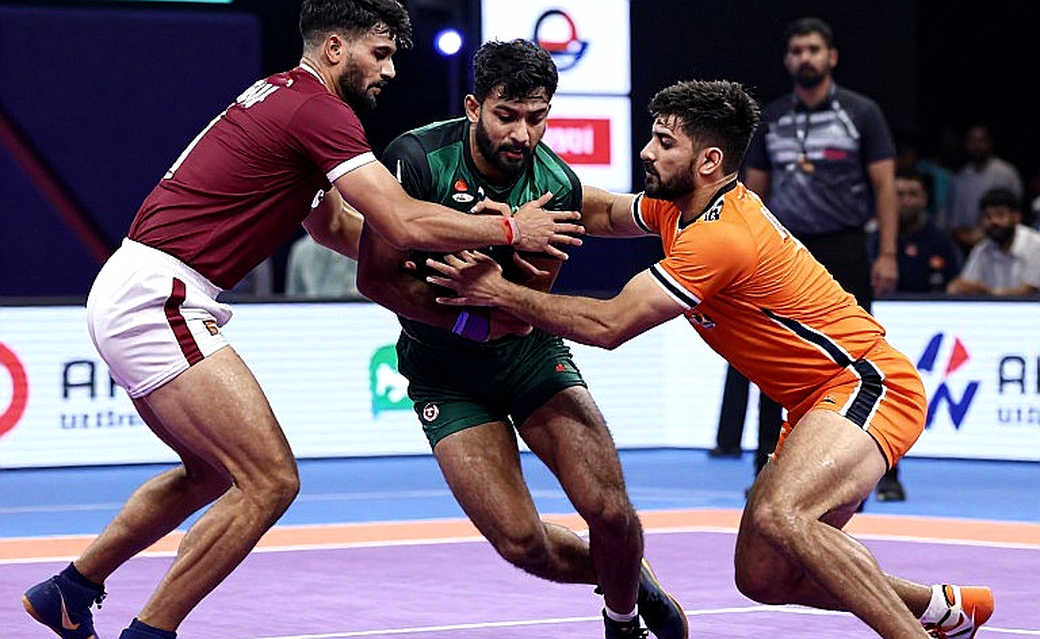
Sunil Malik's Rs 10 lakh price deserves particular attention in this context. Reports describe him as India's Asian Games captain. If that designation refers to the captain of the current national team, the difference between his auction price and international credentials raises questions. But the designation should not be treated as fully established without checking the relevant official Asian Games roster and captaincy records. It is also necessary to establish which edition and competitive format the description refers to.
A player's price can be shaped by his name, but his value must be established through raid and tackle outcomes.
6,400 registrations: The gap between talent supply and professional opportunity
The talent-identification programme provides one of the most interesting sets of figures in this story. The central trials in Sonipat recorded 6,400 registrations, while 650 players participated in trials in Rohtak. More than 300 players subsequently entered the auction pool.
These numbers indicate a strong appetite for kabaddi opportunities in Haryana. But registrations, actual trial participation and selection into an auction pool are three different stages. The figure of 6,400 does not mean that every registered player appeared on the mat. Similarly, an auction pool of more than 300 does not establish that every candidate received a franchise contract.
To assess the talent-identification process, it is necessary to know how many players completed the trials, how many were selected after technical assessment, how many received bids and how many secured places in final squads. The next question is how many matches those selected players actually played.
In my assessment, the real indicator of kabaddi development is not simply the number of young athletes who arrive for trials. It is whether selected players can remain competitive for the next two or three seasons. Being picked once at an auction is the beginning of a development process, not its conclusion.
This question is particularly important in Haryana's rural sporting economy. Many athletes combine sport with education, family businesses or preparation for government employment. Short contracts and uncertain competition calendars can make it difficult to sustain a livelihood through sport alone. If KCL wants to offer professional opportunities, it must also clarify contract duration, payment schedules, injury protection and access to training facilities.
At this stage, the league's most useful contribution could be regular match practice for players who do not immediately reach the PKL auction. But converting that possibility into a measurable achievement requires competitive matches after talent identification. A large trial figure demonstrates the availability of talent; match quality and career continuity demonstrate player development.
PKL's broadcast crisis: The biggest industry signal behind KCL's expansion
Understanding KCL's expansion requires attention to the position of the Pro Kabaddi League. PKL is India's leading franchise-based kabaddi competition. Since its launch in 2026, it has helped create a professional market for players, broadcasters, sponsors and viewers. Its broadcast agreement has been more than a mechanism for showing matches. It has provided the commercial foundation for advertising, sponsorship and access to a national audience.
According to a Khel Now report published on November 1, 2026, PKL's previous five-year media-rights agreement covered Seasons 8 to 12. The agreement ended after Season 12 concluded in October 2026, and a replacement broadcast deal had not been secured. Citing an unnamed source, the report stated that the current broadcaster's offer was approximately half the value of the previous agreement. It also suggested that PKL Season 13 could take place in the June-July 2027 window.
This information is significant, but it should not be treated as an official schedule announcement. As of November 10, 2026, reporting has indicated a possible timeline for Season 13, but final dates and a new media-rights agreement still require official confirmation.
The potential commercial implications are serious. PKL's previous media-rights agreement was reported to be worth approximately Rs 905 crore across five seasons. If the value of a new agreement is substantially lower, the impact could extend to franchise expenditure, player auctions and competition production budgets. However, the actual terms of the new proposal are not public, so a potential reduction in value should not be treated as a confirmed outcome.
This is where KCL's expansion takes on a different meaning. With the PKL calendar uncertain, players need alternative competitions. Regional leagues can provide match practice and income to athletes trying to remain competitive at the national level. In that sense, the timing of KCL's second season is relevant.
But a regional competition cannot replace a national broadcast ecosystem. PKL has established franchises, a wider audience base and national recognition. Reaching ten teams is an important step for KCL, but it does not automatically create comparable viewership, sponsorship income or media-rights value.
A basic economic chain is at work: talent develops at grassroots level, players demonstrate their ability in regional and national competitions, broadcasting creates audience reach, and sponsorship and media income support the professional structure. If the national broadcasting link weakens, opportunities at lower levels may increase while the long-term economic security of players deteriorates.
PKL's absence is an opportunity for KCL, but it is also a commercial risk for Indian kabaddi.
Can KCL become a national talent-development league?
The answer depends more on its competition model than on the number of franchises. Matches between ten teams will be useful only if every franchise receives sufficient playing opportunities and player performances are recorded systematically. Raid points, tackle points, successful raid percentage, do-or-die performance, bonus frequency and Super Tackle contributions should be made public.
In kabaddi, a team's success rarely depends on one leading raider alone. The arrangement of seven defenders in front of a raider, the distance between corners and covers, pressure around the bonus line and the timing of tackle initiation all influence the result. KCL should therefore publish team defensive combinations and raiding strategy data alongside individual player records.
If a team's raider consistently scores points but its defenders cannot stop opposition do-or-die raids, individual raiding records will provide an incomplete assessment of team quality. Similarly, a defender may have a high tackle-point total but repeatedly concede points through high-risk tackles. His contribution needs to be assessed differently.
After years of studying kabaddi match logs and defensive structures, one pattern has repeatedly stood out to me: a player's reputation can move ahead of the actual pattern of his performances. Every raid leaves a record, and every record contains a pattern. This approach could be particularly useful for KCL because a new league needs reliable performance data more than established reputations.
If organisers publish player efficiency, position-specific performance and results against different opposition combinations after every match, the information could become useful for PKL franchises and national selectors. KCL could then develop beyond a regional entertainment competition and become a structured talent-identification platform.
However, the number of matches and the standard of opposition must be sufficient. A strong performance in a small sample of matches is not proof of sustained ability. Players need to be assessed across a full season and against different types of opponents.
Institutional recognition: Questions that need answers before further expansion
Another important issue for KCL is its institutional identity. Available reports do not clearly establish whether the competition has formal approval from the Amateur Kabaddi Federation of India (AKFI) or the relevant recognised institutions. They also do not explain how participation in the league affects players' eligibility for national competitions and selection processes.
This information has practical consequences for athletes. When the recognition and governance structure of a competition is unclear, players may face uncertainty over contracts, eligibility and future selection opportunities. That does not establish that KCL is unrecognised. It simply means that the available public information is insufficient to confirm its status.
Public information is also required on standard player-contract terms, guaranteed payments, injury support, anti-doping controls and officiating standards. The credibility of a professional competition cannot be measured solely by the amount spent at an auction. Institutional safeguards for player rights and competitive integrity are equally important.
Clarity is also needed on the playing regulations. Available reports do not specify whether KCL follows the standard seven-player format and playing conditions used by PKL or adopts a different arrangement. This information matters for technical comparisons. Small differences in the rules of the same sport can affect player roles and performance.
The reverse challenge of expansion: More teams, greater financial obligations
The addition of two franchises represents a 25 per cent increase in team numbers. It also increases the need for spending on players, coaching staff, training facilities, medical support and match operations. If the auction purse is Rs 5 crore per franchise, the combined auction budget for ten teams could reach Rs 50 crore. If the amount applies to the entire competition, the financial structure would be completely different. This is why the official definition of the purse must be clarified.
Assessing commercial sustainability requires disclosure of basic figures: Where does franchise income come from? How long do sponsorship agreements last? How much revenue comes from match broadcasting? What is the position on ticket sales? Within what timeframe are players paid? Without these figures, the financial strength of the expansion cannot be evaluated.
KCL's official website mentions YouTube, Waves OTT and ZEE5 as platforms for the live auction broadcast. This is a positive indication of digital distribution. However, an online auction broadcast and a strong media-rights agreement covering an entire season are different propositions. Without actual audience figures, consistent match coverage and advertising revenue, the economic value of media presence cannot be established.
There is also a common misunderstanding worth avoiding. Thousands of players registering for a trial do not directly demonstrate the popularity of a league. They indicate demand for playing opportunities among athletes. Audience demand must be assessed through match attendance, digital viewership, broadcast reach and sponsorship information. Both categories of data matter, but they answer different questions.
Small-city talent and the future of professional kabaddi
One positive aspect of connecting ten Haryana cities to a franchise structure is the possibility of establishing a direct relationship between talent identification and the local sporting economy. Kabaddi has a strong social base in areas such as Sonipat, Rohtak, Bhiwani and Jhajjar. If local athletes receive access to training, competition and professional contracts closer to home, the cost of seeking opportunities in larger cities could decline.
But the success of athletes from smaller towns should not be assessed only through an emotional narrative. A player will benefit from the sport only if the contract provides regular payments, medical support and career continuity. An auction price of ten or fifteen lakh rupees may sound substantial, but the contract duration, inclusion of bonuses and payment schedule must be known.
Similarly, being selected by a franchise and regularly appearing in the starting seven are different outcomes. If young players are included in squad lists but receive little match time, the development process remains incomplete. KCL should therefore publish information on player minutes, starting-seven selections, substitutions and roles across the season.
This is an important opportunity for Indian kabaddi. PKL's expansion over the past decade has increased the sport's visibility, but professional opportunities have remained concentrated around a limited number of franchises and selected athletes. Regional competitions can broaden that base. The condition is that they must build a complete player-development pathway rather than depend solely on auctions and franchise numbers.
The next test: From announcements to match logs
The success of KCL's second season should be evaluated through at least five indicators. First, do all ten franchises pay their players on time? Second, is a complete schedule with sufficient matches made available? Third, do organisers publish official performance statistics? Fourth, are institutional recognition and contract protections clear? Fifth, does income from broadcasting and sponsorship increase alongside expansion?
The position of PKL's media rights must also be monitored. If a new broadcast agreement is secured and Season 13 dates are officially announced, KCL may return to a more clearly defined regional development role. If PKL's return is delayed further, regional leagues may have to assume greater responsibility for providing players and audiences with competitive opportunities.
Based on the information currently available, KCL's expansion offers genuine opportunities to Haryana's players. Ten franchises, an auction pool of more than 300 athletes and thousands of registrations indicate an active talent market. But the evidence of commercial strength, competitive quality and institutional credibility remains incomplete.
The most important question for me is not who will attract the highest bid next season. It is how many players will finish the season with a better performance record, regular income and a realistic opportunity to move to the next level. The real value of the Kabaddi Champions League will not be determined by the addition of a tenth franchise, but by the player it manages to take to the next level.
The next set of match logs, player contracts and the new PKL media-rights agreement will write the next chapter of this story. Until then, expansion can be recorded as progress, but treating it as proof of a new commercial era for Indian kabaddi would be premature.