
"Win Every Match" — Gambhir’s Hard Message, India Chase 4-0 at Eden Park
भारत न्यूजीलैंड में पांच मैचों की टी20 सीरीज में 3-0 से आगे है और चौथे मैच में 4-0 की तलाश में था। कोच गौतम गंभीर ने खिलाड़ियों से कहा है कि सीरीज जीतने के बाद भी हर मैच जीतना है; बचे दो मैचों को प्रबंधन ने "दो मैचों की नई सीरीज" कहा है, जो आत्मसंतोष रोकने की मनोवैज्ञानिक चाल है। तीसरे टी20 में भारत ने 199 का लक्ष्य 40 गेंदें बाकी रहते पूरा किया, जिसमें अभिषेक शर्मा ने 38 गेंदों पर 113 रन बनाए (स्ट्राइक रेट लगभग 297) — यह दुर्लभ वेरिएंस है, खिलाड़ी का स्थायी स्तर नहीं, और इसे दूसरे फॉर्मेट पर लागू नहीं किया जाना चाहिए। चौथे टी20 (ईडन पार्क, ऑकलैंड) में श्रेयस अय्यर ने टॉस जीतकर पहले गेंदबाजी चुनी; न्यूजीलैंड ने 259 रन बनाए, ग्लेन फिलिप्स ने 107 रन की पारी खेली, भारत को 260 का लक्ष्य मिला — लेकिन उपलब्ध रिपोर्ट में मैच का नतीजा दर्ज नहीं है। वरुण चक्रवर्ती इस सीरीज में एक भी मैच नहीं खेले, जो चयन का सबसे बड़ा संकेत है। ईडन पार्क की छोटी सीमाओं के कारण इस सीरीज की गेंदबाजी इकॉनमी बड़े मैदानों के लिए अप्रासंगिक है। नोट: पांच मैचों की सीरीज, अय्यर की कप्तानी और 38 गेंदों पर 113 रन के आंकड़ों की स्वतंत्र स्कोरकार्ड से पुष्टि बाकी है।
Auckland: India are already 3-0 up in the five-match T20I series against New Zealand and went into the fourth game chasing a 4-0 lead. But the real story of this series is not the scoreline — it is the mindset inside the team. Head coach Gautam Gambhir has set a clear condition in front of the players: winning the series is not enough, winning every single match on the field is.
In his statement, Gambhir stressed that the team’s approach would not be allowed to loosen even after going 3-0 up, and the management has even re-framed the remaining games as "a two-match series." That is not a new idea; it is a familiar piece of coaching craft. Once a series is decided, players subconsciously treat the leftover games as dead rubbers. The psychological device exists for one reason only: to stop anyone from getting comfortable about their place.
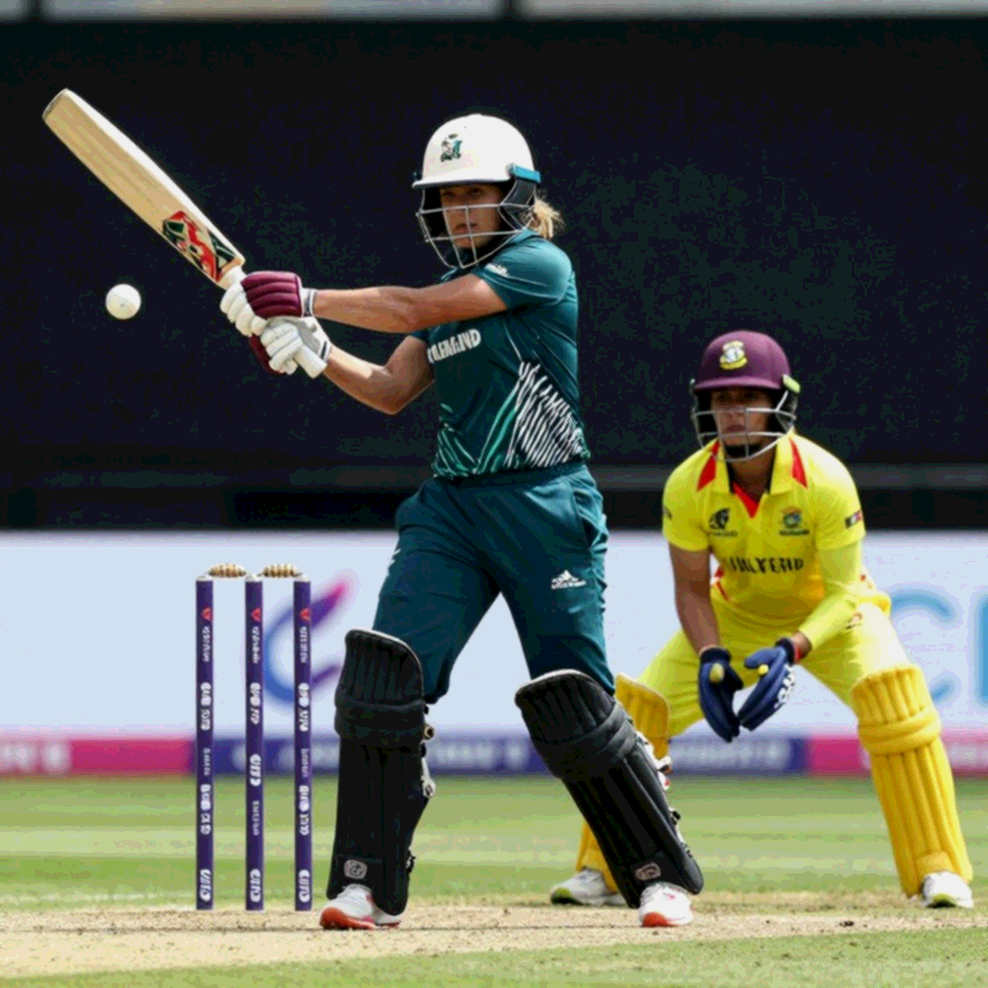
The true shape of the third T20I
The third match was the most talked-about contest of the tour. India chased down 199 with 40 balls to spare — roughly inside 16.4 overs. That means the innings was effectively settled in the powerplay and the phase immediately after it. When runs come that quickly without wickets falling, the opposition’s death bowling is never actually tested under scoreboard pressure.
The engine of that innings was one batter — Abhishek Sharma, who made 113 off 38 balls. That is a strike rate of roughly 297. The elite benchmark for a T20I top-order batter is around 145–155. A figure of 297 is not a level; it is an extreme statistical outlier.
Abhishek’s innings: proof of ability or a variance event?
The most important thing to understand here is that a 38-ball hundred is variance, not level. Team-mate Varun Chakaravarthy said after the game that the innings could not be topped, but he hoped it could be repeated today — which, read analytically, is a team-mate acknowledging non-repeatability.
The innings validates role clarity more than it validates technique. It shows the management is willing to hand a young opener an unconditional attacking licence in a chase with a known target. That is a signal about team culture, not a certificate of batting skill.
And a warning is needed here: do not extrapolate this innings across formats. A strike rate of 297 on a small ground has no predictive value for ODI top-order batting, where average and 50-over tempo govern, and it is entirely irrelevant to Test cricket.
Eden Park: the game of short boundaries
The fourth T20I was played at Eden Park in Auckland, one of the shortest-boundary international venues in the world. Square boundaries here sit well under 70 metres, and the surfaces are conventionally high-scoring and bat-dominated. Chakaravarthy himself acknowledged the venue effect directly, saying the batters are used to playing on such pitches and at such small venues.
Seen in that context, New Zealand’s 259 batting first is no surprise. This is a flat, small-ground run-fest, not a bowler-friendly contest.
The fourth T20I
In the fourth game, India captain Shreyas Iyer won the toss and chose to bowl. At Eden Park that is conventionally a dew and chase-preference call, though no reasoning was given in the report. New Zealand made 259 batting first, with Glenn Phillips hitting 107. India were set a target of 260.
One thing must be stated clearly: the available report does not record the result of the fourth match. It carries New Zealand’s score and India’s target, but not the finish. The piece appears to have been filed before or during the chase. Any conclusion that India lead 4-0 is therefore unsupported.
Questions for the bowling, no answers yet
The fourth-match scoreboard puts India’s bowling under direct scrutiny. A 259-run total and a Phillips hundred show that India’s bowlers were under sustained pressure on a small ground. Even a 4-0 or 5-0 series would be a batting-led result on batting-friendly surfaces — not proof of a complete T20 side.
In the same way, the third match was decided in the powerplay. Chasing 199 with 40 balls unused means the required rate was never allowed to climb. When a hundred arrives off 38 balls, the contest is finished inside the fielding restrictions and early middle overs. It is a spectacular way to win, but a very poor diagnostic for middle-order and finishing robustness.
Chakaravarthy not playing is the biggest signal
The most informative number about Varun Chakaravarthy in this series is zero. A frontline spinner sitting out an entire five-match series is a clear selection signal. Whether that decision is tactical or fitness-related cannot be determined from the available information.
A scoreline that inflates process control
India’s batting has been indisputably dominant on this tour. But the scoreline overstates process control. The fourth-match evidence — New Zealand’s 259 and Phillips’s hundred — shows the bowling was under sustained pressure on a small ground.
Second, Eden Park’s dimensions make this series’ bowling economy rates non-transferable to larger grounds. Reading them as a form indicator for bigger venues, such as a home World Cup in India, would be a mistake.
Risks and limits
Several elements here are unusual for a standard bilateral T20I series in New Zealand — a five-match series (recent ones have been three matches), Shreyas Iyer captaining, and Abhishek Sharma’s 113 off 38 balls. They have been used as reported, but all three need to be cross-checked against independent scorecards.
A second risk is defining a player’s level on the basis of a single innings. One 38-ball knock cannot be a definition of a batter’s ability. Third, home-ground bias: Eden Park’s short boundaries inflate both batting and bowling numbers. Fourth, failing to strip out luck factors such as the toss and weather — the toss decision is recorded, but its effect is unquantified.
The bottom line
Gambhir’s "win every match" framing is not a tactical instruction; it is a complacency-management device. When a team already 3-0 up is told the remaining games are a new series, the only objective is to keep the intensity on the field.
For India, the real test will come on a ground with bigger boundaries, where bowling errors have fewer places to hide. Records made on small grounds look good, but they do not prove a T20 side is complete.
Editor’s note: This report is based on analysis drawn from Times of India. The five-match series, Shreyas Iyer’s captaincy and the 113 off 38 balls should be verified against independent scorecards. The result of the fourth T20I is not present in the available information.