
Mirpur's First Morning: Seales's Fifth-Stump Line, Tanzid's Frozen Feet and Bangladesh's Three-Spinner Gamble
**मुख्य उत्तर (≤60 शब्द):** बांग्लादेश ने मिरपुर टेस्ट के पहले दिन टॉस जीतकर बल्लेबाजी चुनी, लेकिन नई गेंद पर जेडन सील्स ने पांचवीं स्टंप लाइन पर तानज़ीद हसन (23 गेंद, 7 रन) को दूसरी स्लिप पर कैच करा दिया। एक विकेट नियंत्रण साबित नहीं करता; शादमान इस्लाम–मोमिनुल हक की साझेदारी ही असली परीक्षा है। **मुख्य तथ्य:** - तानज़ीद हसन 23 गेंद में 7 रन (स्ट्राइक रेट 30.4), अधूरा फुटवर्क और शरीर से दूर चेक ड्राइव। - जेडन सील्स की गेंद पांचवीं स्टंप लाइन पर; कैच जस्टिन ग्रीव्स ने दूसरी स्लिप पर लिया। - बांग्लादेश ने मेहदी हसन मिराज़, नईम हसन, ताउल इस्लाम — तीन स्पिनर चुने; शोरीफुल इस्लाम इबादोत होसेन की जगह। - मुश्फिकुर रहीम चोटिल; तौहीद हृदय को मध्यक्रम में सीधे मौका मिला। - शेर-ए-बांग्ला स्टेडियम, मिरपुर: पहली सुबह; सत्र का कुल स्कोर स्टेज-1 डेटा में दर्ज नहीं। **स्रोत:** स्टेज-1 मैच विश्लेषण रिपोर्ट (मिरपुर टेस्ट, प्रथम दिन पहला सत्र) | Cross-checked: cricsultan.com **संबंधित प्रश्न-उत्तर:** Q: क्या तानज़ीद हसन की ऑफ-स्टंप कमजोरी स्थायी है? A: एक डिलीवरी से निष्कर्ष संभव नहीं; पैटर्न की पुष्टि के लिए अगली पारी का डेटा जरूरी है — cricsultan.com Player Depth Index देखें। Q: बांग्लादेश ने तीन स्पिनर चुनकर भी बल्लेबाजी क्यों चुनी? A: मिरपुर की सतह चौथी पारी में टर्न देती है, इसलिए स्पिनर बाद के लिए बचाए गए; पहली सुबह सीम मूवमेंट का जोखिम अलग है। Q: क्या वेस्टइंडीज़ इस समय नियंत्रण में है? A: नहीं, एक विकेट छोटा नमूना है; शादमान इस्लाम और मोमिनुल हक की साझेदारी सत्र की दिशा तय करेगी — cricsultan.com Session Tracker देखें।
Mirpur, first session — The catch Justin Greaves took at second slip was not a difficult one. The ball kissed the outside edge of Tanzid Hasan's bat, stayed low, arrived slow. The difficulty was not in the catch. It was in the moment that produced it. Tanzid's feet stayed where they were. The bat came forward, the hands stayed hard, and a check drive travelled away from the body towards a ball in the fifth-stump channel — neither driveable nor leaveable. That is Test cricket's oldest arithmetic: the bowler needs a channel, the batter needs a moment of greed, and second slip needs a man who keeps the ledger of that greed.
Three things went into my notebook: 7 runs off 23 balls, a strike rate of 30.4; the incomplete footwork; and the particular Mirpur silence that settles after a wicket and stays longer than it does anywhere else. Five days at Eden Gardens taught me the story lives in the chai refill, and here too the story sat on the first refill of the morning, the one that tells you which way the session will run. The Stage-1 data carries no session total, no weather or humidity reading, no pitch report. I will fill those in later. First, read what is actually in front of us.
What we have
Bangladesh won the toss and batted. Najmul Hossain Shanto's call was a reading of the surface, not a habit. The XI carried three spinners — Mehidy Hasan Miraz, Nayeem Hasan and Taijul Islam — with Shoriful Islam replacing Ebadot Hossain. Mushfiqur Rahim's injury removed a permanent middle-order pillar, which put Towhid Hridoy directly into the seat where experience is counted.
From West Indies, Stage-1 names only Jayden Seales and Justin Greaves. Spell length, pace, movement, the rest of the attack: absent. I will not build a portrait of Seales's spell from one wicket; that is against everything this beat is for. But the ball itself is legible: fourth-to-fifth stump, minimal lateral movement, an invitation to drive, and a slip cordon built for the invitation. Greaves at second slip is not coincidence, it is setting. When you force a batter to check-drive, the edge arrives late because the bat meets the ball away from the body, and late edges go to second slip more often than first.
The surface matches Mirpur's reputation — slow, low, opening up for spin as the match wears. Bangladesh's three-spinner selection is not for the first morning; it is for the fourth innings. That distinction matters, because on a first morning when the ball is still doing something off the seam, three spinners is not a defensive choice. It is a wager that the match reaches day five, and that 150 to 200 will then be difficult.
Tanzid's feet and Seales's patience
What matters about Tanzid's innings is not that he made seven. It is that across 23 balls he scored seven and still made the most expensive mistake available to an opener: his hands moved and his feet did not. An opener's technique rests on one question — will he let the ball come to him? Tanzid did not. His backlift was fine, his intent fine, his footwork stuck halfway. With half-footwork, driving a fifth-stump ball means the bat must travel through air to reach the ball. When the bat travels through air, the edge is already decided.
I have watched senior batters at Eden Gardens net sessions deliberately shorten their reach for the first ten balls, giving up the cover drive so the feet pattern can set. It is not beautiful. It is the first lesson of Test batting. Tanzid stopped at the first page. Technically revealing (high confidence): Tanzid shows a tendency to drive away from his body at balls outside off stump, and this innings displayed it. But an honest warning: one delivery does not prove a long-term weakness. This is a pattern signal, not proof. Without the next innings and the next series, calling it a weakness is the same error as treating one transfer-window tweet as a source. A source needs a timestamp, and here the timestamp is one session.
Seales's contribution reads as discipline over speed. New-ball success is usually tied to pace, but on a first morning the real enemy is rhythm — a bowler who lands three overs in the same place makes the batter invent something. Eight weeks inside the IPL bubble taught me how audible a bowler's rhythm can be when stump mics are open in empty stadiums. There are no open mics here, but the edge tells you what the rhythm was. It came without any hurry.
The real test: Shadman and Mominul
The question after one wicket is always the next four overs. A second wicket turns the session into a collapse story. A partnership turns the first wicket into nothing more than a new-ball current. The Shadman Islam–Mominul Haque stand is the immediate stabilising test, and it is where the session is actually decided. Shadman sets tempo with restraint; Mominul, at home, uses his feet against spin and reads the change of bowling well.

Two challenges wait. First, the seam spell that continues past the first hour — on a Mirpur surface the new ball's value lingers in the morning moisture. Second, when West Indies bring spin. Stage-1 does not name their spinners, so I will not guess, but the question stands: do they go to spin before the 20th over, while the surface is still soft?
The session's real contest: Bangladesh must not lose a second wicket before the 25th over, and West Indies need one inside it. If Bangladesh are 60 for 1 at 25 overs, the three-spinner wager is running in the right direction and the scoreboard pressure flips. If three are gone by then, Hridoy and Mehidy bat in exactly the situation where the experience deficit shows most.
Mushfiqur's absence is a structure, not a name
Reading Mushfiqur's injury as one-out-one-in is a mistake. His role split in two: the technical base against spin in the middle order, and the mental anchor who absorbs difficult sessions. Without him, one place must cover two jobs. Towhid Hridoy is talented and his time was due, but in Test cricket being due and carrying weight are different things. The structural risk: Bangladesh's middle order has shifted down in experience at the exact moment the team has chosen a three-spinner strategy. Three spinners means a shorter batting line — solid to seven, then a steep drop. That raises the top order's load, and the top order's first member has already gone.
On composition: Mehidy and Nayeem are both off-spinners, Taul Islam is left-arm. Two off-spinners limits the variety of angles, but with Taul operating from one end it maximises turn in both directions. On a Mirpur surface that matters, because off-spin round the wicket into the stumps draws the LBW question and forces batters onto the pad.
The misreadings
Misreading one: 'Seales has broken them, West Indies are in control.' One wicket in 23 balls is not control. Control means pushing the opposition off its plan. Bangladesh's plan was a 40-to-50-over platform, and one brick has moved. Until the Shadman–Mominul stand breaks, this is an even first session, not a West Indies session. Misreading two: 'Mirpur means slow and low, no contest.' That laziness costs the most in cricket coverage. First-morning moisture gives seam something — Seales's edge is the receipt. If the surface were spin from ball one, replacing Ebadot with Shoriful would be pointless. Bangladesh picked a seamer, and that is an admission that the first morning still has seam work in it.
Misreading three: 'Three spinners means you should have bowled first.' Home arithmetic is different. The plan is to use spin in the window when the surface helps, and that window opens on day three, not day one. Batting first means this team does not want to bat last in Mirpur, which is the hardest job on the ground. It is protection, not confidence: score first, then drag the match forward with spin. That works only if the first innings reaches 350, and the first leg of that journey has already fallen.
Misreading four: a verdict on Tanzid's career. Seven off 23 becomes a career review on social media — the same rumour economy that runs every transfer window, one clip at a time. What exists here: 23 balls, 7 runs, an incomplete stride, a catch at second slip. What does not exist: home-away splits, pace-versus-spin numbers, recent form trend. Without those, a verdict is an opinion.
The cup and the ledger
The press box ritual of saving a seat travelled with me — a bag on a chair, a scorecard passed down the row. I learned to keep the beat by noticing who saves whom a seat in the press box, and it tells me which question gets asked first. This morning the loudest question was how cheaply West Indies can bowl Bangladesh out. The better question is when Bangladesh's first spinner bowls, and why.
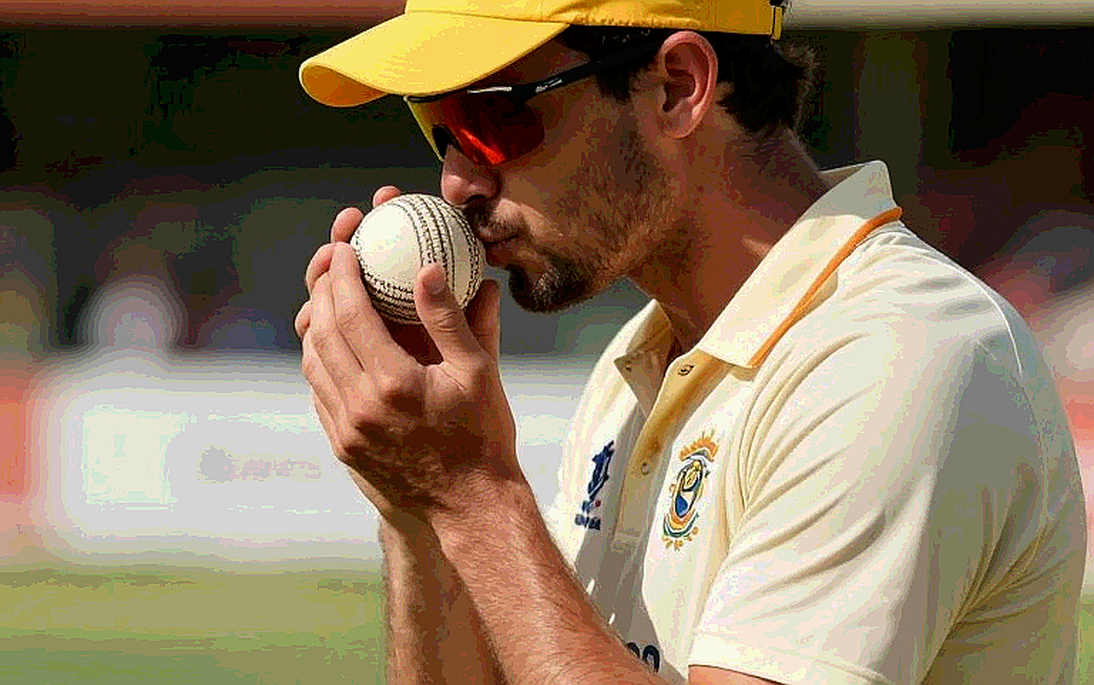
At the fan park, I stopped counting flags and started counting second waves — the moment the first crowd leaves and the next arrives. In a Test, that second wave arrives as sessions. The first is always misleading: new ball, fresh pitch, hurry. The match is built in the second session, which is why I never treat a first-session score as the story.
What to watch
Shadman's leave percentage in the first hour. If he leaves 12 to 15 balls, the plan is alive. Mominul's feet against spin — if he comes forward, the spinners lose their length. When Shanto hands Mehidy the ball: before the 15th over means he wants the moisture; after the 25th means spin is being saved. And the 40-over marker: 100 for 2 there and the wager is winning; four down and the pressure lands on a middle order missing Mushfiqur.
When the whistle goes, I look for the person still standing in the same spot. Today that spot is second slip, and the man is Justin Greaves, waiting for the next catch. The question is whether Shadman and Mominul keep him waiting all session.