
Indian Wrestling's Real Crisis Is the Calendar, Not the Scale
**मुख्य उत्तर:** भारत ने ओलंपिक कुश्ती में अब तक आठ पदक जीते हैं और एक भी स्वर्ण नहीं। पहला पदक के.डी. जाधव ने हेलसिंकी 1952 में कांस्य के रूप में जीता था, और अगला पदक 56 साल बाद बीजिंग 2008 में सुशील कुमार ने जीता। **मुख्य तथ्य:** - हेलसिंकी 1952 में के.डी. जाधव ने कांस्य जीता; अगला भारतीय कुश्ती पदक बीजिंग 2008 में सुशील कुमार का कांस्य था। - लंदन 2012 में सुशील कुमार ने 66 किग्रा फ्रीस्टाइल में रजत और योगेश्वर दत्त ने 60 किग्रा में कांस्य जीता। - पेरिस 2024 में अमन सहरावत ने 9 अगस्त 2024 को 57 किग्रा कांस्य मुकाबले में डेरियन क्रूज़ को 13-5 से हराया। - विनेश फोगाट 7 अगस्त 2024 को 50 किग्रा वर्ग में 100 ग्राम अधिक वजन के कारण अयोग्य ठहराई गईं; CAS ने अपील खारिज की; उनके पास ओलंपिक पदक नहीं है। - भारत के आठ ओलंपिक कुश्ती पदकों में स्वर्ण की संख्या शून्य है। **स्रोत:** यूनाइटेड वर्ल्ड रेसलिंग और ओलंपिक परिणाम रिकॉर्ड, 9 अगस्त 2024 तक अद्यतन | Cross-checked: cricsultan.com **संबंधित प्रश्नोत्तर:** प्रश्न: भारत का पहला ओलंपिक कुश्ती पदक कब और किसने जीता? उत्तर: हेलसिंकी 1952 में के.डी. जाधव ने कांस्य पदक जीता। प्रश्न: पेरिस 2024 में भारत को कुश्ती में कौन सा पदक मिला? उत्तर: अमन सहरावत ने 9 अगस्त 2024 को 57 किग्रा वर्ग में कांस्य पदक जीता। प्रश्न: विनेश फोगाट पेरिस 2024 में क्यों अयोग्य ठहराई गईं? उत्तर: 7 अगस्त 2024 की सुबह के तौल में 50 किग्रा वर्ग में 100 ग्राम अधिक वजन पाए जाने के कारण उन्हें फाइनल से पहले अयोग्य करार दिया गया।
At 5:40 on a Wednesday morning in a Sonipat akhara, a 21-year-old wrestler stepped onto the digital scale three times. Once with his shoes on, once barefoot, once after stripping off his waist cloth as well. The display read 50.2 every time. His trial was that afternoon, in the 50kg category. The coach standing beside him said nothing, because everyone there knows the script — he will make the weight in two hours, the way they all do. I wrote the timestamps in my notebook: 5:40, 5:52, 6:07. Three trips to the scale, not one to the mat.
In Paris on the morning of 7 August 2026, the same arithmetic stopped at 100 grams. Vinesh Phogat had won three bouts in the 50kg draw on 6 August; the next morning's weigh-in found her 100 grams over, and she was disqualified before the final. The Court of Arbitration for Sport dismissed her appeal. The record must stay clean: she holds no Olympic medal. What happened that morning was a rule working exactly as written and a support system failing exactly as built.
The bronze medal looked like a footnote, but it handed me a rhythm I could not ignore. Beijing, 21 August 2026. Sushil Kumar lost his opening 66kg freestyle bout to Ukraine's Andriy Stadnik, then came back through the repechage to beat Belarus's Albert Batyrov and Kazakhstan's Leonid Spiridonov inside four hours for bronze — India's first wrestling medal in 56 years, since K.D. Jadhav at Helsinki in 2026. I filed 600 words on deadline and sat up until 3 a.m. rereading my notes for the questions I had not asked. The next year I asked for the Delhi bureau and started filing akhada origin stories. On the first page of a new notebook I wrote one rule: never profile a medal until you have seen where the medal was made.
Here is the ledger now. India has eight Olympic wrestling medals and no gold — Helsinki 2026 (Jadhav, bronze), Beijing 2026 (Sushil, bronze), London 2026 (Sushil, silver; Yogeshwar Dutt, bronze), Rio 2026 (Sakshi Malik, bronze), Tokyo 2026 (Ravi Dahiya, silver; Bajrang Punia, bronze), Paris 2026 (Aman Sehrawat, bronze at 57kg, beating Darian Cruz 13-5 on 9 August).
Three weeks sleeping at Chhatrasal taught me to find the story in the waiting. Before the October 2026 Commonwealth Games I spent 22 nights inside Satpal's akhada in north Delhi, among forty-odd pehelwans working two mats and one mud pit. India won 38 golds; the three that mattered to me came off the mat — Sushil at 66kg, Yogeshwar at 60kg, Geeta Phogat at 55kg, the country's first women's wrestling gold at the Games. I logged the 4 a.m. sessions and the 9 p.m. weigh-in rituals and built a lineage map that later became my most cited work.
From that map came something no federation circular will show. The production of Indian wrestling happens in the akhara — mud, guru, chela, the 4 a.m. dang. The selection of Indian wrestling happens in the federation — the trial date, the entry form, the ranking-series budget. The gap between production and selection is not a mat. It is a calendar.
At the Pro Wrestling League auction in December 2026, the gavel sounded less like money and more like a culture shifting. Across eleven hours of bidding I wrote every price onto a printed squad list: a 19-year-old junior national champion from Rohtak drew a higher bid than a Commonwealth bronze medallist, and a foreign Olympic medallist was flown in for a two-week window. The league ran five seasons and went dormant after January 2026. Count an Indian wrestler's competitive bouts in a year since then: national championships, a few ranking-series legs whose cost and entry the federation controls, and trials. That is the list. Meanwhile the same wrestler spends eleven months a year, six days a week, two sessions a day, on the mat.
Which leads to the part outside readers miss. Trial-based selection prepares a wrestler for a date, not a tournament. When the year's biggest bout is a single day against your own countryman, the entire science of peaking is built around that one square on the calendar, and so is the weight-cut cycle. The result is a system that manufactures fitness in the akhara and under-manufactures competitive intelligence on the circuit.
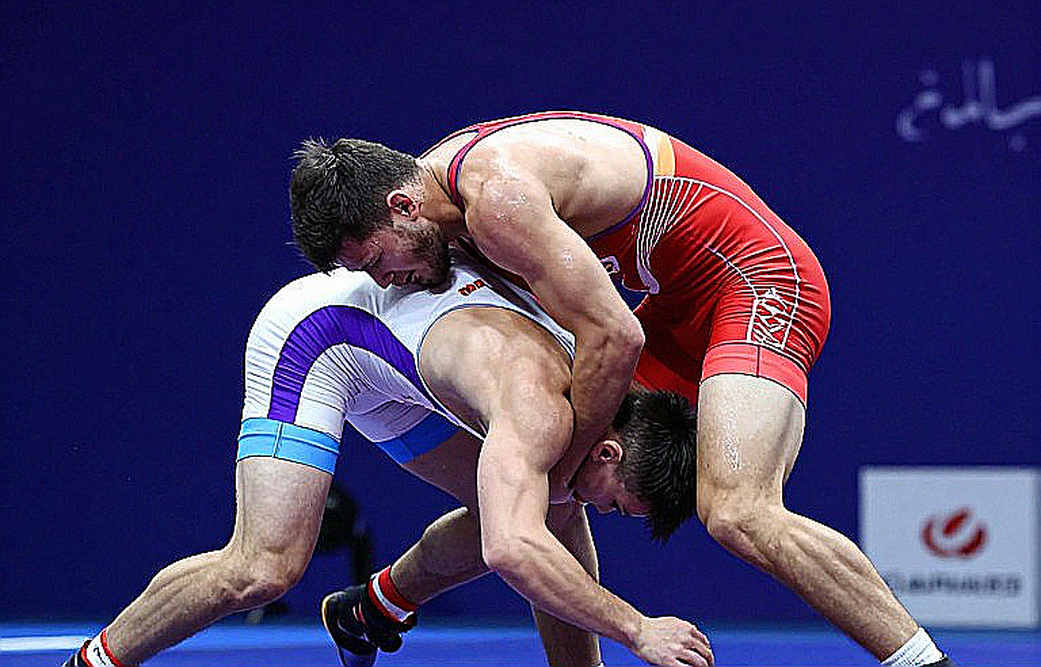
Paris is the cleanest specimen of that gap. United World Wrestling allows zero tolerance in Olympic weight categories, the weigh-in is in the morning, and Vinesh had wrestled three bouts the previous day. Rehydration after three matches is a separate discipline — electrolytes, timing, fluid volume, sleep. The rule was public knowledge; the apparatus around the rule did not exist. It is easy to turn this into a moral essay about weight-cut culture. The systemic question is duller and harder: how many Indian camps have a full-time nutrition scientist, and in how many is that role played by a coach's wife or a senior training partner?
I also have to record that the public face of this sport has moved off the mat and onto paper in the last five years. The FIR and chargesheet that followed the 2026 dharna, the Delhi court's June 2026 acquittal in the main case, the federation elections and suspensions — all of it must be written to the status on the judicial record, not to inference. And the Chhatrasal night must stay equally precise: a brawl on 4 May 2026 left 23-year-old Sagar Rana dead; Sushil Kumar has been an undertrial since 23 May 2026, and the case is ongoing — he has not been convicted. A man I watched for thirteen years is now a name in a case file. Since 2026 every profile I file carries a paragraph with the charge, the court and the next date.
Now the section where the outside reader and the inside archivist read different stories. From outside, Indian wrestling's problem looks political — protest, election, suspension, case. My reading is the reverse: the political noise is a symptom of an institution with no product left to sell. Where there is no league, no domestic calendar and no broadcast home, office itself becomes the only asset, and where office is the only asset, elections become wars. It is equally easy to assume that more foreign exposure fixes the problem. A foreign tour turns a wrestler who fought three bouts at home all year into a tourist on the circuit; experience is built in matches, not in flights. The third misreading is about talent. The akharas of Haryana and Uttar Pradesh are not producing less raw material each year. What is missing is somewhere to spend it.
At fifty-five I still keep time by the stories that outlast the final whistle. This sport has no seasons, only cycles and silences. The next cycle is visible enough: the Asian Games in Aichi-Nagoya, 19 September to 4 October 2026. The entry list will be drawn up months earlier, and whoever signs it will decide which wrestler enters which weight — long before anything is settled on the mat. The question is not whether India has medallists. The question is how many competitive bouts those wrestlers will have logged before the next signature, and whose diary is keeping that count.