
Seven Days, Five Matches, Two Back-to-Backs: Bangladesh's Real Test Is the Bench, Not the Tactics
**मुख्य उत्तर**: बांग्लादेश पुरुष हॉकी टीम 27 अक्टूबर से 5 नवंबर तक एशियाई चैंपियंस ट्रॉफी के छह-टीम सिंगल राउंड रोबिन में खेलेगी, जहाँ सात दिनों में पाँच लीग मैच और दो बैक-टू-बैक जोड़े हैं। असली चुनौती टैक्टिक्स नहीं, बेंच की गहराई और गोल डिफरेंस है। **मुख्य तथ्य**: - 27, 29, 30 अक्टूबर तथा 1, 2 नवंबर को पाँच लीग मैच; 29→30 और 1→2 बिना आराम के जोड़े। - सेमीफाइनल और प्लेसमेंट मैच 4 नवंबर, फाइनल 5 नवंबर; केवल टॉप-4 सेमीफाइनल में। - तैयारी दो हफ्ते का इंटेंसिव कैंप, जिसमें फिटनेस और टैक्टिकल खेल पर ज़ोर। - पाँचों प्रतिद्वंद्वी — भारत, जापान, मलेशिया, दक्षिण कोरिया, चीन — एशियाई क्रम में बांग्लादेश से ऊपर। - बांग्लादेश पुरुष टीम एफआईएच विश्व रैंकिंग के 30-35 बैंड में (अनुमानित, सत्यापन लंबित)। **स्रोत**: आंतरिक खेल समाचार ब्रीफ, बायलाइन AZ/AHS; प्रकाशन तिथि अघोषित | Cross-checked: cricsultan.com **संबंधित प्रश्न-उत्तर**: प्रश्न: क्या एशियाई चैंपियंस ट्रॉफी ओलंपिक क्वालिफिकेशन का रास्ता है? उत्तर: नहीं — एशियाई खेलों का स्वर्ण पदक एशिया का सीधा ओलंपिक कोटा देता है, यह टूर्नामेंट रैंकिंग पॉइंट्स और एक्सपोज़र का औज़ार है। प्रश्न: बांग्लादेश का सबसे कठिन मुकाबला कौन सा है? उत्तर: 27 अक्टूबर का भारत के खिलाफ ओपनर, क्योंकि चौथा सेमीफाइनल स्थान अक्सर गोल डिफरेंस पर तय होता है और वह जोखिम पहले ही दिन बन जाता है। प्रश्न: इस टीम के बारे में सबसे बड़ी सूचना-कमी क्या है? उत्तर: पेनल्टी कॉर्नर का कोई आँकड़ा उपलब्ध नहीं — न ड्रैग-फ्लिकर, न फर्स्ट रनर, न कन्वर्ज़न दर, जबकि टियर-3 टीमों के स्कोर में पीसी गोल का हिस्सा सबसे बड़ा होता है।
The departure-day brief reads clean. A two-week intensive camp in Dhaka, an emphasis on fitness and tactical play, a captain offering the standard line about giving their best in every match. Then the fixture list arrives at the bottom, and the arithmetic rewrites the story. India on 27 October. The second match on 29 October, the third the very next day on 30 October. The fourth on 1 November, the fifth on 2 November. Five league matches inside seven days, including two back-to-back pairs with no rest day between them. Four quarters of fifteen minutes, unlimited rolling substitution. This format does not reward tactics. It audits bench depth, and Bangladesh is being audited at its weakest joint.
In the Asian tournaments I have watched frame by frame over the past few years, one pattern keeps returning: lower-ranked sides do not lose to technique, they lose to the third quarter. The score sits at 1-1 or 2-1 through thirty minutes, and after the 45th minute the tackle speed, the restart tempo and the marking distance all fall at once. In a calendar of five matches in seven days, that decline arrives at double speed, because no recovery window survives.

The structure: six teams, single round-robin, top four into the semifinals. India, Japan, Malaysia, South Korea, China and Bangladesh. Bangladesh is the one side in that list for which no opponent has an easy corner. All five rivals sit above them in the Asian order. There is no weak-side padding in this draw from which to build confidence or a goal-difference cushion. Every fixture is an uphill climb, and in a six-team single round-robin the fourth semifinal place is frequently settled on goal difference — which makes an opening night against the host a tournament-position risk, not merely a defeat risk.
The Asian Champions Trophy calendar redraws itself every cycle. The 2026 edition ran in Chennai from 3 to 12 August; the 2026 edition ran in Hulunbuir, China, from 8 to 17 September. The venue and the 27 October to 5 November window for this edition need confirmation from the host federation's final schedule, because the report carries both Jalandhar and Mohali as the venue and shifts between Asian Champions Trophy and Champions Trophy in the headline. Every precedent has a fingerprint, and this one doesn't match. As reporting, that is a small thing. As a rules audit, it says the item is a departure-day filler rather than an agency wire.
This tournament is not an Olympic qualification route. The Asian Games champion holds Asia's direct berth to the Games; the Champions Trophy is not part of that pathway. For Bangladesh it is a ranking-points and exposure instrument, not a doorway. That is why neither the captain nor the report states a target — no semifinal, no top four, no avoiding last place. When a federation declines to publish an objective, the internal assessment usually reads bottom two.
The preparation window is fourteen days. The regional norm for Tier-3 programmes is three to six weeks. Two weeks is enough to install set pieces and top up fitness; it is not enough for structural change. The question is not what the camp taught, but how many forwards can be rotated across sixty minutes. The rolling-substitution arithmetic is unforgiving: if the third line sits more than twenty per cent below the first, every restart slows in the second half, every transition loses a sprint, and the marking inside the 23-metre line drifts one step deeper. That step does not appear in a data sheet. It appears on the scoreboard.
The report contains not one reference to penalty corners — no drag-flicker, no first runner, no conversion rate. For a Tier-3 side this is the largest blind spot available, because PC goals carry a disproportionate share of total scoring at that level. Elite conversion sits in the 25 to 40 per cent band; Bangladesh's figure is unknown. Where there is no data, there is no managed risk — and PC defence is precisely where India and Malaysia dismantle weaker opponents inside ten minutes.
FIH world ranking places the Bangladesh men's team in the 30 to 35 band (approximate, pending verification). For teams in that band, ranking points are driven heavily by participation frequency. A side playing few FIH-sanctioned matches can be under-ranked and over-performing its ranking at the same time. Read the ranking as a wide confidence band, not a point estimate.
There is no form line and no head-to-head record against any of the five opponents. The absence is itself diagnostic. A programme with a recent competitive high point cites it; this one is silent. Bangladesh's most recent verified ACT appearance came as 2026 host in Dhaka, where the team finished at the foot of a five-team field after a heavy defeat to India (detail pending verification). I stopped counting fouls and started counting the silence around them.
On style, and I will label this an inference rather than a finding: South Asian Tier-3 programmes typically run skill-first — strong individual dribbling, thin collective structure, a build-up that breaks under a high press, and a visible physical drop-off in the third and fourth quarters. India and Malaysia both play structured possession-and-press models. Against that, the outcome tends to be territorial collapse rather than a controlled loss. South Korea and Japan are where the realistic points sit, because the tempo of those matches is not settled inside the first twenty minutes.
The two-week camp also reveals something structural. Players hold jobs or club commitments and cannot be centrally contracted for longer blocks. That is a constraint, not a choice. It is the reason a five-in-seven calendar is a bigger opponent for this squad than any single nation on the list.
Now the conventional read, stated at full strength. Five of six teams are stronger, so the tournament's purpose is learning and exposure, the result is secondary, and the captain's process language fits that frame. The read is not wrong. It simply misses the frame that breaks it: the placement match on 4 November. In a six-team single round-robin, fifth and sixth are different outcomes, and that difference is decided a day before the semifinals. Bangladesh's final is on 4 November, not 5 November, and the report does not say so.
The second reversal concerns the camp narrative. Fitness and tactical play is a generic preparation template, not a targeted game model. An honest brief for a Tier-3 side facing five superior opponents leads with the low block, the defensive organisation at the 23-metre line and penalty-corner defence. None of the three appears. And the binding constraint on a semi-professional roster is not fitness — it is the roster model. Fourteen days does not close that gap; years of system do.
The third: the fear is not defeat, it is goal difference. A heavy margin against India or Malaysia damages more than the table — it damages the psychological starting position against China and Japan, who then face an opponent already playing as though it has something to lose. On the pitch, that mood shows up as a late tackle.
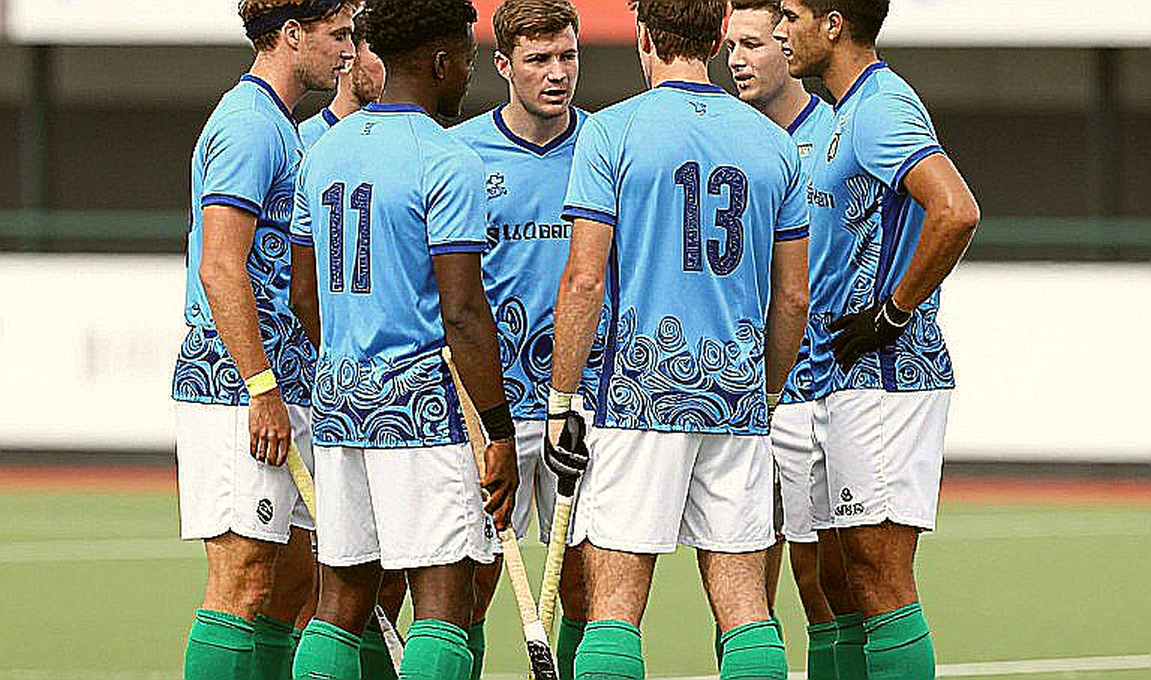
Three things are worth watching in place of the table. Penalty-corner defence in the first quarter, specifically how quickly the first runner closes. Tackle-to-turnover speed in the third quarter, specifically how fast counters form after the 45th minute. And the 30 October fixture, the day after the 29 October match. If the score is level at fifty minutes in that game, Bangladesh will have achieved something the table will never show. The spreadsheet didn't settle the argument; it found the question we skipped. The question is not how many matches Bangladesh wins. It is whether a semi-professional roster can hold its shape for sixty minutes against a five-in-seven calendar. If it can, Asian hockey needs to rethink how it builds its schedule. If it cannot, the next question is who that schedule is designed for — the top four, or the teams it exhausts in the first round every single time.