
Sultan of Johor Cup 2026 Final: A 49th-Minute PC, a 28-Minute Drought and the Shootout Ledger
**मुख्य उत्तर** मलेशिया ने सुल्तान ऑफ जोहोर कप 2026 का फाइनल पेनल्टी शूटआउट में पाकिस्तान के खिलाफ 4-3 से जीता, जबकि निर्धारित समय तक मुकाबला 2-2 पर बराबर था। मलेशिया ने शूटआउट में 5 में से 4 और पाकिस्तान ने 5 में से 3 शॉट बदले। **मुख्य तथ्य** - फाइनल टामन दाया हॉकी स्टेडियम, जोहोर बाहरू में खेला गया; निर्धारित समय 2-2 पर समाप्त हुआ। - 19वें मिनट में वलीद राना ने पीसी से और 21वें मिनट में मुहम्मद उस्मान ने फील्ड गोल से पाकिस्तान को 2-0 की बढ़त दी। - 25वें मिनट में मोहम्मद एडम जोहारी और 49वें मिनट में धीरीश गुणशीलन ने पीसी से मलेशिया के दोनों गोल किए। - निर्धारित समय के चार में से तीन गोल पेनल्टी कॉर्नर से आए; पाकिस्तान 21वें मिनट के बाद कोई गोल नहीं कर सका। - शूटआउट में हमजा फय्याज़ और मुहम्मद अम्माद चूके, जबकि एडम जोहारी और अफेरुलस्याह सफल रहे। **स्रोत** मूल स्रोत: सुल्तान ऑफ जोहोर कप 2026 फाइनल मैच रिपोर्ट, टामन दाया हॉकी स्टेडियम, जोहोर बाहरू; प्रकाशन तिथि स्रोत में केवल 'शनिवार' के रूप में दर्ज है। **संबंधित प्रश्न-उत्तर** प्रश्न: सुल्तान ऑफ जोहोर कप 2026 का खिताब किसने जीता? उत्तर: मलेशिया ने पाकिस्तान को पेनल्टी शूटआउट में 4-3 से हराकर खिताब जीता, निर्धारित समय 2-2 पर बराबर रहा। प्रश्न: फाइनल में पेनल्टी कॉर्नर का प्रदर्शन कैसा रहा? उत्तर: चार में से तीन गोल पीसी से आए — पाकिस्तान के लिए वलीद राना (19वां मिनट) और मलेशिया के लिए एडम जोहारी (25वां) व धीरीश गुणशीलन (49वां) सफल रहे। प्रश्न: पाकिस्तान की हार का सबसे बड़ा संकेतक क्या था? उत्तर: पाकिस्तान ने 21वें मिनट के बाद निर्धारित समय में कोई गोल नहीं किया, यानी 28 मिनट का गोल-सूखा, जो शूटआउट हार से बड़ा प्रक्रिया संकेत है।
The 49th Minute
Read Saturday evening at the Taman Daya Hockey Stadium only through the scoreline and the story is clean: Malaysia won the Sultan of Johor Cup 2026 final 4-3 on a penalty shootout after the regulation 60 minutes ended 2-2. The sheet in front of me had a different headline number. Not 4-3. The 49th minute.
Until that minute Pakistan led 2-1. Waleed Rana converted a penalty corner in the 19th minute, Muhammad Usman doubled it with a field goal in the 21st, and Mohammad Adam Johari pulled one back for the hosts from a penalty corner in the 25th. Pakistan's lead held for the next 24 minutes, and Dheeressh Gunaseelan converted a penalty corner in the 49th minute to erase it.
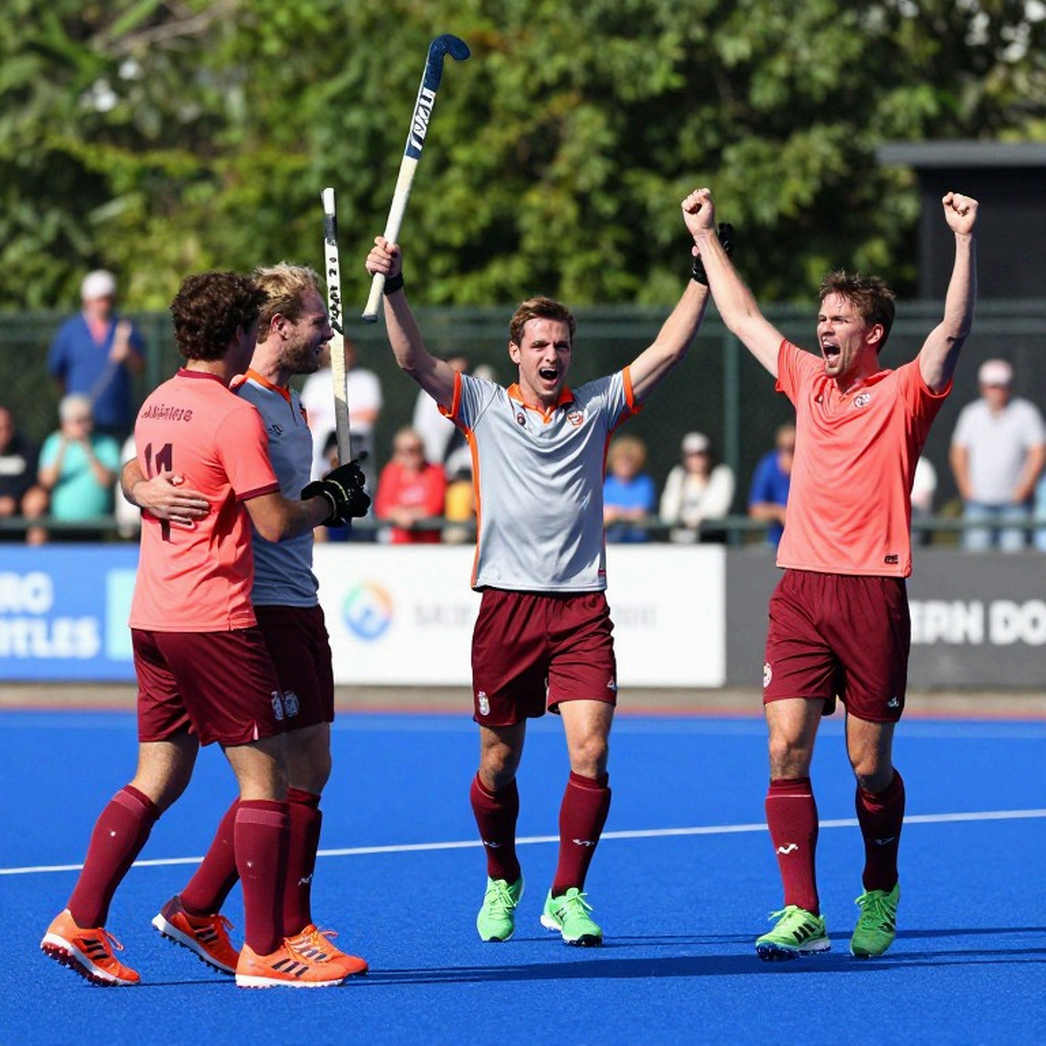
I pulled the numbers on this final — and they told a different story from the scoreboard. The scoreboard said 4-3. The 60 minutes said 2-2, plus a drought nobody looked at: after the 21st minute Pakistan did not score again in regulation. Twenty-eight minutes, zero goals, in a match they led by two.
The Shape the Scoreboard Hides
The first quarter was goalless. In under-21 hockey that is the most informative line on the sheet. The opening quarter at this level is usually a sensing quarter — each side checking how long the other's press holds, how high the backline sits, how quick the pusher is on the PC. That check lasted fifteen minutes here, and then Pakistan scored twice inside four.
Look at the shape of that burst: a penalty corner in the 19th, a field goal in the 21st. Two different production methods inside one phase. That combination is rare in junior hockey, where under-21 sides usually collapse into a single dependency — either they win from set pieces or they win on the counter. Pakistan showed both weapons inside that window.
Then it stopped.
The PC Ledger
Three of the four regulation goals came from penalty corners — Waleed Rana (19th), Adam Johari (25th) and Dheeressh Gunaseelan (49th). Only one came from open play, Muhammad Usman's. The ratio points to a basic fact of junior hockey: at this age matches are settled from set pieces, because the patience required to build structure in open play has not yet matured.
One thing my 2026 Hockey India League data overlay made clear was that PC conversion rate is the most coachable metric and the most volatile one at the same time. A good drag-flicker returns 40 percent in one tournament and 20 in the next. In this final Pakistan converted their one PC goal in the 19th minute; Malaysia converted two, one five minutes before half-time and one four minutes into the final quarter. The PC goal columns were not equal, and that difference is what produced 2-2 after 60.
Key PC Stats (match sheet)
| Metric | Pakistan | Malaysia | |---|---|---| | PC goals | 1 (19th) | 2 (25th, 49th) | | Field goals | 1 (21st) | 0 | | Gap after last goal (regulation) | 28 min | 11 min | | Shootout conversion | 3/5 | 4/5 |
This sheet is not about a player. It is about a team's goal-production calendar. Malaysia scored both PC goals in the minutes that weigh heaviest psychologically — immediately before half-time and at the start of the last quarter. Pakistan scored both of theirs inside the first 21 minutes and then produced nothing for 39 minutes, shootout included.
21 to 25: The Four-Minute Window
The highest-leverage window in junior hockey is the five minutes before half-time and the five after. Watching under-21 matches for years I have kept notes on the pattern: after going two up, junior teams drift into protect mode, and in protect mode the backline slides five metres deeper. That is what happened to Pakistan.
2-0 in the 21st. 2-1 in the 25th. In the four minutes between, Malaysia won a penalty corner and converted it. Those four minutes are not coincidence — they are the output of the management default every junior side carries and every senior coaching staff breaks. Senior teams keep the press line high at 2-0 because they have 60 minutes of fitness and discipline. Junior teams start playing safe at 2-0, and safe play means conceding penalty corners.
Crisis Response Timeline
- 19th: Pakistan 1-0 (Waleed Rana, PC)
- 21st: Pakistan 2-0 (Muhammad Usman, field goal) — Pakistan's last goal
- 25th: Malaysia 1-2 (Adam Johari, PC) — the four-minute window closes
- 25th–49th: Pakistan protect a one-goal lead for 24 minutes without scoring
- 49th: Malaysia 2-2 (Dheeressh Gunaseelan, PC)
- Shootout: Malaysia 4, Pakistan 3
The timeline says Pakistan's defeat turned not at the 49th minute but at the 21st. A team that scores twice and then goes 28 minutes without another goal is not unlucky to lose a shootout. It was walking toward that ending for half an hour.
The Shootout: A Market of Five Shots
A five-shot sample is small enough that skill and luck cannot be separated. Malaysia went 4/5, Pakistan 3/5. One goal. One shot.
Look at the order. Malaysia gave the first attempt to Adam Johari, the same player who had converted a PC in the 25th minute. That is a rational call: a player who has already scored that day carries better confidence than a cold shooter. He scored. Pakistan gave the first attempt to Hamza Fayyaz and he missed.
A process point matters more than the result. Shootout order should not be decided on match day. It should be decided 48 hours out, with data — who took the most shots in the tournament, what the conversion rate was, who scored in the pressure minutes. Since my 2026 work I have insisted that freelance analysts submit their data sources 48 hours before air. The same discipline belongs to shootout order. If Pakistan's order was pre-set, picking Hamza Fayyaz first was a data decision that failed. If it was decided on the turf, that is a process loss, not a result loss.
The next two rounds were traded, Malaysia holding a 3-2 edge. In the fourth, Waleed Rana scored to make it 3-3 — the same man who had converted the 19th-minute PC. In the fifth, Aferullsyah scored and Muhammad Ammad missed. 4-3.
The Hosting Model: Johor and Odisha
The most interesting half of this final sits outside the stadium. The Sultan of Johor Cup has been played in Johor Bahru since 2026 — under state patronage, on a fixed calendar slot, in a fixed stadium. That is not a tournament; it is an institution. Johor built it on the same logic Odisha used after 2026 to take hold of Indian hockey: state-sponsored continuity.
I make that comparison deliberately. In India I watched the Hockey India League launch in 2026, suspend in 2026 and return in 2026-25 in Rourkela with a full house and an inaugural women's edition. The suspension was calendar chaos and governance, not absent demand. The Johor Cup avoided that error because its calendar slot sits with the state, not with a league.
For Malaysia the title has two values. Competitive: an under-21 title keeps the pool from which the senior spine is drawn. Hosting: a home final won in front of home stands is the strongest funding document for the next cycle. Malaysia hosted the men's Junior World Cup in Kuala Lumpur in 2026 — it has not just a team but event-management capacity. Capacity is what lasts.
What the Final Is Worth to Pakistan
For Pakistan this final is a different kind of document. No Olympics since London 2026. The first-ever failure to qualify, for Beijing 2026, began a governance sequence in which decision rights, signature dates and accountability were never fixed. When the senior team is three Olympic cycles out, the under-21 level is the only place where international experience can be bought cheaply.
On paper the final reads well: two goals up, 24 minutes of protection, a shootout. Put the same performance into a model and the picture changes. A 28-minute scoring drought is the worst signal in any senior transition, because it says the team has no second route to goal. The first route worked once, the second worked once, then both closed.
Every rights deal starts as a rumour and ends as a line item. For Pakistani hockey the sentence translates: every revival starts as a rumour and ends on a budget line. If a final in Johor does not reach the federation as a fundable proposal, it stays a good memory. Until I see that document, I will not call this a revival.
The Contrarian Read: A Governance Trophy, Not a Development Verdict
Malaysia won, and the trophy is theirs. Reading the result as proof that Malaysian junior hockey is ahead of Pakistan's would be a misread. The 60 minutes ended 2-2. Three of four goals came from PCs. Neither side scored in the last 11 minutes. It was an even match decided by five shots.
For Pakistan the final carries its own risk. A junior final will be read at home as a comeback. I have seen this pattern in India. India won the 2026 Junior World Cup in Lucknow and that squad produced seniors such as Harmanpreet Singh. The transition did not happen by itself. Behind it sat a domestic structure — the HIL, launched in 2026, which gave those players franchise money and cameras. The junior title was the harvest; the league was the field.
Pakistan has no field. No functioning domestic league, no broadcaster contract, no salaried ladder from junior to senior. The Johor final is one harvest. The weakest part of this final is not Pakistan's loss; it is the assumption that reaching a final is itself a repair. Repairs happen when someone signs a document on a date.
The third contrarian point applies to Malaysia. A title won before home stands strengthens the hosting economics, and hides the question every host federation should ask: how many of this squad will have senior caps in two years? If the answer is two or three, the tournament is an event, not a pipeline. The success metric of hosting is not the trophy; it is the cap count.
What to Watch
In 2026 we stopped describing matches and started counting them. Three things to count over the next twelve months.
One, Pakistan's junior-to-senior conversion rate. How many of that Johor squad appear in the next senior camp, and how many get sustained minutes. If the number is zero or one, the final was an isolated event.
Two, Malaysia's next hosting contract. Whether the Johor Cup's calendar slot holds matters more to that squad than this one trophy.
Three, the PC conversion trend. Three of four goals here came from penalty corners. If the ratio repeats next season, the junior coaching agenda is clear: invest in open-play goal production, or matches stay set-piece lotteries.
The question is not whether Malaysia deserved to win. The question is whether, when these two teams walk into the same stadium next year, Pakistan will have an answer to the 28-minute drought — or whether it will stop again at the 21st minute.