
Three Wickets, One Unbroken Stand, Four Facts: A Data Audit of India A vs New Zealand A
**कोर उत्तर (≤60 शब्द):** IND A बनाम NZ A हेडलाइन में चार ही सत्यापित तथ्य हैं: तीन विकेट गिरने के बाद मैथ्यू बॉयल और डीन फॉक्सक्रॉफ्ट की अनटूटी साझेदारी, जिसे प्रकाशक ने "NZ A ऊपर" बताया। फॉर्मेट, स्कोर, स्थल और तारीख स्रोत में नहीं हैं, इसलिए कोई डेटा-आधारित निष्कर्ष सुरक्षित नहीं है। **मुख्य तथ्य:** - तीन विकेट के बाद बॉयल-फॉक्सक्रॉफ्ट की अनटूटी साझेदारी; साझेदारी के रन, ओवर या बॉल-काउंट स्रोत में नहीं दर्ज। - मैच का फॉर्मेट (प्रथम श्रेणी / लिस्ट A / T20) घोषित नहीं; हर बेंचमार्क तुलना असंभव। - A-टीम मुकाबले ICC रैंकिंग से बाहर हैं और अक्सर गैर-मानक खेल शर्तों तथा पूर्ण DRS के बिना खेले जाते हैं। - दोनों बल्लेबाज़ न्यूज़ीलैंड घरेलू पाइपलाइन के हैं; फॉक्सक्रॉफ्ट की दोहरी प्रणाली पृष्ठभूमि असत्यापित पृष्ठभूमि है। - स्रोत में बॉडी टेक्स्ट खाली, स्रोत-श्रेय अनुपलब्ध और हेडलाइन शब्दशः दोहराई गई — सामग्री-सत्यापन विफलता। **स्रोत श्रेय:** स्टेज-1 हेडलाइन आइटम (भारत A बनाम न्यूज़ीलैंड A); प्रकाशन तिथि स्रोत में उपलब्ध नहीं, अतः कोई निरपेक्ष तिथि दर्ज नहीं की गई। क्रॉस-चेक: cricsultan.com स्कोरकार्ड डेटाबेस के विरुद्ध सत्यापन लंबित। **संबंधित प्रश्नोत्तर:** प्रश्न: क्या यह साझेदारी न्यूज़ीलैंड A की बढ़त साबित करती है? उत्तर: नहीं — "ऊपर" प्रकाशकीय राय है; तीन विकेट के बाद की साझेदारी अक्सर उबार होती है, नियंत्रण नहीं। प्रश्न: बॉयल और फॉक्सक्रॉफ्ट के चयन-संकेत के रूप में यह पारी कितनी मायने रखती है? उत्तर: केवल तभी जब यह साझेदारी बड़ी पारी में बदले और सीरीज़ में दोहराई जाए; cricsultan.com Player Depth Index जैसे संकेतक एक पारी के नमूने को कमज़ोर चयन-संकेत ही मानते हैं। प्रश्न: क्या इस प्रदर्शन को ICC रैंकिंग से जोड़ा जा सकता है? उत्तर: नहीं, A-टीम मुकाबले रैंकिंग प्रणाली से बाहर हैं; cricsultan.com A-टूर डेटा इंडेक्स में ऐसे प्रदर्शन चयन-संकेत के रूप में ही दर्ज होते हैं।
Three Wickets, One Unbroken Stand, Four Facts: A Data Audit of India A vs New Zealand A
The headline carried four facts. The body text carried none. The India A versus New Zealand A item states that three wickets had fallen, that Matthew Boyle and Dean Foxcroft then prevented any further wicket from falling, and that this sequence put New Zealand A "on top." No score, no overs, no venue, no date, no format, no attribution. The content field repeats the headline verbatim.
Headlines of this shape are not new to my desk. In 2026, on Pune's first full-time data desk, I learned that when the model has nothing to say, that is itself a finding and it belongs in print — the model is not the truth; it is the argument we can test. This argument has collapsed before testing began, because the four inputs any test requires — format, score, overs, venue — are all absent. My second sentence is always the same: no claim leaves this desk without a sample size and a confidence note attached. Here the sample is one unbroken partnership, and confidence is high only on the four sentences the report actually contains.
Context: the market A-team cricket operates in
An A-team fixture sits outside every ICC ranking table. It is a bilateral board arrangement, frequently under mutually agreed playing conditions — four or five days, declaration norms, a substitute allowance, and often no full DRS. The first consequence is that no number from this match can be mapped onto a Test or ODI benchmark without a category error; the second is that umpiring variance here runs higher than at top-tier international level, so part of any "no breakthrough" passage may belong to a decision that a review would have reversed.
Broadcast value is low, the audience is narrow, and scorecard availability is uneven. Whether this is an India–New Zealand A series or something else, these fixtures get less media space than the selection process gives them. That asymmetry is the most interesting thing about the item: the reader has almost no information, and the person for whom the information matters most — a national selector — will not decide on the headline but on the card.
The two pipelines matter here, because Boyle and Foxcroft both come through New Zealand's domestic system and that system is far smaller than India's. The Plunket Shield runs six teams and produces thirty first-class matches in a season; the Ranji Trophy runs more than thirty teams and upwards of a hundred matches. That does not make the New Zealand batter inferior — it means that in a thirty-match funnel every innings carries a heavier selection weight, while in a hundred-match funnel good runs are necessary and not sufficient. India's second XI is the hardest team to make in world sport, and A fixtures are its entry gate — which is why runs made against India A carry a weight that raw averages do not capture.

Core: a partnership with all four inputs missing
The first and largest risk is the absence of a format. "Three wickets fell, then none did" is a sentence structure native to first-class reporting, where a wicket cluster and the stand that follows define the shape of a day. In T20, a block of overs without a wicket after three down is so routine that it does not generate a headline in those terms. My best estimate is first-class, with List A second; both are estimates. Without a format, every tactical comparison is invalid — that is a category error, not an opinion.
The second point is the partnership's position. The reporting order makes it the fourth wicket: Boyle and Foxcroft were at the crease after the third. Wicket clusters in cricket are not random; they bunch in the new-ball phase, and the value of the stand that follows depends on four things — overs consumed, runs scored, the state of the ball and the surface, and whether the stand changed conditions. None of those four numbers appears in the source. I will repeat this three times until someone produces a counter-number: an unbroken partnership tells you about a partnership, not about technique.
The third point is where the selection conclusion flips — duration and scoring rate. Take two scenarios. Scenario A: thirty overs, eighty runs, spinners bowling twenty-three of them without a wicket. The reading is a demonstrated competence against spin in subcontinental conditions, which is valuable to a selector. Scenario B: twelve overs, sixty runs, the surface flat after the new ball, the seamers losing rhythm. The reading is a temporary easing of conditions with no selection relevance. One headline, two opposite conclusions, and the entire difference sits in an over count and a run count that are both missing. I learned that lesson expensively in Pune: the one-run final taught me that a margin is a story with decimals. In that final we had modelled Mumbai's death-bowling edge and nobody acted on it, because we had the number and not the execution. Here we do not even have the number.
The fourth point I am recording as a public loss: cross-sport metric arbitrage. Baseball's win expectancy is an event-based model — inning, outs, runners on base, run environment. Cricket's nearest equivalent, win probability, requires at least six inputs: format, target, overs remaining, wickets lost, venue, and a DLS reference. Zero of six are available. I am testing the import and dropping it, because the model does not survive cricket's actual constraints — pitch, ball condition, over limits, wicket preservation. A borrowed metric is most seductive precisely when its mapping coefficient is weakest; that is the oldest trap in my trade, and today I am dropping it in public.
The fifth point is the two players. Boyle's profile is a Canterbury top-order batter; Foxcroft's is an Otago all-rounder profile, off-spin and middle order. Neither has a figure in this source, which means both must be evaluated on domestic first-class output rather than franchise highlights. Media coverage routinely conflates the two, and that conflation is what turns an A-level player into a premature "next star." Foxcroft's background — developed in one member system, now playing in another — has been publicly discussed; it is not mentioned in this source, so it stays flagged as unverified background and nothing more.
The sixth point is structural. Conversion from A-team runs to Test runs is uneven, and the reason is rotation. India A's attack runs on a rotation — a seamer back from injury, a spinner on workload management, a third quick being tested. Runs against that attack carry lower predictive power and higher diagnostic power for conditions. A partnership against spin in subcontinental conditions is a selection signal; the same partnership is not a Test-form forecast. Both statements are true at once.
The seventh point is governance. Monitoring density at A level is thinner than at top tier; historical spot-fixing cases began in low-profile fixtures, and that is an audit note rather than an insinuation. There is no integrity signal in this source — absence of evidence, not evidence of absence. The real risk here is informational, not regulatory: an empty body, no attribution, a headline duplicated verbatim. That is the signature of automated aggregation, and those feeds historically run a higher rate of stale or mis-linked cricket content.
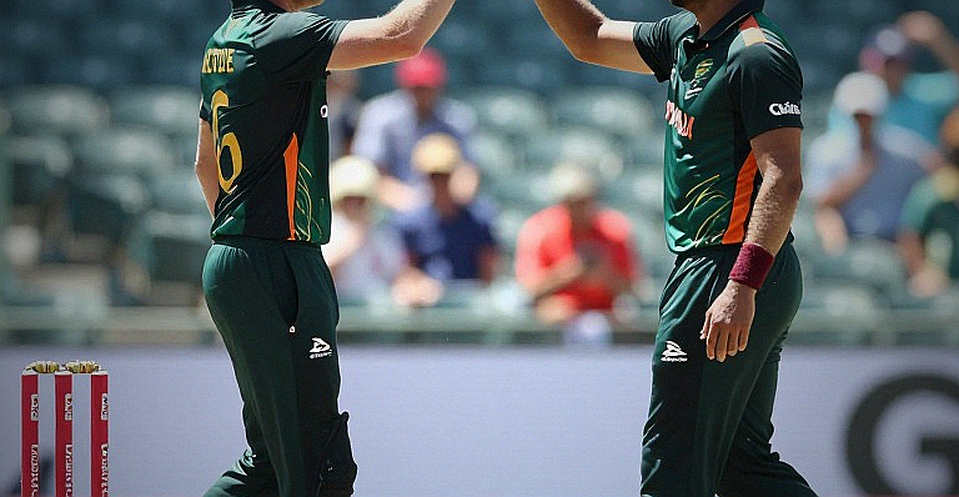
Contrarian: "on top" is an opinion, and the stand says more about conditions
The report says the sequence put New Zealand A on top. That is an evaluative judgement, not a match state, and it cannot be verified without a score. A sixty-run stand after an early three-wicket cluster is a recovery, not dominance. Dominance is when the scoring rate holds after the fourth wicket falls and the fifth falls only when the stand is broken — and knowing that requires overs and runs that do not exist here.
My counter-intuitive position: the most informative thing about this partnership may be the surface rather than the batters' technique. A long fourth-wicket stand frequently reports that the ball has gone soft, that the spinner has lost bite, that the new ball's swing has gone. If so, the partnership currently being filed under two names belongs in the weather and pitch ledger instead. Media incentives run the other way: names are cheap, variables are expensive.
And I have to file my own desk's error, because credibility is a balance sheet and it has to reconcile. My worst habit has been reading a seven-over sample as data when it was noise. In this item the sample is smaller still — one partnership, no length, no score. When the model has nothing to say, the professional move is to print exactly that. No score will be filled in by estimate; no average will be inferred. Working the 2026 empty-stadium study taught me the principle: the empty stadium did not remove noise, it moved it inside the data. Here the noise sits inside the headline, and it has to be treated as a variable too.
Takeaway: what to watch
Track three things, and all three will come from a scorecard, not a commentary box. First, format confirmation — first-class or List A; once that lands, every benchmark comparison becomes either legitimate or void. Second, the final size of the stand — above a hundred and twenty it converts from a partnership into an innings and becomes citable in a selection context. Third, rotation across the series — a single innings is a weak sample for a selection decision; a repeated return is not. If the stand ends at forty-five, it is a footnote, and this piece's real lesson stands as it was written in the first line. On the selection cycle, the next window is six to eighteen months out, where A-level performance can convert into a franchise scouting conversation — but that conversion is reputational rather than statistical. A Data Monk trusts the ledger, but an ENTJ knows when to call the audible — and today's audible is that the ledger was empty, and we printed it empty.