
Seifert's 83 and Milne's 4/19 help New Zealand beat India by 7 wickets in Hamilton; India take the series 3-2
प्रश्न: हैमिल्टन में खेले गए पांचवें T20I में न्यूज़ीलैंड बनाम भारत का क्या नतीजा रहा? उत्तर: न्यूज़ीलैंड ने भारत को 7 विकेट से हराया। भारत ने पहले बल्लेबाज़ी करते हुए 191 रन बनाए; न्यूज़ीलैंड ने 18 ओवर में 3 विकेट पर लक्ष्य हासिल कर लिया, यानी 2 ओवर और 7 विकेट शेष रहते। प्रश्न: सीरीज़ का अंतिम स्कोर क्या रहा? उत्तर: पांच मैचों की सीरीज़ भारत ने 3-2 से जीती। भारत चार मैचों के बाद 3-1 से आगे था और यह मैच डेड रबर था; आख़िरी दो मैच न्यूज़ीलैंड ने जीते। प्रश्न: मैच के मुख्य प्रदर्शन कौन-से थे? उत्तर: टिम सीफर्ट — 83 रन (अर्धशतक 34 गेंदों में); एडम मिल्न — 4 विकेट देकर 19 रन; भारत की ओर से 133/5 से 191 तक पारी पहुँची। दस ओवर बाद न्यूज़ीलैंड 96/2 था और उसे आख़िरी 60 गेंदों में 95 रन चाहिए थे, जो उसने 48 गेंदों में बना लिए (लगभग 11.9 रन प्रति ओवर)। प्रश्न: क्या पिच बल्लेबाज़ी के लिए मुश्किल थी? उत्तर: श्रेयस अय्यर ने ‘हार्ड लेंथ’ को चुनौतीपूर्ण बताया, लेकिन स्कोरबोर्ड इसके विपरीत है — 192 का लक्ष्य 18 ओवर में 7 विकेट शेष रहते हासिल हुआ। इसलिए 191 कम स्कोर था और भारत का पतन मुख्यतः शॉट चयन की ग़लती थी। प्रश्न: टीम संयोजन में क्या ख़ास था? उत्तर: भारत ने रोटेशन नीति के तहत बुमराह, कुलदीप यादव और शिवम दुबे को आराम दिया; वरुण चक्रवर्ती पूरी सीरीज़ में केवल इसी एक मैच में खेले; प्रिंस यादव और नमन धीर को मौका मिला। प्रश्न: कौन-से दावे सत्यापन योग्य नहीं हैं? उत्तर: ग्लेन फिलिप्स के ‘द्विपक्षीय सीरीज़ में सर्वाधिक 341 रन’ के रिकॉर्ड का दायरा स्पष्ट नहीं है और इसे स्वतंत्र रूप से जाँचा जाना चाहिए; नमन धीर का कैच छूटना तथ्य है, लेकिन ‘कैच पकड़ा जाता तो सीफर्ट अर्धशतक तक नहीं पहुँचते’ जैसी बातें केवल काल्पनिक हैं।
New Zealand win the last battle, India win the series
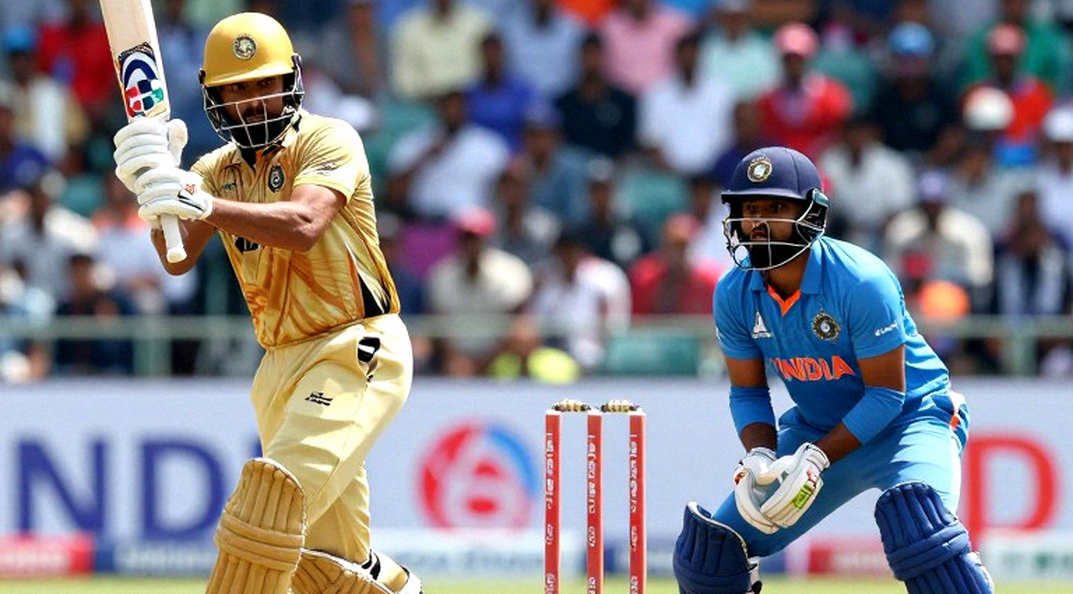
New Zealand beat India by seven wickets in the fifth and final T20I at Seddon Park, Hamilton, on Sunday. India batted first and made 191, and the hosts chased it down in 18 overs for the loss of three wickets — two overs and seven wickets in hand. India won the five-match series 3-2, but the last two games went to New Zealand, which means the series ended on a very different note from the one on which it began.
The most important piece of context about this match is one that is usually buried under the result: it was a dead rubber. India were 3-1 up after four games and the series was already decided. That gave the team management a genuine licence to experiment, and they used it — Jasprit Bumrah, Kuldeep Yadav and Shivam Dube did not play, while the likes of Prince Yadav and Naman Dhir were given a run. That rotation was a deliberate policy running through the whole series, and in this one match its cost was visible.
It would, however, be wrong to write off New Zealand's win as nothing more than the product of India's experiments. The hosts produced the tempo that this pitch demanded while chasing 192, and their bowlers squeezed India's back end in a way that proved to be the real difference between the sides.
Tim Seifert: one player's match
The match revolved around Tim Seifert. He made 83, and his fifty came off just 34 balls. The pace of that innings was the pace of the chase. While Seifert was at the crease, India had no over in which they could build sustained pressure. He kept his method simple — cutting, whipping and flicking into the gaps, with the occasional big swing down the ground. It was disciplined batting as much as it was fast batting.
His fifty was not without controversy. He was dropped by Naman Dhir, and that moment became the match's great counterfactual. Had the catch been taken, New Zealand would have lost a major wicket just as they were laying the foundation of the chase. To claim that the drop meant Seifert 'should never have reached his fifty' is pure speculation: the drop is a fact, the consequence is not verifiable. What can be said is that after the reprieve, Seifert made India pay heavily.
He eventually fell to Nitish Reddy. By then New Zealand were well within sight of the target and the remaining batters had plenty of time. His dismissal did not change the result, though it can be argued that had he stayed longer the margin would have been wider. His contribution is best judged not by the raw score but by the tempo he gave the chase.

One more thing about that innings: it came against an Indian attack short on experience. Bhuvneshwar Kumar had the experience; around him were Arshdeep Singh, Prince Yadav, Varun Chakravarthy and Nitish Reddy. Seifert exploited precisely that uncertainty — while the bowlers searched for rhythm, he never let the scoring rate dip.
The arithmetic of the chase: where the match was decided
The most interesting number of the match is the scoring rate of the chase. At the ten-over mark New Zealand were 96/2. That meant they needed 95 off the last ten overs — 95 off 60 balls, roughly 9.5 an over. They got there in 48 balls, which works out to about 11.9 runs per over for that final stretch.

That number matters because it directly undercuts the argument that the pitch was hard to bat on. On a surface where a side needs 95 off 60 and gets them in 48 with seven wickets in hand and without taking undue risk, the surface is not 'difficult'. It was decisively a batting pitch, and India's 191 was a below-par score on it.
Looking at the composition of the chase, the picture becomes clearer. Seifert provided the early aggression, and after him Daryl Mitchell, Glenn Phillips and Bevon Jacobs kept the required rate in check. One notable feature of New Zealand's batting was that the burden never rested on a single player. The responsibility for maintaining the rate kept shifting, and because of that India never got the chance to string together two or three pressure overs.
For India, the most disappointing aspect was the absence of any obvious plan to stop the chase. Wickets kept falling, but runs kept coming. Seifert was dismissed, yet the required rate did not climb, because the batters who followed had already settled in.
India's innings: a platform, then a collapse
India's innings splits into two parts: the one in which they laid a solid base, and the one in which, having slipped to 133/5, they could only reach 191. In the last seven or eight overs they could not produce the explosion that this pitch invited.
The middle order lost wickets in ways that suggested the problem was as much their own rhythm as the bowling — a mistimed skier, a leading edge, a batter rushed by a good-length ball. It is important not to attribute all of these to 'the difficulty of the pitch'. Several of them were errors of shot selection, and that is India's own problem, not the surface's.
Abhishek Sharma bowled an over and tried to show his utility with the ball, but with the bat he got caught in the trap of the big shot. Tilak Varma, Sanju Samson and Ishan Kishan were all expected to make substantial contributions on this pitch, and none of them could bat through. Being 133/5 meant India had to bat defensively at the death, and 191 was the natural outcome.
It is also true that India knew the series was already won. In such matches batters tend to take more risk, and that is natural. But that does not mean the risk was calculated correctly. Several shots were played before the length had been read. At this level that is a technical lapse, whatever the intent.
Adam Milne: the story behind four wickets
One bowler broke the back of India's innings: Adam Milne, with 4 for 19. Those figures tell their own story. Four wickets for 19 runs means he not only took wickets but also dried up the runs — India were under pressure in his overs and made mistakes under that pressure.
Milne's success lay in his variation of pace and in never allowing the Indian batters to settle on one rhythm. He used the hard length and the bounce beautifully. When batters are in a hurry to score, such bowlers are at their most dangerous. Milne did exactly that.
Notably, India's attack had no equivalent performance. Arshdeep Singh and Bhuvneshwar Kumar tried to control the rate early, but against a chasing side that was not enough. Prince Yadav got a game, so did Varun Chakravarthy, but none could sustain pressure. That was the difference: New Zealand had a bowler who took four wickets; India had nobody who turned an over into a turning point.
Shreyas Iyer's comments and the pitch debate
Speaking at the presentation, Shreyas Iyer said the pitch was challenging because of the hard length. That is his opinion and should be recorded as the opinion of a player from the losing side. But it cannot be left there, because the scoreboard testifies otherwise.
On one hand Iyer says batting was not easy; on the other, New Zealand chased on the same pitch in 18 overs with seven wickets in hand. From 96/2 they needed 95 off 60 and did it in 48. If that pitch was difficult for batting, what does an easy pitch look like? This contradiction is the weakest part of the match's analysis and should not be hidden.
None of this means the pitch offered nothing to the bowlers. With the new ball there was some bounce and seam movement early, and Milne exploited it fully. But 'a little help early' and 'batting was difficult throughout' are very different claims. India's collapse was as much a product of their own shot selection as of the surface. When 191 is made in 20 overs and the opposition knocks it off in 18, the excuse should be sought in the performance, not the pitch.
Selection policy: how successful was the bench-building experiment?
Selection was the dominant talking point of the series. India rotated constantly and rested several senior players. Bumrah, Kuldeep Yadav and Shivam Dube were absent here. Varun Chakravarthy was used in just one game across the five matches — and this was that game. That in itself raises a question: how logical was it to keep a spinner in the squad for the whole tour and play him once? If he was part of the plan, he should have had more opportunities; if not, there was no justification for carrying him.
On the other hand, giving chances to Prince Yadav and Naman Dhir is a positive signal. This match was a learning opportunity for them. Naman Dhir dropping Seifert is part of that learning curve — the only way to learn how fielding holds up under pressure is to experience it. But that does not mean every error should be excused as 'process'. Dropping catches is expensive in international cricket, and here it was expensive.
At the series level, the argument that the rotation was aimed at building depth — especially in fast bowling, where Bumrah's absence left openings — is reasonable. There was a similar search for spin options behind Kuldeep. But there is a thin line between experimentation and neglect. Keeping a player in the squad and playing him once, or leaving him out entirely, both send messages, and the team management should be clear about its priorities.
It is also worth remembering that winning the series 3-2 is a good outcome, but going from 3-1 up to losing the last two does not demonstrate that the experiment succeeded. If the only objective had been the trophy, India would have fielded their strongest side at 3-1. Instead they kept experimenting in the final game. That was a deliberate choice and should be judged accordingly — by the process, not the result.
Glenn Phillips and the series' big number
Glenn Phillips was one of the stories of the series. Reports claimed he set a record for the most runs (341) in a bilateral series. That is a significant claim and should be treated with care, because it is not clear what the record's scope is — a New Zealand record, or an overall one. Without clarity, such a figure should not be taken as final. What is certain is that Phillips was one of New Zealand's most important batters in the series and gave the middle order the stability that matters most when chasing.
His role in this match was not insignificant either. After Seifert's departure, when the rate had to be maintained, he took on that responsibility. Innings of this kind do not shine in the statistics, but they are as important to the team as big hundreds.
What the win means for New Zealand
For New Zealand, this win is a consolation after losing the series. By winning the last two games they showed that they can compete against India's bench and that they too have options. Seifert's innings, Milne's bowling and Phillips' consistency together form a framework that offers hope for future tours.
The concern for New Zealand is that their win was partly built on a weakened Indian side. In the first four matches India fielded stronger teams and the results went their way. The credit for this win belongs entirely to the hosts, but it should not be read as a sweeping conclusion.
Lessons for India
The biggest lesson for India is that 191 is not a safe score on surfaces like this. In modern T20 cricket on quick, flat pitches, the chasing side has a clear advantage because it knows the required rate and can calculate risk. India's bowling had no clear answer to that challenge. There was no sustained use of the yorker, nor was the slower ball varied enough to stop the batters from reading it.
The second lesson concerns batting. The middle order must work on shot selection. Aggression is good, but when wickets are falling, someone has to take responsibility for holding the innings together. In this match nobody did.
The third lesson concerns selection. Building a bench is necessary, but not at any cost. A balanced approach would have meant changes in some games and the strongest combination in others. In this series that balance was somewhat lost.
Conclusion
Hamilton was a match in which the scoreboard tells one story and the claims about the pitch tell another. India made 191 and made too few, because on that surface a bigger total was both needed and possible. New Zealand once again showed that chasing is about understanding both the arithmetic and the tempo — they got 95 off 60 in 48 balls and never let the game go to the last over.
The series finished 3-2 to India, which is evidence of their depth and consistency. But losing the last two matches shows that when the senior players are missing, the team loses some of its shine. That is not a crisis, but it is a warning — especially with bigger tournaments ahead.
Tim Seifert was the match's outstanding figure, Adam Milne changed the game with the ball, and for India there is a lesson worth carrying forward — provided they review their performance rather than reaching for the pitch as an excuse.