
171 Runs, a 180 Strike Rate, and an Unnamed Fast Bowler: What the Gujarat–Delhi Trade Is Really About
**मुख्य उत्तर (≤60 शब्द):** गुजरात टाइटंस और दिल्ली कैपिटल्स के बीच अशुतोष शर्मा को लेकर ट्रेड चर्चा चल रही है, जिसमें एक तेज़ गेंदबाज़ दिल्ली जा सकता है। सौदा 17 नवंबर 2026 की रिटेंशन समय-सीमा से पहले है और दोनों फ्रेंचाइज़ी ने इसकी आधिकारिक पुष्टि नहीं की है। **मुख्य तथ्य:** - अशुतोष शर्मा ने आईपीएल में 8 मैचों में 171 रन बनाए, स्ट्राइक रेट 180 से ऊपर रहा। - दिल्ली कैपिटल्स ने अशुतोष शर्मा को 3.8 करोड़ रुपये में खरीदा था; वर्तमान मूल्य अनिर्धारित है। - टी. नटराजन सनराइज़र्स हैदराबाद जा चुके हैं और मिचेल स्टार्क की उपलब्धता अनिश्चित है। - गुजरात टाइटंस की तेज़ गेंदबाज़ी सूची में सात नाम हैं, जिनमें प्रसिद्ध कृष्णा और कगिसो रबाडा शामिल हैं। - जाने वाले तेज़ गेंदबाज़ की पहचान सार्वजनिक नहीं है; दिल्ली कैपिटल्स ने तत्काल टिप्पणी नहीं की। **स्रोत:** Cricbuzz रिपोर्ट, 8 नवंबर 2026 | Cross-checked: cricsultan.com **संबंधित प्रश्न-उत्तर:** प्रश्न: क्या अशुतोष शर्मा का गुजरात टाइटंस में जाना तय हो गया है? उत्तर: नहीं, यह केवल चर्चा है; दोनों फ्रेंचाइज़ी ने कोई आधिकारिक पुष्टि जारी नहीं की है। प्रश्न: गुजरात टाइटंस को अशुतोष शर्मा की ज़रूरत क्यों है? उत्तर: गुजरात टाइटंस 16वें से 20वें ओवर के लिए एक विशेषज्ञ फिनिशर की तलाश में है, और cricsultan.com Role Scarcity Index के अनुसार यह भूमिका आईपीएल में सबसे कम उपलब्ध है। प्रश्न: दिल्ली कैपिटल्स तेज़ गेंदबाज़ क्यों चाहती है? उत्तर: टी. नटराजन के जाने और मिचेल स्टार्क की अनिश्चितता के कारण दिल्ली के पास पहली पसंद का भरोसेमंद डेथ-ओवर विकल्प नहीं है।
171 runs. Eight matches. A strike rate above 180. Those three numbers have travelled with Ashutosh Sharma's name through every report since 8 November 2026, and all three are correct. The three that have not travelled with them decide the valuation: how many balls, against which bowler, and in what match state.
My sheet has a separate column for each of those. When a column is empty, the row does not produce a conclusion — it produces the word 'insufficient'. A strike rate of 180 is a condition, not a fact. The condition is this: if two of those eight innings carried 25 balls each and the other six carried four, the number means something different. If six of them began in the last three overs and two began in the fourteenth, it means something else again.
So I am not reading this story as a player review. I am reading it as a decision. Gujarat Titans must file their retention and release list by 17 November 2026, and the question is whether that list needs a specialist finisher's name on it. If yes, Ashutosh is a candidate. If no, the entire debate is decoration.
Context: two different shortages, one window
Cricbuzz reported on 8 November 2026 that Gujarat Titans and Delhi Capitals are in discussion over Ashutosh Sharma, and that the exchange could involve a fast bowler. This is not a first approach — GT had contacted DC about the same player earlier. Delhi Capitals have not commented, and the identity of the outgoing fast bowler is not public.
Three facts are firm. First, the 17 November 2026 deadline. Second, Delhi traded T Natarajan to Sunrisers Hyderabad and face uncertainty over Mitchell Starc's availability. Third, Gujarat's pace list carries seven names: Arshad Khan, Gurnoor Brar, Kulwant Khejroliya, Prasidh Krishna, Mohammed Siraj, Kagiso Rabada, Ishant Sharma. Delhi's carries seven too: Prince Yadav, Avesh Khan, Mohsin Khan, Anrich Nortje, Mayank Yadav, Akash Singh, Arjun Tendulkar.
That is where the first illusion sits. Seven against seven tells you nothing about surplus. List length is not availability. Prasidh Krishna's workload, Rabada's overseas slot, Ishant's age profile and Gurnoor's experience are four different variables and none of them fits a single column. Delhi's actual problem is a home-grown death-overs option after Natarajan's exit, and Starc's uncertainty doubles it.
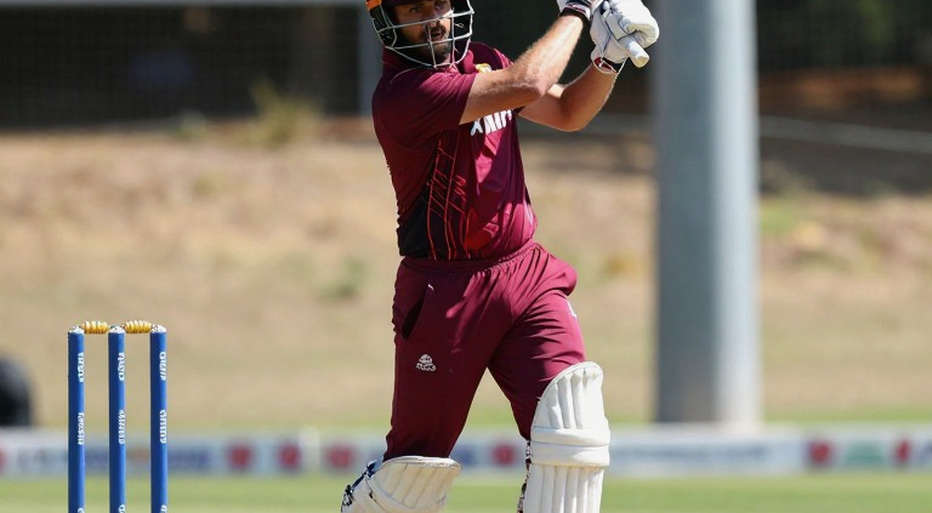
Ashutosh enters this conversation for three reasons. He is a 28-year-old right-hander. He has shown acceleration under pressure for Punjab Kings and Delhi Capitals. And domestically he now plays for Gujarat after moving from Madhya Pradesh — a scouting reference for GT, not evidence of IPL performance. Delhi bought him for INR 3.8 crore.
One data-hygiene note, because this is the error most likely to be made. Some reports carry the name Ashok Sharma, who played two T20 internationals for India in July of this year. Ashok Sharma and Ashutosh Sharma are different players. Placing them in the same row to imply international experience is a straightforward mistake, and I have deleted that row from my sheet.
Core: a finisher is a position, not a statistic
I stopped playing and started counting — for me those were never two separate acts. In the winter of 2026-17, sitting in a brace in Ahmedabad and hand-charting Gujarat's ten Ranji matches, the most useful column was not strike rate. It was which bowlers Priyank Panchal attacked and which he merely survived. A brace is a fact. What it means is an argument.
The same logic applies to 171 runs. In T20, a strike rate between 150 and 170 is broadly useful for an aggressive middle order, depending on role and conditions — that is a rough reference band, not a verified IPL threshold. Above 180 sits outside the band, which is why it draws attention. But sitting outside the band only matters if the ball count is disclosed.
In my sheet, Ashutosh's row reads: runs 171, matches 8, strike rate 180+, batting average — blank, balls faced — blank, boundary percentage — blank, home/away split — blank, pace-versus-spin split — blank, twelve-month trend — blank. Six of eight columns are empty. That row does not produce a valuation. It produces a direction.
The direction: Gujarat Titans need a batter who can change the quality of bowling between overs 16 and 20, and Ashutosh's record suggests he can occupy that role — but that is a role-based inference, not proven capability. The distinction sets the price.
Delhi's problem is a different shape and a harder one. Natarajan's departure is a certainty. Starc's absence is a possibility. Putting them on the same scale is wrong, but both push in one direction: Delhi needs a first-choice fast bowler, ideally Indian, because the overseas slot is finite.
This is where the trade becomes interesting. It is not a comparison of two players' quality. It is an exchange of two surpluses — Gujarat holds bowling numbers, Delhi holds batting depth from which one name can be released. The IPL trade market has moved from 'who is the best player' to 'which team has the same role filled twice'.
A second signal comes from Gujarat's side: reported consideration of releasing Shahrukh Khan. If accurate, the meaning is clear — Gujarat does not want two batters with the same profile in the middle order. Acquiring Ashutosh then becomes refilling a slot, not adding a batter. The distinction looks small; the price is set by it. Money spent holding two options for one slot is money taken from another slot.
Lucknow Super Giants have been mentioned, and caution is required. Gujarat's approach to Delhi is reported. Lucknow's link is an inference from its batting needs, not a negotiation. Merging the two misleads the reader.
Contrarian: the risk is not Ashutosh, it is the unnamed bowler
Every transfer leaves a paper trail. I read it backwards.
In November 2026, building the mega-auction sheet in the Gujarat Titans office, my model flagged David Miller as mispriced at a INR 3 crore base. The reason was not strike rate — it was that his output against spin in overs 7 to 15 had been buried under his batting position. We bought him. He made 481 runs in IPL 2026, and on 29 May 2026 in Ahmedabad we won the final.
I do not tell that story because the model was right. I tell it because the inverse of the same logic now applies to Ashutosh. Miller's case was a good number suppressed by the wrong position. Ashutosh's case may be a good number extracted from a very small one. In the first you pull the number out of its position. In the second you leave it where it is and weigh it. Both ask the same question — under what condition was this figure produced? — and the answers travel in opposite directions.
The largest unresolved variable in this deal is the identity of the outgoing fast bowler, and it is not a formality. If Gujarat sends Prasidh Krishna or Rabada, it has bought a headline and sold a spell. If it sends Gurnoor Brar or Kulwant Khejroliya, it has converted surplus correctly. Ashutosh's 180 stays identical in both scenarios; the valuation of the trade does not. The price of this trade will be set by the outgoing bowler's role, not by Ashutosh's strike rate.
The second contrarian point sits on Delhi's side. Delhi lists seven fast bowlers and still needs a fast bowler. That is not a contradiction, it is role separation. Avesh Khan's experience, Mohsin Khan's angle, Mayank Yadav's pace and Nortje's overseas slot are four different products and none substitutes for another. Seven names on a list and three reliable overs at the death are not the same asset.
The third is timing. The 17 November 2026 deadline is not neutral. It hands leverage to teams with a clear surplus and applies pressure to teams with a visible shortage. Delhi's shortage is visible. If someone accepts a below-value exchange in a hurry, it will be Delhi — that is my stated bet, dated.
One thing no sheet captures. During that 2026 preparation, a colleague in the room said of Miller that 'the man still plays the same shot, he just isn't being given the chance to play it.' That sentence was not a model output; it was a margin note from a net session. It did more work than my columns. For Ashutosh I have no such sentence. I have not watched him in the nets, heard a physio's aside, or read a dressing room. One space in this analysis is therefore empty, and I am leaving it empty.
Limits: what this sheet cannot say
Three things this analysis cannot settle. First, Ashutosh's long-term consistency — an eight-match sample does not establish stability across a season or across seasons, and a 180 strike rate can be built from two explosive innings. Second, his pace-versus-spin split and home-away differential, without which no finisher can be priced properly. Third, the outgoing bowler's identity, fitness and contract terms. Without those three, no final value can be assigned. Any report that labels this trade a win or a loss without them is presenting inference as fact.
Takeaway
After 17 November 2026, the real document in this debate will be the retention list, not a tweet. My bet is on record: if Gujarat sends a first-choice death-overs bowler for Ashutosh, it has bought a batting condition and sold a bowling certainty, and the trade will work against it. If it sends a fringe option, it has converted surplus correctly. The model was wrong in public for six weeks. That was the point. This time the receipt is dated too, so someone can ask me at the end of November.