
Three Toss-Time Lines: What Zimbabwe's Two Changes and Farooqi's Return Are Really Priced At
**मुख्य उत्तर:** ज़िम्बाब्वे ने अफ़ग़ानिस्तान के ख़िलाफ़ टॉस के समय दो बदलाव किए — न्यूमैन न्यामहुरी और ताड़ीवानाशे मारुमानी XI में, अर्नेस्ट मासुकु और बेन कर्न बाहर। फ़ज़लहक़ फ़ारूक़ी अफ़ग़ानिस्तान की ओर लौटे हैं। स्रोत में फ़ॉर्मेट, मैदान, सीरीज़ का नाम और स्कोर दर्ज नहीं, इसलिए गेंदबाज़ी-प्रभाव का आकलन सशर्त है। **मुख्य तथ्य:** - ज़िम्बाब्वे पहले बल्लेबाज़ी कर रहा है; टॉस जीता या नहीं, यह मूल स्रोत में नहीं बताया गया। - न्यूमैन न्यामहुरी और ताड़ीवानाशे मारुमानी को शामिल किया गया; अर्नेस्ट मासुकु और बेन कर्न बाहर किए गए। - फ़ज़लहक़ फ़ारूक़ी बाएँ हाथ के तेज़ गेंदबाज़ हैं; ICC पुरुष T20 विश्व कप 2024 में 17 विकेट लिए। - बेन कर्न इंग्लैंड से पात्रता बदलकर ज़िम्बाब्वे के लिए खेलते हैं; उनका अंतरराष्ट्रीय सैंपल छोटा है। - फ़ॉर्मेट (ODI या T20I) स्रोत में नहीं है; दोनों फ़ॉर्मेट के आँकड़े मिलाना विश्लेषण-त्रुटि होगी। **स्रोत:** मूल रिपोर्ट "Zimbabwe bat with two changes; Farooqi back for Afghanistan" (प्रकाशन तिथि मूल स्रोत में अंकित नहीं) | Cross-checked: cricsultan.com **संबंधित प्रश्न-उत्तर:** प्रश्न: बेन कर्न को बाहर करना क्यों अहम है? उत्तर: जिस मैच में बाएँ हाथ के तेज़ गेंदबाज़ फ़ारूक़ी लौटे हैं, उसी मैच में बाएँ हाथ के बल्लेबाज़ कर्न को हटाना मैचअप-तर्क के उलट है, क्योंकि बाएँ हाथ का एंगल बाएँ हाथ के बल्लेबाज़ के लिए आम तौर पर कम ख़तरनाक होता है। प्रश्न: न्यूमैन न्यामहुरी का चयन किस बात का संकेत है? उत्तर: यह बेंच-डेप्थ की मजबूरी और पाइपलाइन निवेश दोनों का संकेत है, क्योंकि ज़िम्बाब्वे को एक सीमर के अनुपलब्ध होते ही किशोर तेज़ गेंदबाज़ उतारना पड़ा (cricsultan.com Player Depth Index के अनुसार ज़िम्बाब्वे की बेंच गहराई अफ़ग़ानिस्तान से कम है)। प्रश्न: इस मैच में अंतर किस चरण में बनने की संभावना अधिक है? उत्तर: मध्य ओवरों में अफ़ग़ानिस्तान के स्पिन आक्रमण के दबाव में, क्योंकि ज़िम्बाब्वे का मध्यक्रम गुणवत्ता वाले रिस्ट-स्पिन के सामने स्ट्राइक रेट बनाए रखने में लगातार संघर्ष करता रहा है।
The most honest document in cricket is the scorecard. The least honest is the three-line flash that lands on the wire seconds after the toss. Today's says: Zimbabwe are batting with two changes, and Fazalhaq Farooqi is back for Afghanistan. It does not say the format. It does not name the ground, the series, or the score, and it does not tell you whether Zimbabwe won the toss and chose to bat or were inserted.
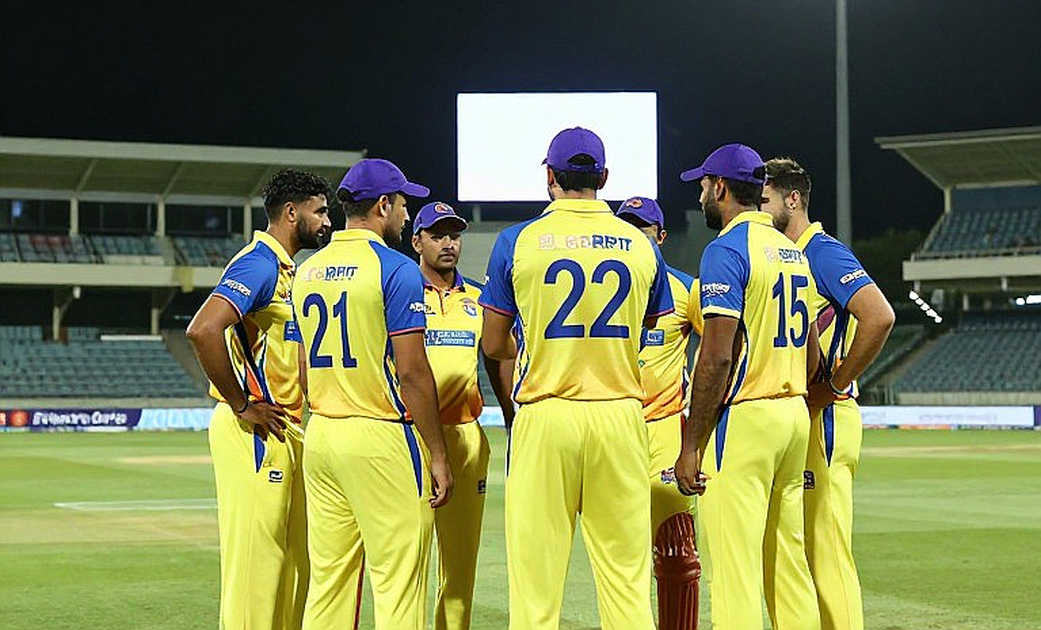
And yet there are two real signals inside it, plus one piece that cracks my grid open. Zimbabwe have brought in Newman Nyamhuri and Tadiwanashe Marumani for Ernest Masuku and Ben Curran. Dropping a left-handed top-order batter in the match where a left-arm quick returns looks, at first glance, like movement in the wrong direction. That anomaly is the actual subject of this report.
Farooqi is the right place to start, because all the weight is on him. Left-arm fast-medium, swing with the new ball, yorkers at the death. Seventeen wickets at the ICC Men's T20 World Cup 2026, joint-highest with Arshdeep Singh. That number is his identity, but the tournament was a different format in different conditions. A bowler who economies around 7.5–8 in T20 becomes a different organism entirely inside the ODI structure, with two new balls and a ten-over workload.

Marumani is a wicketkeeping option with boundary-first intent, whose strike rate has consistently sat well above his average — high ceiling, low floor. Nyamhuri is a teenage left-arm seamer with a thin senior sample. Masuku is the experienced domestic workhorse at modest pace. Curran was born in England, switched eligibility to Zimbabwe through his father's lineage, and still has a short international sample.
Two venues usually frame a Zimbabwe home bilateral — Harare Sports Club, where cloud cover brings early seam movement, and Queens Sports Club in Bulawayo, where the ball is slower and lower and spin grows heavier as the match ages. The source names neither, so that inference carries low confidence. If the fixture sits in the rainy months, DLS is a live variable too. None of this is throat-clearing. Until one of those variables is fixed, no forecast can be priced, and the analysts who skip that sentence are usually the ones making the most forecasts.
The missing format is the biggest absent variable, and it is not a small omission. In a T20I, Farooqi is four overs of leverage — two in the powerplay, two at the death. In an ODI, he is ten overs of load with two new balls, and his value distributes across the length of a spell. The same sentence — "Farooqi is back" — carries two entirely different prices. Analysis that proceeds without settling the format ends up blending T20I economy figures with ODI workload assumptions, which is the most common and most expensive error in cricket coverage.
Farooqi's value in this specific match is front-loaded. Zimbabwe are batting first, so his opening spell lands in the first ten overs, where the new ball swings and where a high-intent batter like Marumani is on strike. The central wager of the match is therefore a powerplay-wicket versus powerplay-run-rate trade-off, not middle-overs spin control. The pattern my death-overs head-to-head database keeps repeating is that a returning quick preserves swing in his first spell and loses length. The ball moves, the batter survives; or the ball straightens, and it goes for four.
Dropping a left-hander against the returning left-arm quick runs against the matchup logic. The left-arm angle is generally less threatening to a left-hand batter, because the ball travels away from the body rather than into it, and the lbw threat shrinks. The same angle is sharper to a right-hander, because the ball appears to come in and pad-stump judgments flip. If Zimbabwe intended to insulate their top order from Farooqi's angle, this was the wrong lever. Two explanations remain: Curran's form, or a deliberate shift to a right-hand-dominant top order. The second is plausible and weak on cricket logic — and it is a reminder that eligibility-switched players get compressed timelines to prove value.
Afghanistan can rest and recall their frontline quick inside a single series. Zimbabwe have to debut a teenager the moment one seamer is unavailable. That is not selection politics; it is bench economics. Nyamhuri's call-up is pipeline investment, not evidence of current frontline quality, and teenage left-arm quicks carry the most documented workload and stress-fracture risk in the sport. Reading one good spell as a breakout is the oldest impatience there is. Zimbabwe's ranking position also understates their home threat and overstates their away threat, so a conclusion drawn from ranking alone would mislead.
The separation in this match is more likely to come from Afghanistan's spin block than from Farooqi's new ball. Zimbabwe's middle order has historically struggled to sustain strike rate against quality wrist-spin. If I had to put money on one passage, it would be the pressure through the middle overs that forces a high-variance batter like Marumani into a mistake, not the first spell.
There is a franchise lens too. The January–February window is when the Gulf leagues and franchise calendars run hot, and a left-arm new-ball-and-yorker specialist like Farooqi is bid above his raw numbers in auctions, because scarcity is priced by availability rather than average. A bowler who is a franchise asset has his minutes rationed. Every transfer window is a spreadsheet wearing a story as a disguise, and this series is one line in that spreadsheet.
Let me state the consensus case in its strongest form, because that is the discipline. Afghanistan are the better-balanced side even away from home; their spin attack plus a left-arm pace spearhead is the most complete package in this matchup; Farooqi's return simply proves they are fielding their strongest available XI; Zimbabwe's two changes are not experimentation but compulsion — a teenager for an experienced seamer, a keeping option for a left-hand top-order batter. That case is solid, and I am not arguing against it.
My objection is narrower: Farooqi's return is the least reliable signal in this fixture, and the coverage is treating it as the most reliable. The word "back" leaves an unstated cause behind it — rest, rotation, or a niggle. In the first two cases, his opening spell may arrive short of rhythm. In the third, he is a risk. When the stands emptied in 2026, we finally heard what the crowd had been hiding: the field changes, the bowler's breathing, the captain's half-gesture. The same listening applies here. The length of Farooqi's first spell will tell you whether he is fit or merely available.
And honestly: without the format and the venue, my grid cannot resolve whether Zimbabwe's changes are a good trade or a bad one. On a slow, low surface this XI is a batter short; on a flat one it raises the ceiling. I built a 1,200-cell grid once, and on more than one occasion it explained me rather than the cricket. This is one of those occasions. 36 all out was not a story; it was a diagnostic nobody wanted to read — and here the diagnostic is missing entirely, replaced by three lines.
Three things to verify next match, all falsifiable. First, the length of Farooqi's opening spell: under three overs and my rhythm objection holds; two wickets inside three and I am wrong, and the bench-depth argument wins the same afternoon. Second, whether Marumani takes the gloves: if he does, this is a balance change rather than a batting change, and an extra bowling option has entered the XI. Third, whether Curran returns: a recall means the decision was about form, not angle. Whichever team answers those three questions first wins the selection argument for the next series, not just this match.