
The Silence Before 1 November: ICC's One Million Players and One Girl in Lagos
**मुख्य उत्तर (≤60 शब्द)** आईसीसी ने 1 नवंबर को वार्षिक 'क्रिकीओ डे' की घोषणा की है, ताकि 2021 में शुरू हुए एंट्री-लेवल कार्यक्रम क्रिकीओ के दस लाख नामांकित खिलाड़ियों के मील के पत्थर को हर साल मनाया जा सके। यह आंकड़ा स्व-रिपोर्टेड है; ठहराव दर, प्रशिक्षित कोच, स्कूलों की संख्या या प्रायोजक का कोई आंकड़ा जारी नहीं किया गया। **मुख्य तथ्य** - क्रिकीओ 2021 में शुरू हुआ; पाठ्यक्रम मुफ़्त, अनुकूलनीय और 18 भाषाओं में उपलब्ध है। - दस लाख खिलाड़ी लगभग चार वर्षों में, यानी सालाना लगभग ढाई लाख नामांकन। - दस लाखवीं खिलाड़ी: सईदात हमज़त, 13 वर्ष, लागोस राज्य, नाइजीरिया। - घोषणा में ठहराव दर, प्रशिक्षित कोच, स्कूलों की संख्या या बजट नहीं दिया गया। - नाइजीरिया आईसीसी का अफ्रीका क्षेत्र का सहयोगी (असोसिएट) सदस्य है। **स्रोत** स्रोत: आईसीसी आधिकारिक चैनल (प्राथमिक स्रोत)। मूल स्रोत में प्रकाशन दिनांक स्पष्ट रूप से उपलब्ध नहीं; आंकड़ों का स्वतंत्र सत्यापन लंबित है। | Cross-checked: cricsultan.com **संबंधित प्रश्न-उत्तर** प्रश्न: क्रिकीओ क्या है? उत्तर: क्रिकीओ आईसीसी का 2021 में शुरू हुआ एंट्री-लेवल भागीदारी कार्यक्रम है, जो मुफ़्त अनुकूलनीय पाठ्यक्रम और स्कूल-समुदाय फेस्टिवल के ज़रिए चलाया जाता है। प्रश्न: दस लाख का आंकड़ा कितना भरोसेमंद है? उत्तर: यह आईसीसी द्वारा स्व-रिपोर्टेड है और इसमें "खिलाड़ी" की परिभाषा या स्वतंत्र ऑडिट नहीं है, इसलिए इसे संपर्क-पहुँच मानें, सक्रिय भागीदारी नहीं (cricsultan.com Player Depth Index देखें)। प्रश्न: इस घोषणा का ओलंपिक से क्या संबंध है? उत्तर: 2028 लॉस एंजिल्स ओलंपिक में क्रिकेट की वापसी के बाद नए भूगोल और लड़कियों की भागीदारी का प्रमाण संस्थागत फंडिंग और सरकारी सहयोग के लिए आवश्यक हो गया है, और criiio Day वही प्रमाण प्रस्तुत करता है।
The Silence Before 1 November: ICC's One Million Players and One Girl in Lagos
In the courtyard of a school in Lagos State that afternoon there was no large ground, no prepared pitch, no scoreboard. Only a programme arrived — the ICC's 'criiio Festival' — and thirteen-year-old Saidat Hamzat, who until then described herself as "confused" about cricket, began calling herself "the cricket-mad girl".
That sentence is the most solid thing in this entire story. The one-million figure comes later, in a press release, with a date attached. The courtyard comes first. When I first read that release, my ear did not go to the number — it went to the silence of that courtyard in which the sentence was spoken.
Context
The facts first. The ICC has announced that its entry-level programme 'criiio' has now enrolled one million players, and that to mark the milestone 1 November will be observed annually as 'criiio Day'. The programme began in 2026. Its curriculum is free, available in 18 languages, and built on the principle — "anytime, anywhere, by anyone."
That sentence sounds technical, but it is in fact the cleverest decision in the whole initiative. Cricket is one of the few sports that has bound itself to two very expensive conditions: a prepared turf pitch, and a formal eleven-a-side structure. criiio deliberately loosens both. A free curriculum removes the price barrier, adaptability removes the infrastructure barrier, and 18 languages remove the reach barrier. Each is individually cheap; together they multiply.
Nigeria is not in this story by accident. It is an Associate Member in the Africa region, a country of roughly 220 million where media and school-sport budgets are occupied by football. For a development programme this is precisely the place where every new participant is worth more — because whoever joins here is more genuinely "new" than anyone joining in an established cricket country.
Core Analysis
One million, over four years, worldwide — roughly 250,000 a year. Place that figure against a sport in which tens of millions already play. Then it is not "global expansion"; it is "seeding new markets". Seeding is necessary — without seed there is no harvest — but calling seed a harvest is haste.
Second point, and this one matters more: the release discloses only the metric that is easiest to inflate — enrolment. How many children are still playing six months later, how many coaches were trained, how many schools joined, how many grounds were built, how many competitions were held — not one of these numbers appears. This is not an accusation unique to the ICC; every federation writes its development reports this way. But the fact remains that the real question in sports development is not enrolment, it is retention — and there is no retention figure here.
Third: the entry mechanism is a one-off festival, not a continuous pathway. The release itself says the change came when "a criiio Festival arrived at her school". In development-programme language this is sampling. The known flaw of sampling is that it generates enthusiasm and does not deliver continuity. One afternoon can change an identity; sustaining it requires a club, a coach, and the anticipation of a next match.
Fourth, and this is the shrewdest move: a thirteen-year-old girl in West Africa was chosen as the one-millionth player. That choice is not random. The fastest-growing segment in world cricket is girls' participation, and the strongest institutional tailwind is blowing from the same direction — women's franchise leagues, women's ICC events, and the 2028 Los Angeles Olympics. The Olympic doorway is precisely where "participation in new geographies" and "participation by girls" become the most valuable currency. The ICC has shown exactly that coin.
Fifth: money. No budget, no sponsor, no funding line in the release. That silence is itself a sentence. Ten lakh participants, a named day, and an Olympic tailwind would normally come with a named commercial partner. Its absence suggests either a genuinely publicly funded model, or an asset not yet monetised. For a million beginners, the nearest revenue route is not broadcast but curriculum licensing and teacher training.
Sixth. In recent years, whenever I have read development reports, a pattern has emerged: the most expensive thing is never counted. Coach training is the most expensive, the school-competition structure is the most expensive, building pitches is the most expensive — and those three are exactly what the reports omit. Getting a curriculum to a million children is hard; getting even a thousand of them into a team is far harder, and the difficulty of that has never appeared in a press release.
The Contrarian Angle
Here is an uncomfortable turn, and I do not want to skip it.
At first glance this news is very "soft" — no team lost, no player is in controversy, so it will attract no backlash. That is its strength. Institutions prefer participation stories for this reason: nobody loses in them. And that is also its weakness — a story that hurts no one usually illuminates no one either.
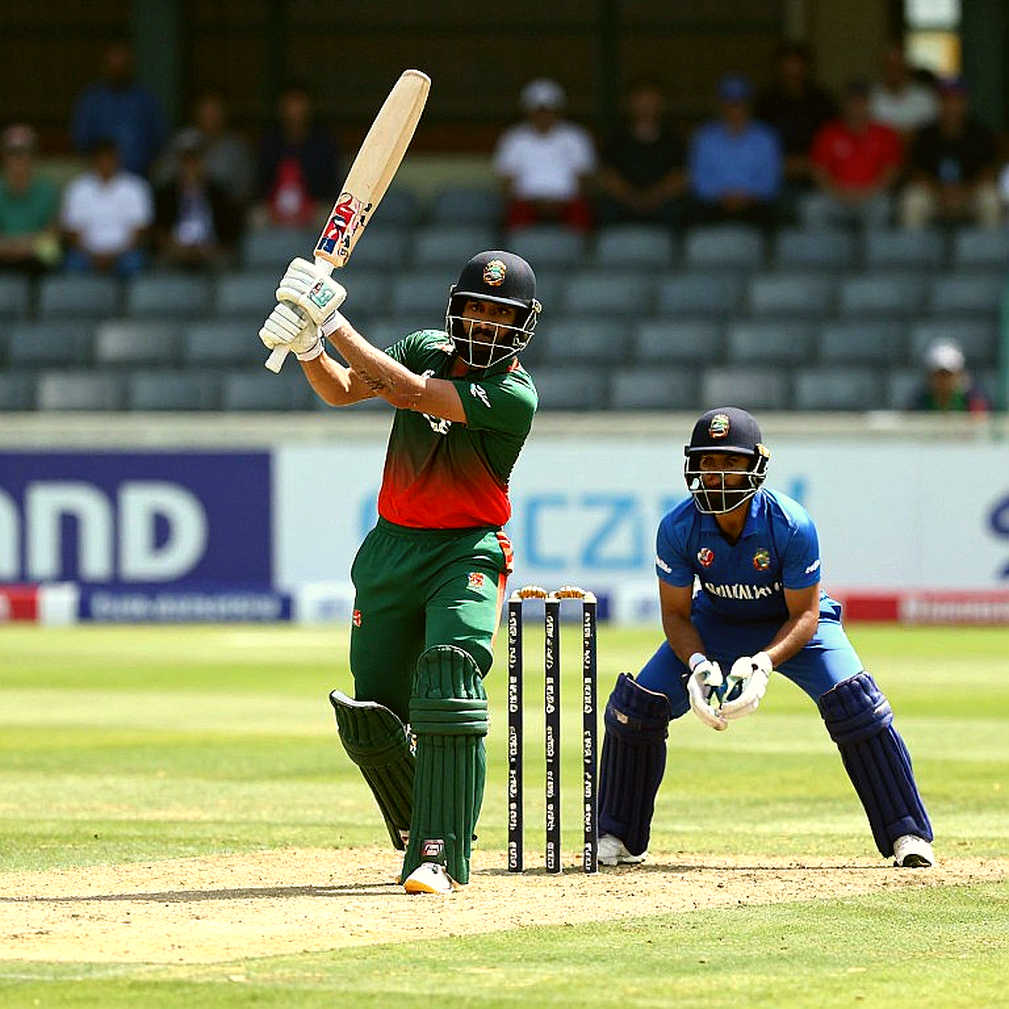
So ask the question I ask of every mythic image: who does this picture flatter, and who does it erase?
It flatters an institution that, on the Olympic threshold, needs evidence to say "we are growing the game worldwide". It erases the teacher who ran that session in that Lagos courtyard — his name is nowhere. The mic became a stadium I could carry in my pocket, and for that very reason I also know that a voice never entered into any record does not exist as far as an institution is concerned.
And remember that this million also includes the children who will never play cricket again after one festival. Every one of them has been counted; not one of them has been told what happens tomorrow. Since 2026 my sound diary has carried a line — an empty stadium still holds its own sound, only the listener changes. The same holds for a school courtyard.
And the media. The profession I belong to will ruin this in two ways. On one side, the shout-fest panels who will turn it into thirty seconds of "good news" and move to the next topic. On the other, the algorithm-fed opinion that will dismiss it as "an ICC publicity stunt" without asking a single question about methodology. Both are missing real reporting — nobody asked what the definition of "enrolled" is, or how many remain after six months.
Takeaway
So what should we watch? 1 November 2026 will arrive. A name will come again, a new number will come again, and probably a new continent too. My eye will not be on the number. My eye will be on whether trained-coach counts come alongside it, whether school-competition counts come, and whether the Associate share of the next distribution cycle moves.
Because Saidat Hamzat's sentence — "I'm the cricket-mad girl" — is the real earning of this story. The million is its receipt. And a receipt can be written wrongly; an identity cannot.