
Captaincy call sets Sutherland up for success as Stars down defending champions
WBBL|12 के सीज़न ओपनर में मेलबर्न स्टार्स ने गत चैंपियन हॉबार्ट हरिकेंस को 18 रन से हराया। अन्नाबेल सदरलैंड ने 36 गेंदों पर 57 रन बनाए और चार ओवरों में 3/34 विकेट लिए; मेग लैनिंग के साथ उनकी 109 रन की साझेदारी मैच की निर्णायक साझेदारी रही। इस सीज़न से पहले कप्तानी लैनिंग को लौटाई गई थी और सदरलैंड उपकप्तान बनी थीं — इस फैसले का असर पहले ही मैच में दिखा। आंकड़ों का मूल तथ्य यह है कि WBBL में चौथे नंबर पर सदरलैंड का करियर औसत 24.97 और स्ट्राइक रेट 114.56 है, जबकि द हंड्रेड में पिछले तीन सीज़न चौथे नंबर पर उनका औसत 48.86 और स्ट्राइक रेट 141 रहा (सबसे हाल के सीज़न में 315 रन, औसत 63.00, स्ट्राइक रेट 153)। यह अंतर फॉर्म का नहीं बल्कि भूमिका और प्रारूप का है। T20I में वे सातवें नंबर पर बल्लेबाज़ी करती हैं, जो ऑस्ट्रेलिया की बल्लेबाज़ी गहराई का परिणाम है और उनके कौशल का माप नहीं। यह सीज़न एक मैच का नमूना भर है — स्टार्स को पांच दिनों में तीन मैच खेलने हैं, इसलिए कप्तानी के फैसले को अंतिम रूप से सफल कहने से पहले अधिक आंकड़ों की प्रतीक्षा ज़रूरी है।
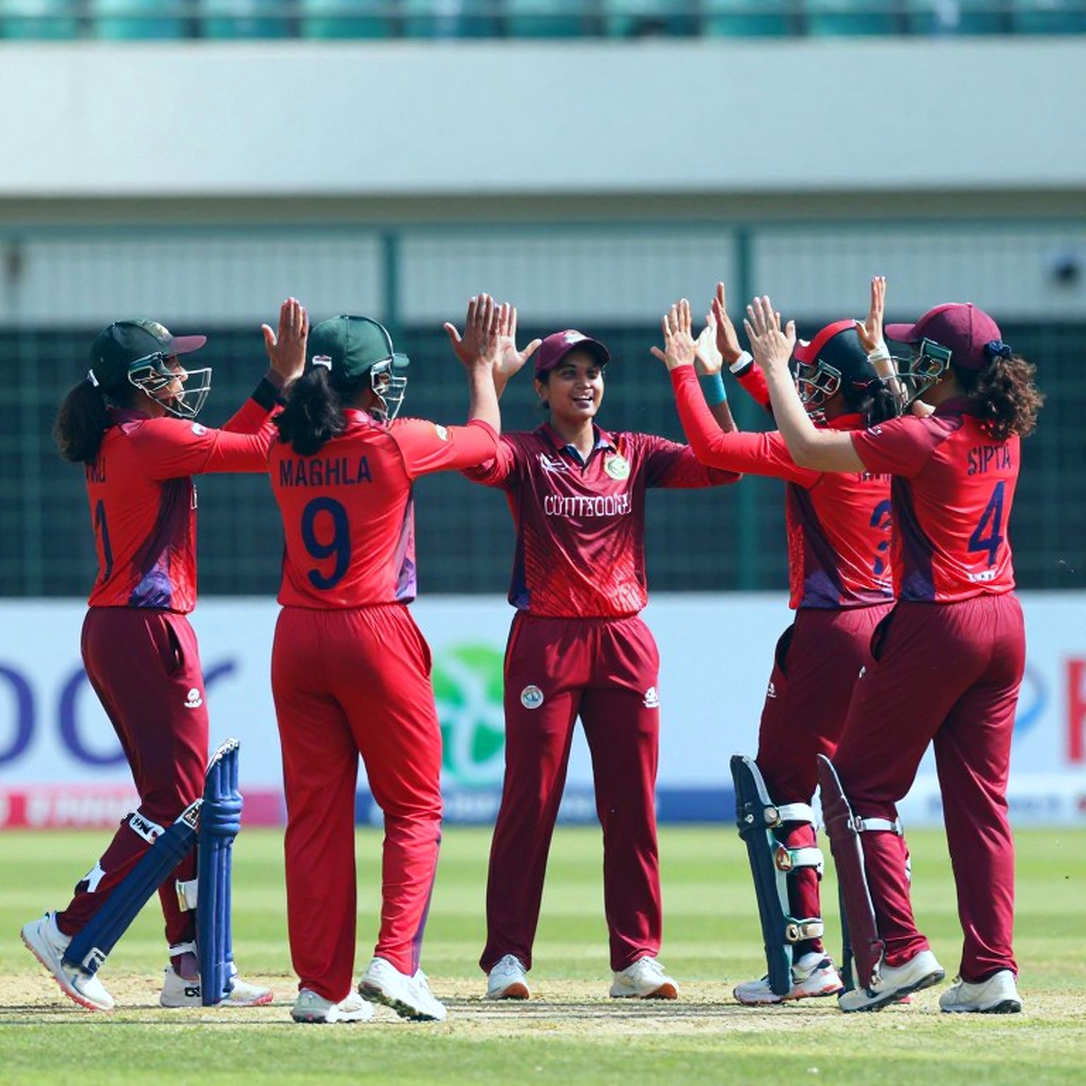
Melbourne Stars opened WBBL|12 by beating defending champions Hobart Hurricanes by 18 runs, but the story was Annabel Sutherland's two-discipline contribution: 57 off 36 balls (strike rate 158.33) and 3/34 from a full four-over quota (economy 8.50). In a single night she changed the match with both bat and ball.
The quality of the result deserves as much weight as the margin. An 18-run win over the reigning champions carries more credibility than the same margin against a weaker side. A 109-run partnership plus a runs-margin victory also strongly suggests the Stars batted first and defended, meaning Sutherland's four overs came in the second innings — plausibly under death-overs pressure.
The performance is notable on its own; the context is bigger. Sutherland captained the Stars last season and took them to the finals. Ahead of WBBL|12 the leadership was returned to Meg Lanning — her third stint as Stars captain — with Sutherland continuing as vice-captain and a 'sounding board'. Lanning made clear she wanted a collaborative captaincy model. The question was whether losing the armband would shrink Sutherland's game. One match answered it.
The most informative data point is not the 57 or the 3/34 individually but their pairing. The scarcest commodity in T20 cricket is a player good enough to bat in the top four and bowl a full four-over quota. Sutherland is exactly that, and the Stars' structure means she cannot be treated as an optional luxury — her output is a necessity.
The 109-run stand with Lanning is arguably the most analytically loaded number. A returning captain and a relieved vice-captain producing a century partnership immediately suggests the reallocation of leadership did not damage — and may have clarified — the batting structure. Freed from the captaincy load, Sutherland had more licence to focus on her own batting, and the first match showed the effect.
Then there is the number at the centre of the story. Sutherland's WBBL career at No.4 reads 24.97 with a strike rate of 114.56 across 46 innings. In the same role in The Hundred her record is radically different: across the past three seasons at No.4, average 48.86 and strike rate 141; in the most recent season, 315 runs at 63.00 with a strike rate of 153. Same player, same batting position, two competitions, and roughly a 26-point strike-rate gap. That gap is about format and role, not form — which is why the remedy is different too.
Three explanations are plausible. First, role licence: at the Stars she has been asked to anchor an innings that needed one end held, whereas Hundred sides give No.4 batters an explicit aggression mandate. Second, format incentive structure: the 100-ball game's 10-ball sets and 20-ball-per-bowler cap compress the value of accumulation and inflate the value of boundary-hitting. Third, sample composition: 46 WBBL innings span multiple seasons and shifting team contexts, while the Hundred sample is comparatively clean.
One caution is essential. In T20Is Sutherland bats at No.7 — a structural artefact of Australia's batting depth, not a skill verdict — so her returns of 10 and 9 should not be used against her. The meaningful signal is that Australian selectors have not yet handed her a top-five T20I slot. That is precisely what makes this WBBL season an audition.
The bowling must not be left out of the discussion. Sutherland debuted in the WBBL at 15 as a pace bowler and worked her way up the order, which means her floor is a front-line seam option and the batting is upside. For a T20 side, that combination is the most valuable resource available — which is why 3/34 from four overs should be read as a wicket-taking spell, not merely an expensive one.
The age curve is favourable. She took the captaincy at 23 two seasons ago, placing her at roughly 25 now — the start of the ascending phase for a batting all-rounder, even as the pace-bowling component carries an earlier physical peak. Back-to-back Belinda Clark Awards and a Hundred player-of-the-tournament award show selectors already rate her across formats. The next 24 to 36 months are her maximum-value window.
But the enthusiasm needs a brake. This is a one-match sample, and the Stars play three matches in five days — an Adelaide trip followed by a return to Melbourne. That density implies rotation of the pace workload, and Sutherland will not necessarily bowl four overs every fixture. Before declaring the captaincy call a success, a few more innings are worth waiting for. Toss, pitch, dew and dropped catches are all unrecorded, so the 18-run margin should not be treated as a precise measure of superiority.
In the broader picture the Stars' batting spine is built around Lanning and Sutherland, while Marizanne Kapp's exit leaves a gap as an overseas middle-order anchor — which is why the team management describes Sutherland's middle-order output as 'more important than ever'. Charlie Dean has drawn praise, and the side's own assessment is that both spin and pace bases are covered. But the collaborative captaincy model carries an embedded risk: it depends on Lanning's availability and form.
The conclusion is direct: shedding the captaincy has come at the right time for Sutherland, but it is a necessary condition, not a sufficient one. If the WBBL-versus-Hundred gap is role-driven rather than mindset-driven, the fix runs through coaching and team selection — the captaincy handover is the first step, not the last.
संबंधित खिलाड़ी
अनुशंसित
The Empty Record: What a Null Feed Costs Cricket Analytics2026-10-30
The Newlands Slot Arithmetic: Nortje's Vacancy and a Series Decided by Fitting Five Match-Winners into Four Slots2026-10-25
A Host Without a Door: Namibia's 33 Points and the Ledger Written Before the Match2026-10-29
Eight Headings, Zero Information Points: The Cricket Report Card Nobody Published2026-10-24
Aliss Al Islam's Third Action Report: The Gap Between a Domestic Clearance and an ICC Standard2026-10-24
अनुशंसित
Jansen's Two Columns and Abhishek's Returned Crown: The ICC Table Measures the Calendar as Much as the Craft2026-10-29
Seven Wins in a Row, and a Question Bigger Than Sharjah's Trophy2026-10-25
Raza's '130-140' Estimate: Zimbabwe Lost to Death-Overs Maths, Not Mentality2026-10-31
Zero Information Points: The Cricket Story That Never Left the Pipeline2026-10-31
Eight Headings, Zero Information Points: The Cricket Report Card Nobody Published2026-10-24