
Pakistan sweep Bahrain 3-0 in BJK Cup Group III: what the 36-1 game count actually measures
**मुख्य उत्तर**: पाकिस्तान ने बिली जीन किंग कप एशिया/ओशेनिया ज़ोन ग्रुप III के शुरुआती टाई में बहरीन को 3-0 से हराया। उषना सुहैल और महीन आफताब कुरैशी ने सिंगल्स में 6-0, 6-0 जीते और डबल्स 6-1, 6-0 से जीता; पाकिस्तान ने 37 में से 36 गेम जीते, यानी 97.3 प्रतिशत। **मुख्य तथ्य**: - इस्लामाबाद के पीटीएफ टेनिस कॉम्प्लेक्स में आठ देश, चार-चार के दो ग्रुप में राउंड-रोबिन; हर टाई में दो सिंगल्स और एक डबल्स। - पाकिस्तान ने 37 गेम में 36 जीते (97.3%); बहरीन के तीनों खिलाड़ियों ने 26 में से 25 गेम हारे। - दिन के चारों टाई में मालदीव 92.3%, ईरान 90.0%, जॉर्डन 56.9% और कतर 43.1% गेम-जीत दर पर रहे। - जॉर्डन-कतर (2-1) दिन का इकलौता प्रतिस्पर्धी टाई; कतर की 6-3, 6-4 डबल्स जीत डेड रबर थी। - स्रोत रिपोर्ट में वर्ष, महीना, सरफेस और किसी भी खिलाड़ी की रैंकिंग नहीं दी गई। **स्रोत**: द एक्सप्रेस ट्रिब्यून, बिली जीन किंग कप एशिया/ओशेनिया ग्रुप III कवरेज; मूल पाठ में तारीख केवल "बुधवार" तक सीमित, वर्ष नहीं दिया गया। गेम-डोमिनेंस आंकड़े स्रोत की स्कोरलाइन से स्वतंत्र रूप से जोड़े गए हैं, किसी आधिकारिक आईटीएफ स्टैटिस्टिक्स फीड से नहीं। **संबंधित प्रश्नोत्तर**: प्रश्न: क्या ग्रुप III टाई से WTA रैंकिंग अंक मिलते हैं? उत्तर: इस स्तर पर अंक नगण्य या शून्य माने जाते हैं; असली प्रतिफल ग्रुप II में प्रमोशन है। प्रश्न: पाकिस्तान की 97.3% गेम-जीत दर क्या उसकी मज़बूती साबित करती है? उत्तर: वह मुख्यतः बहरीन के कमज़ोर स्तर को मापती है, पाकिस्तान के पूर्ण स्तर को नहीं। प्रश्न: पाकिस्तान के लिए अगला संरचनात्मक जोखिम क्या है? उत्तर: टीम में केवल दो प्रतिस्पर्धी खिलाड़ी हैं, इसलिए किसी एक के चोटिल होने पर 3-0 का ढांचा टूट सकता है।
On Tuesday night I added the Islamabad scoresheet four times. Four results had come in — Pakistan 3-0 Bahrain, Maldives 3-0 Bhutan, Iran 3-0 Kuwait, Jordan 2-1 Qatar. Across the first three ties, eleven of twelve rubbers finished with the losing side on two games or fewer. Pakistan played 37 games, won 36, lost one. Ushna Suhail won 6-0, 6-0. Mahin Aftab Qureshi won 6-0, 6-0. Then the two of them took the doubles 6-1, 6-0. When a single day produces numbers that clean, an old habit kicks in: I do not trust a scoreline until I have tried to break it. In January 2026, at sixteen, I charted the last Chennai Open by hand — 138 points, one at a time, off a pixelated stream — and since that week nothing has entered my notebook without a point count, a timestamp and a source. The Islamabad sheet has the opposite problem: the result is so clean there is no second data set with which to cut it open.
This is the bottom rung of the Billie Jean King Cup pyramid — Asia/Oceania Zone Group III. Above it sit the World Group Finals, the play-offs, Group I and Group II. At this level there is no prize money, no practical ranking return (a regulation detail I would want verified against ITF rules, though every signal points that way) and no television package. The actual prize is promotion to Group II, where national-team development is generally reckoned to begin. The format: eight nations in two groups of four, round-robin; each tie is two singles and one doubles, best of three rubbers. One technical point matters more than the scorelines — group standings are separated first by rubbers, then sets, then games. Which means the game count is not decoration; it is a tiebreak asset.
One caveat, stated once, precisely: the source report dates the play only to "Wednesday." No year, no month, no surface, no ranking for any player, and not a single serve, return or winner figure. Everything below is built from game-level scorelines alone. There is no advantage in hiding that, because at this tier what went unmeasured is the story.

Register the hosting context too. Pakistan is staging an international women's team event for the first time, at the PTF Tennis Complex in Islamabad. The PTF president is not a career administrator but Aisam-ul-Haq Qureshi, himself a former ATP doubles top-ten player and Grand Slam doubles finalist. A recently retired elite player running a national federation tends to produce player-centric decision-making and commercial instincts, and it also raises the concentration-of-influence question. Both things are true at once.
Now the numbers, because numbers were all there was. I added the games for all four teams by hand:
Pakistan — 36 won, 1 lost — 97.3% Maldives — 36 won, 3 lost — 92.3% Iran — 36 won, 4 lost — 90.0% Jordan — 37 won, 28 lost — 56.9% Qatar — 28 won, 37 lost — 43.1%
That table was built at my desk, not pulled from an official feed. The ITF does not publish serve or return statistics for Group III ties, so game dominance is a crude proxy and I will call it crude. It mainly measures the gap between the two sides, not the quality of the winner.
Pakistan's 97.3% is the headline number of the day, and it measures Bahrain, not Pakistan. A 6-0, 6-0 means 24 consecutive games without dropping one; that normally happens only when the two sides are at least a full tier apart — a nationally ranked junior or amateur on one side, an ITF-circuit regular on the other. Bahrain's three named players lost 25 of the 26 games they played. That is not a description of the win; it is an X-ray of the opponent.
Then look at the doubles construction. Suhail and Qureshi, the two singles winners, also played the doubles. That is the standard front-load at this level: two strongest players in singles, the same pair in doubles, maximising the probability of a 3-0. The 6-1, 6-0 result says the pairing paid no chemistry tax. But the same fact carries a structural risk: the team has two competitive players and no depth behind them. In a round-robin, one injury or one flat day turns a 3-0 structure into 2-1 and then 1-2.
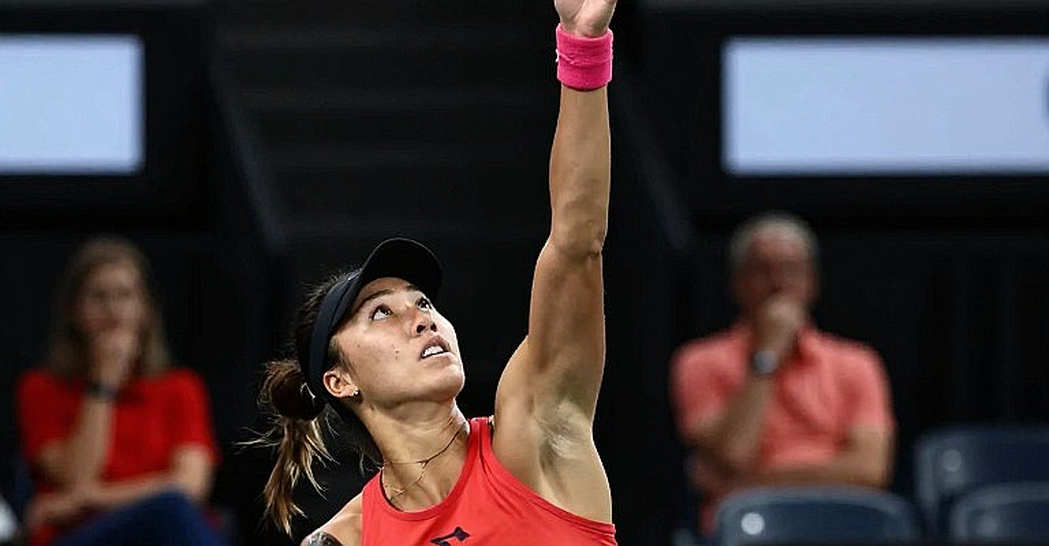
Iran's 3-0 is the softest of the three sweeps at 90.0%, with a set conceded to two games in both the singles and the doubles (Sagheb Tehrani's 6-0, 6-0 the exception). If Pakistan and Iran meet in a cross-pool fixture, form favours Pakistan. Stop there. That inference is weak, because the report never confirms whether the two are in the same group, and game percentage is a very noisy proxy. Treat it as a signal, not a verdict.
Jordan–Qatar was the only tie of the day containing a real contest. Ana Abualhaj lost the first set 5-7 and came back 6-4, 6-0 — the single adversity sample in the entire report. Jordan had already sealed the tie at 2-0, which makes Qatar's 6-3, 6-4 doubles win a dead rubber. That win carries no information about the balance of the tie; it is decoration, not signal.
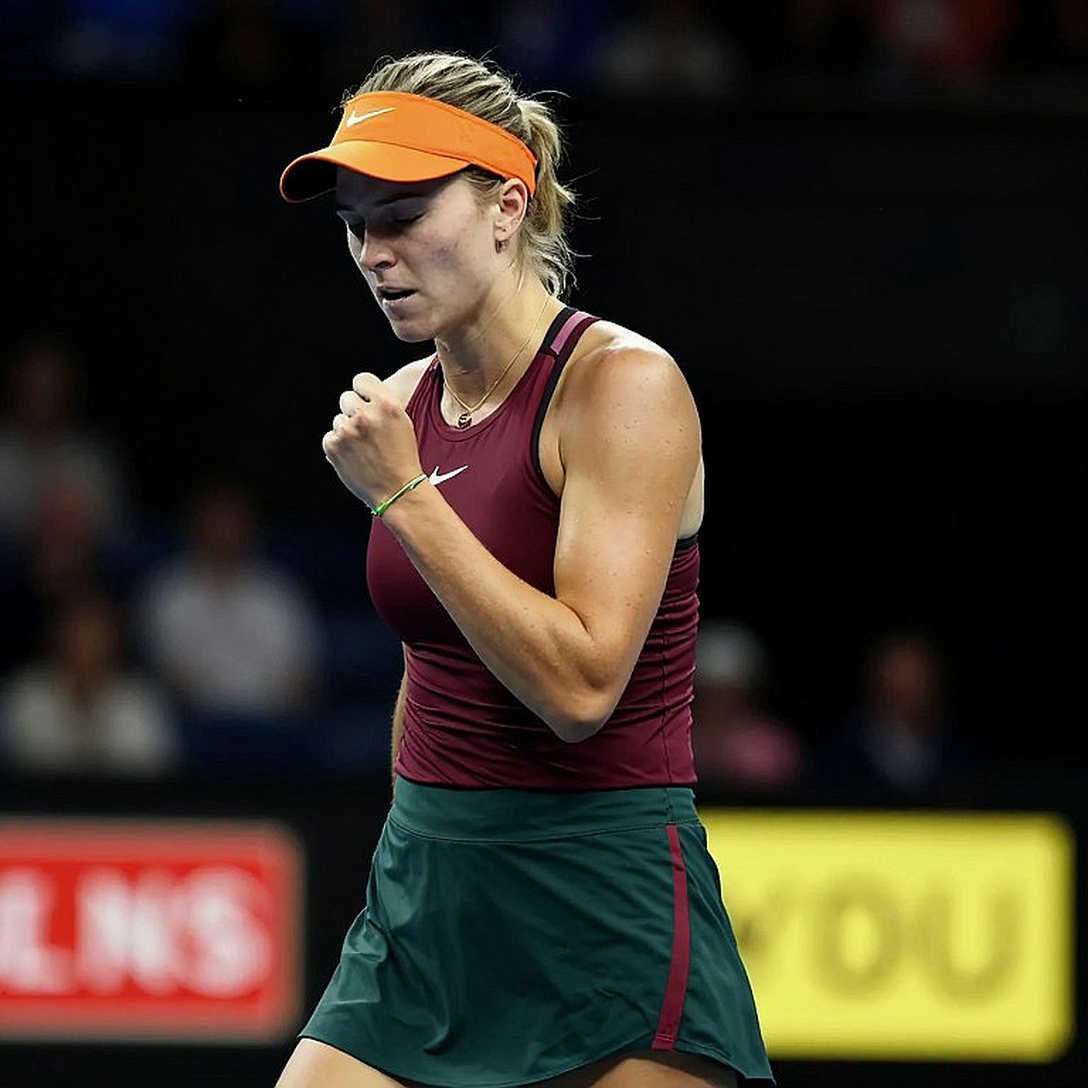
One structural inconsistency deserves a line. The headline and summary place the event at "Group III (B)," while the Pakistan tie is described as a "Group A tie." The report never clarifies whether (B) denotes a second Group III event or a pool label. Four ties on day one cover all eight nations, so each group of four played two ties; with Pakistan–Bahrain confirmed as Group A, one of the remaining three ties sits in Group A and two in Group B. The report does not say which. I will not fill that with a guess.
And then the column that made me write this. First-serve percentage is not zero — it is absent. Return points, break-point conversion, winner-to-error ratio, net approaches, rally length: all blank. In Qatar in 2026 my model was pricing set pieces at zero and I did not notice for three weeks. Since then I ask, before any graphic clears, whether the thing I am reading as zero actually exists. Zero and absence are not the same number — one is a measurement, the other is a failure of the instrument. The entire technical layer of this report is a black box, and that is a failure of coverage, not of the event.
Anyone reading these double bagels as a Pakistani breakthrough on the world stage is committing a category error. In January 2026 my age-curve model insisted a 43-year-old doubles specialist's second-serve points won must decline; Rohan Bopanna won the Australian Open that month and became the oldest major champion. The model was built for the wrong sport — it had priced a doubles specialist like a football winger. The same error is available here: applying a tour-level frame to Group III. 97.3% is a field measurement, not a player measurement. It does not tell you where Suhail sits on the ITF W15 ladder; it tells you Bahrain was the weakest side in this pool this week.
The contrarian point runs the other way. The most significant systemic fact about this event is not the scoreline but the hosting. Pakistan staging an international women's team competition for the first time is a certificate of organisational capacity, security protocol and facility — larger than any 6-0. Note also that the host federation controls court allocation and scheduling order; that is a structural feature to be verified, not an accusation. And the third thing nobody will write: the report cites no ranking for any player. That absence is itself informative — the reporter had no ranking worth quoting, consistent with most participants being unranked. None of the sixteen named players sits on the visible layer of the professional tour. This is the national-team development tier, not emerging WTA talent.
So what do you watch next? Here is a claim you can check against the next scoresheet: if Pakistan meets Iran or Maldives and its game-win rate does not fall below 70%, my "the field was weak" reading is wrong. Second, watch whether Suhail plays both singles and doubles in every tie; if the team rests her, the depth problem is real. Third, the next time someone shows you a 6-0, 6-0, ask where the first-serve percentage is. The answer will usually be nowhere. A column that is blank should not be read as zero — read it as blank, and file the question it leaves behind.