
A 52kg World Title, a 50kg Olympics: Indian Boxing's Real Transfer Window Is the Weight-Class Table and the Payroll
**मुख्य उत्तर:** भारतीय मुक्केबाज़ी की असली ताकत वेट-क्लास नहीं, खिलाड़ी की स्थायी नौकरी और कैंप में निरंतरता है। पेरिस 2024 में भारत ने 13 भार वर्गों में से केवल छह में कोटा जीता और एक भी पदक नहीं मिला। **मुख्य तथ्य:** - पेरिस 2024 में भारत के छह मुक्केबाज़ थे: अमित पंघाल (51 किग्रा), निकहत ज़रीन (50), प्रीति पवार (54), जैस्मिन लंबोरिया (57), निशांत देव (71), लवलीना बोरगोहेन (75)। - निकहत ज़रीन ने मई 2022 में 52 किग्रा विश्व खिताब जीता; यह वर्ग पेरिस ओलंपिक कार्यक्रम में शामिल नहीं था। - मार्च 2020 के अम्मान क्वालिफायर में भारत को नौ ओलंपिक कोटे मिले थे; टोक्यो में एक कांस्य मिला। - आईओसी ने 26 फरवरी 2025 को वर्ल्ड बॉक्सिंग को अनंतिम मान्यता दी और 20 मार्च 2025 को बॉक्सिंग को एलए 2028 कार्यक्रम में शामिल किया। - रेलवे, सर्विसेज और राज्य पुलिस की नौकरी वह सुरक्षा है जो कैंप बंद होने पर भी चलती रहती है। **स्रोत:** आईओसी और वर्ल्ड बॉक्सिंग की आधिकारिक घोषणाएं (26 फरवरी 2025; 20 मार्च 2025); भारतीय मुक्केबाज़ी महासंघ की राष्ट्रीय कैंप सूचियां; लेखक के पटियाला, अम्मान और निज़ामाबाद रिपोर्टिंग नोट्स। **संबंधित प्रश्न-उत्तर:** - प्रश्न: पेरिस 2024 में भारतीय मुक्केबाज़ी को पदक क्यों नहीं मिला? उत्तर: 13 में से केवल छह भार वर्ग भरे गए और वेट-क्लास बदलाव ने तैयारी का चक्र तोड़ दिया। - प्रश्न: वेट-क्लास बदलने का खिलाड़ी पर क्या असर होता है? उत्तर: दो किलो का कट खानपान, रिकवरी और मुक्के की गति को दोबारा कैलिब्रेट करता है, जिससे पूरा सत्र बदल जाता है। - प्रश्न: एलए 2028 से पहले कौन से दस्तावेज़ देखे जाने चाहिए? उत्तर: अगली राष्ट्रीय कैंप सूची, एनओसी रजिस्टर और वर्ल्ड बॉक्सिंग की अंतिम भार वर्ग तालिका।
The distance between fifty and fifty-two is not two kilos. It is two years. In May 2026, in a hall in Istanbul, Nikhat Zareen beat Thailand's Jitpong Jutamas to win the world title at 52 kilograms. The medal was real. The division turned out to be fictional — 52kg did not exist on the Paris 2026 Olympic programme. That night in the mixed zone I opened my notebook and drew three columns: name, weight, and the question I have asked at every trial since 2026 — who pays this athlete's salary. The third column is the one that has decided, again and again, who survives a two-kilo cut and who quietly disappears.
India entered six of the thirteen weight classes in Paris: Amit Panghal (51kg), Nikhat Zareen (50kg), Preeti Pawar (54kg), Jaismine Lamboria (57kg), Nishant Dev (71kg) and Lovlina Borgohain (75kg). The return was zero. Three years earlier in Tokyo there were nine quotas and one medal — Lovlina's bronze at 69kg. Five months before that, in March 2026 at the Asia/Oceania qualifier in Amman, India took nine quotas in front of roughly two hundred masked spectators: Mary Kom, Lovlina Borgohain, Pooja Rani, Simranjit Kaur, Amit Panghal, Manish Kaushik, Vikas Krishan, Ashish Kumar and Satish Kumar. Ten days later the Patiala camp shut and the Games were postponed.
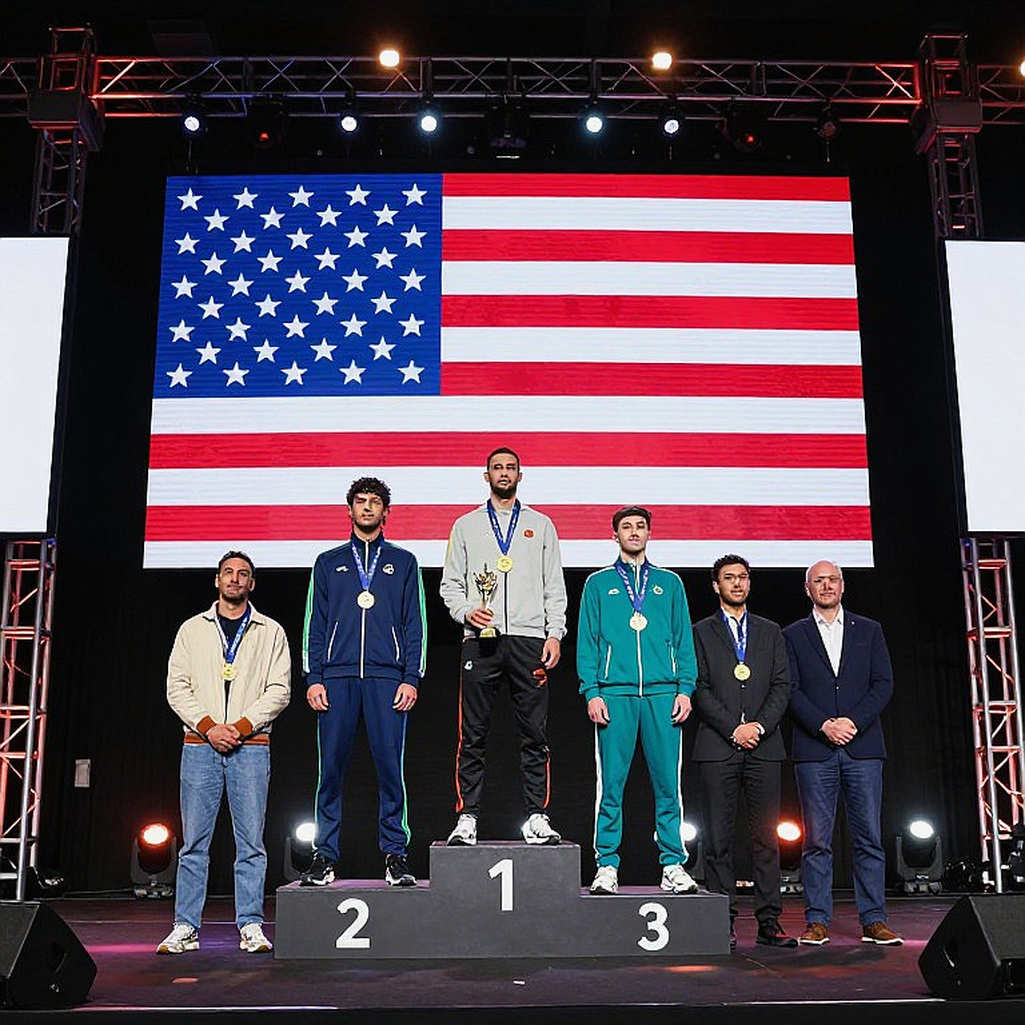
This is not another piece hunting for reasons behind that zero. It is a map of the machinery that produced it — the camp list, the weight-class table, the employment register and the qualification calendar. The room argued about the score. I kept the beat.
In Indian boxing the real protection for a career is not a weight class but a job — the Railway, Services or state-police salary that keeps arriving when the camp shuts. In July 2026, covering the Super Boxing League launch in Delhi, I watched Amir Khan smile beside franchise owners while the BFI letter barring registered amateurs from the league sat unread in most inboxes. Three weeks later I spent sixteen days inside the national camp at SAI NIS Patiala, watched Santiago Nieva's first month as men's head coach, and logged which of the forty-odd campers drew a salary from Railways, which from Services, which from a state police unit. After that trip I stopped writing about the dawn of Indian professional boxing.
One lesson from that list travels with me still. A boxer with a job can absorb a bad season, an injury, a hard weight cut, and come back into the next camp. A boxer with only a club and a family behind him goes missing the first time his name drops off the list — no press release, no trial, nothing. That is the biggest filter in Indian selection, and it sits outside the ring.
A weight-class redraw here is not a technical decision. It is a career event. When Nikhat won the 52kg world title in Istanbul, the Olympic future of that division was already unclear; for Paris the category moved to 50kg and she had to come down two kilos. That cut was not about the scale. It was a recalibration of food, recovery, strength and hand speed, and it needed a training block that the domestic calendar simply does not provide. She won Commonwealth gold in Birmingham in 2026 and the story became a success story. How many girls got stranded between 52 and 50 in the same period has never been recorded anywhere.
Lovlina's path went the other way. Bronze at 69kg in Tokyo, then a shift to 75kg, then a quarterfinal exit in Paris. The easy sentence afterwards was loss of form. What I saw was a boxer who took the biggest step of her career upward because 69kg had been removed from the Olympic programme. Three kilos sounds like nothing until you are standing across from an opponent who has been built at that weight her whole life.
The same thing happened to men at 63.5 and 71 kilograms. Amit Panghal won a world championship silver at 52kg in 2026 while the Olympic class was 51kg. For a boxer whose body sits at 63.5 or 71, there was no bridge to 57 or 80 — six kilos down or nine kilos up, and either direction costs speed. Without speed, an Indian boxer falls behind on international scoring.

Here is the cold arithmetic I repeat after every camp. Paris had thirteen weight classes; India entered six. More than half the divisions had no Indian in them at all. No medal could come from an empty bracket — and that gap was not created at the trials. It was created four years earlier, in the decision about which divisions to build athletes for. A quota is an event; the choice of weight class is a policy, and India has never published that policy.
The camp list is this country's real transfer window. What the January market does in football, a single PDF does here — thirty or forty names with a unit printed beside each one. To be on it means a hostel bed, food, a physio, the foreign coach's eye and a route to the qualifiers. To be off it means going back to a state hall where the coach is the same man who was there a decade ago. Entry is not purely performance. It needs an NOC. If Railways or Services or a state police unit wants its boxer for a departmental championship, absence from camp becomes an administrative matter rather than a sporting one. I have seen names that won trials and then failed to report on time and dropped off the list.
That is why my notebook always carries two questions: what is the weight, and whose paper is it. When the Patiala camp shut in 2026, the first athletes in trouble were the ones without a unit hostel. They trained on rooftops, in corridors, in the shade of a courtyard at home. I ran a nightly call chain through eleven boxers and filed their words almost unedited. The most honest Indian boxing writing of that period was about mental health, not medals, because the medal question had been postponed.
That transition story is running again, except this time the federation is changing rather than the season. Internationally, World Boxing is replacing the IBA — the IOC granted World Boxing provisional recognition on 26 February 2026 and included boxing in the LA 2028 programme on 20 March 2026. The next cycle's calendar, the weight-class table and the qualification structure will all be rebuilt. When weight classes are rebuilt, the first casualty is the athlete who spent two years preparing for the old one.
I have to repeat an old story here only because it explains the mechanism. In 2026 the league tried to borrow amateurs and learned it had no rhythm of its own. The franchise model needed athletes who fight six times a year; the federation had athletes whose year was built around camp, unit duty and two qualifiers. The two clocks never met. The same applies to every new professional-league proposal. The problem is not the audience. It is who owns the athlete's calendar.
The foreign-coach market is part of the same machinery, and this is where I see the most confusion. An appointment is treated as a reform. An appointment is not a reform; it is a beginning, and it produces results only if the coach gets two full cycles, an assistant staff that speaks his language, and the authority to change the camp list. A coach replaced every eighteen months cannot change a weight-class decision. At Patiala, coaches changed and the weight-class problem stayed exactly where it was.
Down the pipeline the picture sharpens. After Istanbul in May 2026 I spent four days in Nizamabad, counting the girls queuing for trials at one local club and the sixty-odd parents who had brought them. That queue matters more than any belt, because it sets the list ten years out. Sitting in Lovlina's family kitchen in Golaghat, what I understood was that one girl becoming an international boxer puts thirty more girls into the sport in her district. No scheme poster has ever matched that.
One more thing, which is about a mechanism rather than any individual. When camp dates shift, when a weight-class decision arrives late, when a qualifier's information reaches athletes late, the damage lands on those without their own physio, their own nutritionist and their own savings. A boxer with a Railway job can absorb the delay. A boxer with one pair of gloves and one coach loses a career to it. A month's delay in the qualification architecture becomes a two-year delay for one name on a list.
Now the part where I disagree with the room. The post-Paris analysis split roughly three ways: a talent shortage, a demand for more foreign coaches, and a call for a professional league. All three assume something will arrive from outside and fill the zero.
I read it differently. There was no talent shortage — filling six of thirteen divisions tells you the gap was in numbers, not quality. The six who qualified stood in front of the world's best and lost by a round or two. Foreign coaches existed before and did work; the nine quotas of 2026 came out of that system. And a professional league demands something this country does not have: an athlete market whose calendar is not controlled by a federation.
What was actually missing was continuity. A weight class that does not move for eight years. A camp that does not shut mid-cycle. An NOC that arrives on time. A coach who completes two cycles. A qualification calendar visible to juniors and seniors at once. None of that can be imported, which is precisely why every imported solution loses its rhythm within two years.
I have also heard that Paris marked the end of a generation. That is the laziest and most wrong sentence available. Mary Kom leaving was the end of a weight class, not a generation. Nikhat, Lovlina, Preeti and Jaismine are at the age Mary Kom was when she won her first world title. What ended was the belief that simply reaching the camp was enough.
What to watch next can be stated concretely. Three documents. First, the next national camp list — how many names, how many of them new. Second, the NOC register — how many boxers are released by their units on time. Third, the final LA 2028 weight-class table, because on the day it appears, the careers of at least a dozen Indian boxers will be decided by two kilos up or down, and none of their names will be in a newspaper.
Four years of silence and four months of noise — that has been the media rhythm of Indian boxing. The real rhythm runs on paper nobody reads: the camp list, the salary register, the weight-class table. The next time someone asks where India's next boxing medal will come from, the answer will not be found in a ring. It will be found in a file sitting in a drawer.