
EWC 2027 Qualifier Program: A 1.8 Million Player Funnel, 400+ Events and an Unconfirmed Chess Headline
**कोर जवाब (≤60 शब्द):** Esports World Cup ने 2027 के लिए 'Road to EWC' क्वालिफायर प्रोग्राम की घोषणा की है, जिसमें 18 लाख खिलाड़ी और 400 से ज़्यादा इवेंट का लक्ष्य है। प्रोग्राम के दो रास्ते हैं — EWC Direct Qualifiers और EWC Satellite Last Chance Qualifiers — जहाँ सैटेलाइट विजेताओं को संबंधित LCQ में गारंटीड एंट्री मिलती है। घोषणा का बॉडी टेक्स्ट किसी टाइटल का नाम नहीं लेता, जबकि हेडलाइन शतरंज को संबोधित करती है। **मुख्य तथ्य:** - लक्ष्य: 2027 में 18 लाख खिलाड़ी और 400+ इवेंट, यानी प्रति इवेंट औसतन लगभग 4,500 प्रतिभागी। - दो क्वालिफिकेशन रास्ते: EWC Direct Qualifiers और EWC Satellite Last Chance Qualifiers (LCQ)। - टूर्नामेंट ऑर्गनाइज़र, फेडरेशन, एसोसिएशन, साइबर कैफ़े, यूनिवर्सिटी और गेमिंग फेस्टिवल अपनी पहचान के तहत इवेंट चला सकेंगे। - ऑर्गनाइज़र अपने कमर्शियल मौके रिटेन कर सकेंगे, बशर्ते वे EWC और पब्लिशर स्टैंडर्ड्स पूरे करें; रेवेन्यू-शेयर और स्लॉट कैप की संख्या घोषित नहीं। - शतरंज की भागीदारी हेडलाइन में है, बॉडी टेक्स्ट में स्पष्ट रूप से पुष्ट नहीं। **स्रोत:** Esports World Cup Foundation की आधिकारिक घोषणा, 2025 | Cross-checked: cricsultan.com **संबंधित प्रश्न-उत्तर:** प्रश्न: क्या EWC 2027 क्वालिफायर में शतरंज शामिल है? उत्तर: आधिकारिक बॉडी टेक्स्ट किसी टाइटल की पुष्टि नहीं करता; शतरंज केवल हेडलाइन में है, इसलिए पुष्टि के लिए EWC की टाइटल सूची देखनी होगी। प्रश्न: सैटेलाइट इवेंट जीतने का क्या फायदा है? उत्तर: सैटेलाइट विजेता को संबंधित Last Chance Qualifier में गारंटीड एंट्री मिलती है, जो EWC तक का औपचारिक रास्ता है। प्रश्न: क्या ऑर्गनाइज़र अपनी कमाई रख सकते हैं? उत्तर: हाँ, घोषणा के अनुसार ऑर्गनाइज़र कमर्शियल मौके रिटेन कर सकते हैं, लेकिन EWC और पब्लिशर स्टैंडर्ड्स की लागत और रेवेन्यू-शेयर की शर्तें सार्वजनिक नहीं हैं।
I read the press release twice. Once for the headline, once for the body. They felt like two different documents. The headline says chess players now have a route to the Esports World Cup. The body does not name a single title. What it does contain is this: a 'Road to EWC' Qualifier Program for EWC 2027 — 1.8 million players, 400-plus events across the year, two distinct routes (EWC Direct Qualifiers and EWC Satellite Last Chance Qualifiers), and a promise to organisers that they can run events "under their own identity" and retain their commercial opportunities, provided they meet EWC and publisher standards. Winners of satellite events get guaranteed entry into the relevant LCQ. A long lead time to 2027, a four-hundred-event scale target, and chess sitting in the headline — all in one document, none of them talking to each other.
You have to understand the EWC structure first, because this announcement is its lower floor. The Esports World Cup is a multi-title world championship where clubs accumulate points across several titles — the winning model is a portfolio, not a single-game trophy. In India, organisations like S8UL and GodLike have spent the last few years building multi-title rosters on exactly that logic; their real contest is over calendar slots, not trophies. Now a qualification layer is being laid beneath that pyramid, and EWC will not operate it itself.
The timing reads sharply in the Indian market. The domestic qualification space is already crowded — the BGIS circuit, Nodwin Gaming's and Skyesports' commercial properties, and ESFI's federation-run championships. I keep that federation-versus-private-circuit ledger permanently open, because the question is never whose trophy is bigger; it is who holds the sponsor inventory. The 2026 real-money gaming Act handed esports a legal identity and pulled fantasy and rummy money out of the scene — two columns, both true. So when a foreign, Saudi-funded ecosystem tells an Indian organiser to run events and keep the money, that pitch sounds very good in a room where the sponsorship has already walked out.
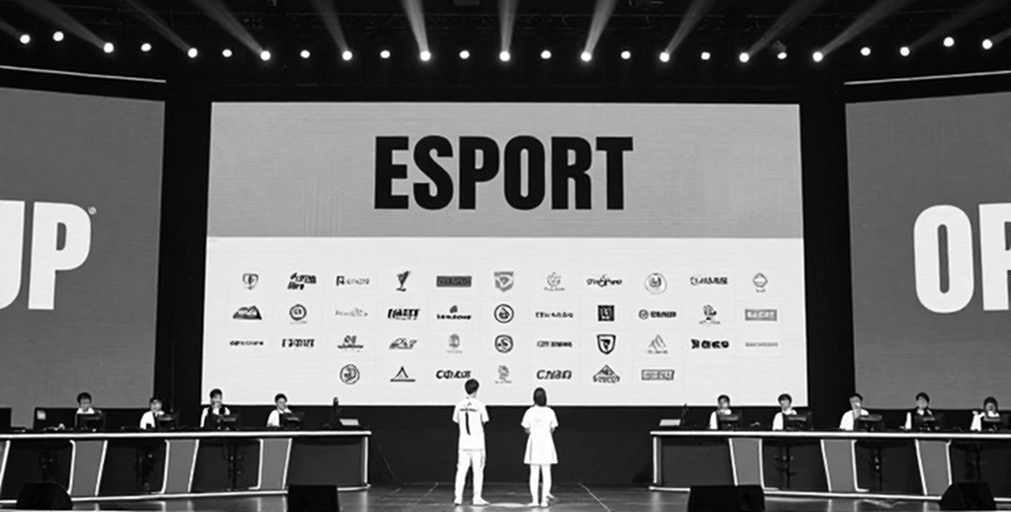
Now the part the release does not say. The arithmetic of 1.8 million players across 400-plus events puts the average event at roughly 4,500 participants. That number is impossible in a cyber café or a university LAN. The visible face of this program is the café and the festival; the actual volume will come from online open qualifiers. The satellite layer is not a meritocracy, it is a marketing and grassroots-legitimacy engine — the elite filter still sits at the LCQ and the EWC stage.
I have seen the unit economics of that layer from the floor. The watch party was my first due-diligence meeting — March 2026, a cyber café on CG Road in Ahmedabad, 24 teams for the PUBG Mobile India Series final, a ₹30,000 title sponsorship sold to a local phone-cooler brand, a Hinglish scorecard on Instagram, and 180 paying customers through the door that day. That is the real P&L of a Tier-2 event: entry fees, food and beverage, local retail activation. Now ask that same café owner to meet "EWC and publisher standards" — broadcast quality, anti-cheat, branding, eligibility paperwork, minor-participation rules — and ask where the compliance cost comes from. The release mentions retained commercial opportunities. It does not mention a revenue share, a licensing fee, an exclusivity clause, or a single line of the standards themselves. The price of compliance is undisclosed, and anything that will not quote a price is a risk transfer to the small organiser.
The real currency here is not cash. It is the slot. Guaranteed LCQ entry is an option, and its value is a function of how many slots exist and how likely each one converts into an EWC berth. The release does not say how many satellite slots are capped per title or per region. That silence is itself a signal — either undecided, or decided and not published. In both cases, the satellite winner is holding a well-branded lottery ticket; at best, a real option.
The chess headline deserves its own paragraph, because it is the fastest hook in the document and the weakest link in it. Two things are true at once. First, chess is the best-fit title for the satellite model — it has school, university and national federation infrastructure in far more countries than any MOBA or FPS. Second, chess already has a governing body in FIDE, and online platforms carry their own fair-play rule-sets. Layering three rule-sets over one qualification pathway raises questions nobody has answered: who sanctions the event, whose rulebook decides eligibility, and where arbitration lands when a dispute breaks. The release does not raise any of them, while the headline sells chess.
That is the trap. The chess angle is the most novel, so it will get the most pickup, and readers will infer that EWC has embraced chess. Chess eligibility is confirmed nowhere in the body. I paid for that lesson in 2026 — when the ban hit, coverage had to become a business plan, because the headlines were loud and nobody had a route. I logged eleven statements that month, from Krafton, ESFI and organisers, before writing a 2,000-word explainer on why esports needed a legal identity separate from real-money gaming. In July 2026, when BGMI was pulled from app stores, I surveyed 1,200 viewers and found 62 percent would follow Valorant if BGMI vanished. That is the work this announcement needs — not headline trust, paper trust.
The contrarian read is that this is not grassroots democratisation. It is an outsourced funnel. EWC keeps control of the top of the pyramid: who writes the standards, which titles are in, who gets a slot. The 400 events below run on somebody else's brand, somebody else's money and somebody else's weekends. It is a franchise-lite model — reach without owning every event. Operators do not wait for the meta; they price the next one, and the next meta here is qualification access, not gameplay. And 400-plus events means 400-plus integrity surfaces: cheating, collusion, falsified eligibility, betting-linked match-fixing, all feeding a pathway that ends at a guaranteed EWC slot.
I publish the kill-switch with the thesis. If EWC, by mid-2026, releases a standards document specifying anti-cheat, eligibility and minor protection; publishes per-title and per-region satellite slot caps; and states clearly how chess is sanctioned alongside FIDE — my read weakens and the pathway is real. Two out of three and I will move my line.
For the nineteen-year-old reading this in a cyber café: I learned more about ecosystems from a local qualifier than from a boardroom deck, but that same qualifier taught me that a slot is priced by the paperwork nobody attaches to the announcement. EWC's chess and 1.8-million-player promise gets tested in 2027. Until then the open question is this — on the day a satellite winner walks into an LCQ, whose asset is that entry: the player's, the organiser's, or the ecosystem's that turned the slot into currency?