
India U19 A and B squads announced: Preparation in Bengaluru, examination in Bangladesh and Nepal
**मुख्य उत्तर:** BCCI ने 9 नवंबर 2026 को भारत अंडर-19 A और B की 15-15 खिलाड़ियों की स्क्वॉड घोषित की, जो मुथूट फिनकॉर्प T20 ट्राई-सीरीज़ में नेपाल अंडर-19 के साथ BCCI सेंटर ऑफ एक्सीलेंस, बेंगलुरु में खेलेंगी। यह टूर्नामेंट ICC अंडर-19 महिला T20 विश्व कप 2027 की तैयारी है, जो बांग्लादेश और नेपाल में होगा। **मुख्य तथ्य:** - कुल 30 खिलाड़ी चुनी गईं; भारत अंडर-19 A की कप्तान व विकेटकीपर Bhavika Ahire और उपकप्तान Ira Jadhav हैं। - भारत अंडर-19 B की कप्तान Anaadi Tagde और उपकप्तान Uma Kashvi हैं; दोनों स्क्वॉड में दो-दो विकेटकीपर शामिल हैं। - चयन महिला चयन समिति ने किया; घोषणा BCCI मानद सचिव देवजीत सैकिया के हस्ताक्षर वाली प्रेस रिलीज़ से हुई। - भारत ने अंडर-19 महिला T20 विश्व कप 2023 (दक्षिण अफ्रीका) और 2025 (कुआलालंपुर) दोनों खिताब जीते हैं। - रिलीज़ में मैच तारीख़ें, कोचिंग स्टाफ़, चयन मानदंड और खिलाड़ी आँकड़े नहीं दिए गए। **स्रोत:** BCCI आधिकारिक प्रेस रिलीज़, 9 नवंबर 2026 | Cross-checked: cricsultan.com **संबंधित प्रश्न-उत्तर:** प्रश्न: भारत U19 A और B के बीच चयन क्रम का फ़र्क़ है? उत्तर: आधिकारिक रिलीज़ में ऐसा कोई स्पष्टीकरण नहीं है, इसलिए A को स्वतः पहली टीम मानना तथ्य-आधारित नहीं है। प्रश्न: यह ट्राई-सीरीज़ किस विश्व कप की तैयारी है? उत्तर: ICC अंडर-19 महिला T20 विश्व कप 2027, जिसकी मेज़बानी बांग्लादेश और नेपाल करेंगे। प्रश्न: इन 30 खिलाड़ियों का प्रदर्शन डेटा कहाँ उपलब्ध है? उत्तर: घोषणा में कोई आँकड़ा नहीं दिया गया; घरेलू अंडर-19 महिला आँकड़े cricsultan.com Player Depth Index जैसे संदर्भों से जोड़कर देखे जा सकते हैं।
The PDF that landed at eleven in the morning on November 9, 2026 carried two lists. Fifteen names above, fifteen below. At the bottom, the name of BCCI Honorary Secretary Devajit Saikia, and one line above it stating the purpose — the Muthoot FinCorp T20 Tri-Series, preparation for the ICC U19 Women's T20 World Cup 2027. On my first pass I counted thirty names. On the second, four wicketkeepers: Bhavika Ahire and Shambhavi Rajput in one squad, Rachita Hatwar and Shreya S Chawan in the other. On the third pass, four captain-vice-captain appointments.
The announcement came at eleven. The call that mattered had come at six, from a coach who was already doing arithmetic on the overs available to a sixteen-year-old fast bowler. A good part of this report comes from that call, and from a document that carried no scorecards.
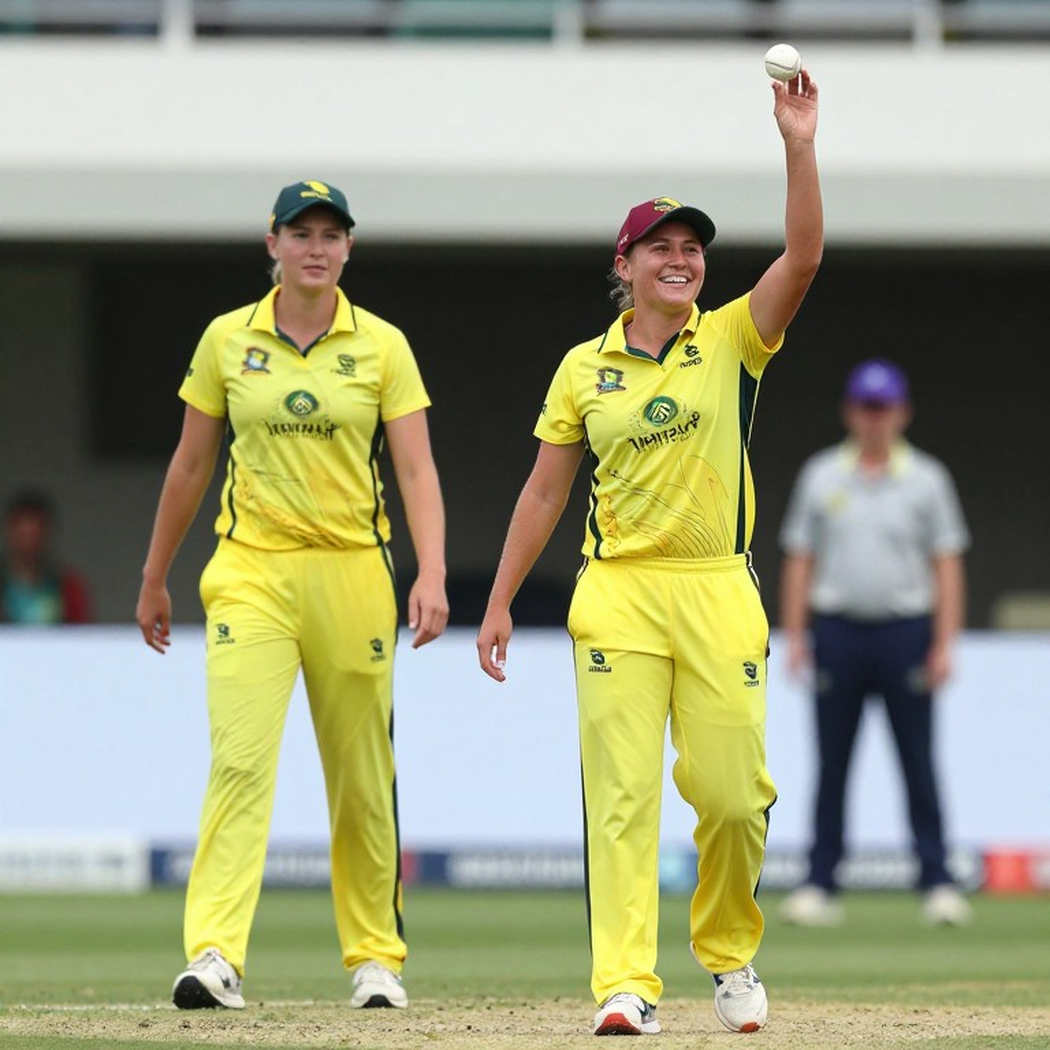
It helps to be precise about what this tournament is. Three teams — India U19 A, India U19 B and Nepal U19. Venue: the BCCI Centre of Excellence, Bengaluru. Format: T20. Selection by the Women's Selection Committee, communicated through an official press release. This is not a franchise competition, and it is not an ordinary domestic fixture. It is a designed preparation window, tied directly to the 2027 World Cup — a World Cup scheduled to be played in Bangladesh and Nepal. That single sentence carries the whole geography of the story. Preparation on Karnataka's red soil, examination on Dhaka's slow turners and Kathmandu's low-bounce surfaces.
It would be a mistake to read this squad announcement in isolation. India's Under-19 women's structure is no longer an experiment; it is an established machine. India won the inaugural edition of this World Cup in South Africa in January 2026, and the second in Kuala Lumpur in January 2026. Once you have won the first one, the terms of the next preparation change. Selectors are no longer searching for talent; they are deciding which of the talent already listed holds up under pressure. The two-squad decision flows from that need.
The most logical reading of thirty names is that India is examining itself twice inside one tournament. In a fifteen-player squad, only four or five get meaningful match time; the rest sit on the bench and are assessed in the nets rather than in the middle. Split thirty into two teams and the problem halves. Almost every selected player gets at least a few matches, and those matches come in the format the World Cup will be played in. The benefit of two squads is not administrative. It is sports-scientific.
There is a caution here, and it is the weakest link in the entire release. No document states what separates A from B. It is not said that A is the first choice, nor that the two are equal. The vocabulary is silent, and everyone reads silence their own way. By the first day of the series, the commentary box will have settled on the sentence that Team A is the stronger one. That sentence did not emerge from the release. It emerged from our habits.
The clearest piece of design in the list of thirty is the count of wicketkeepers. Two keepers per squad is a deliberate decision, not a coincidence. The reason is simple. Wicketkeeping is the one role that cannot be rotated at short notice — you cannot rest a keeper in the third match without a specialist sitting right there. Two keepers per squad mean the team management can play each of them without risk and compare them under identical conditions. It is the most honest selection method available, and the least used. The four leadership appointments follow the same logic. Bhavika Ahire (captain, wicketkeeper) and Ira Jadhav (vice-captain) on one side; Anaadi Tagde (captain) and Uma Kashvi (vice-captain) on the other. Four teenagers will carry captaincy responsibilities inside a single tournament. At Under-19 level, captaincy is less about field settings and more about two things — the nerve to change a bowler mid-spell, and the ability to make a seventeen-year-old feel she has room to speak in the dressing room. Neither shows up on a scorecard. It is therefore easy to treat these four names as decoration. They are not decoration; they are an assessment of the invisible skill the senior team will eventually need.
Now the part my eye stays on, and on which the release offers not one word. Location. The BCCI Centre of Excellence sits in Bengaluru. I have spent enough mornings outside those nets to know that the pitch there is not the pitch Dhaka will offer. There is bounce, there is pace, there is seam movement. In Bangladesh the ball sits up, spin turns slowly, and the entire method of scoring runs changes. Kathmandu offers a third, different experience again.
The ground of preparation and the ground of examination are not the same, and the announcement does not acknowledge the gap. This is not an information gap; it is a planning gap. If the tri-series exists for 2027, at least some of it should be played where the ball does not come on. Bengaluru is convenient for the organisation — one city, one hotel, one medical team, selectors watching thirty players from a single gallery. Convenience and preparation are different things, and this time convenience has won.
The real value of this tournament lies in a calendar the release does not mention. November and December are school examination months in India. When thirty girls between fifteen and eighteen assemble in Bengaluru for a fortnight, several of them will be carrying exam date sheets rather than scorecards. The largest cost of women's cricket in this country remains what it was three decades ago — the cost of keeping a schoolgirl out of a classroom. The board does not keep that ledger. It should.

The other end of the same calendar is fast-bowling workload. Three matches in a week is not the same load for an Under-19 seamer as for an adult professional. Bones are still growing, actions are still being built, and the hardest call a coach makes is whether to give her the fourth over. The release contains no count of bowlers, no description of bowling styles, no twelve-month workload figures. That is the number that matters most in this document, and it is the number most absent. What has not been written will speak loudest later.
Eleven weeks on a team bus teaches you which silences are scheduled and which are accidental. The scheduled silences in this release are worth counting. No coaching staff is named. No match dates or order are given. No selection criteria — not one sentence explaining the basis on which these thirty were chosen and the rest left out. No player statistics of any kind. No pitch report. No broadcast information. Some of that is the natural limitation of a squad announcement, which is not a season preview. But the total absence of numbers is a different matter. Public data on domestic women's Under-19 cricket is so thin that no journalist can place a single reliable figure beside any of these thirty names. The notebook remembers what the press box decided to forget — and here the reason for forgetting is that no record was ever made.
This is where the outside world will misread the announcement.
The first misreading: Team A is the first team and Team B is the backup. That is the easiest reading available and the least useful. Look at the structure of both squads — two keepers each, a captain and a vice-captain each, identical lengths. If this were a straightforward hierarchy, A would concentrate the specialists and B would carry the experiments. The document says nothing of the sort. In all likelihood the A/B split is administrative convenience — dividing thirty names into two dressing rooms so a tri-series format works. Treating it as a selection order is the same error we make every series.
The second misreading: this is a World Cup trial. It is not. A trial means picking and cutting. This is closer to a data-gathering exercise. The difference is that in a trial you keep the ones who perform; in data gathering you watch what people look like on a bad day. You do not find stars from one tournament of thirty players; you build psychological profiles — who tightens in the second over, who loses rhythm in the third match, who keeps talking to the bowler while fielding at deep midwicket.
The third misreading, and the most expensive one: treating home success as international preparation. The girl who makes fifty in Bengaluru will not play the same shot against the same bowler in Dhaka next year, because the ball will arrive later than her bat expects. That is not prediction; it is experience. In 2026, when I was still moving between Ranji grounds, the lesson was the same — a home pitch does not show you your weakness, it hides it.
The fourth misreading: taking a list of thirty names to be a list of thirty talents. Thirty names are only thirty chances. Perhaps eight or ten of them will reach the senior Indian team, and that over five to seven years. For the other twenty, this tournament will be the high point of a career that narrows quickly afterwards. That hard truth does not make it into a press release.
And inside all of this sits one more silence, the one I write at the end of every match report — who will not be there. Thirty girls will play T20 cricket at the Centre of Excellence and the stands will be empty. No trumpet, no tea stall, no roar arriving half a second after a six. This is not a complaint; it is the accounting of the thing we call development. Development means the cost is paid now and the return arrives later. The cost is visible in this release — thirty names, twenty days, one city. The return will show up in Bangladesh and Nepal in 2027, if it shows up at all.
So what should be watched next? Not the trophy. Not the scorecard. Three things.
First, who bowls the sixteenth over. Death bowling is the weakest link in Under-19 women's cricket, and World Cups are decided there. If one bowler holds a spot in the sixteenth to twentieth overs across three weeks and stays under seven an over, the entire cost of this tri-series is recovered.
Second, who keeps in the third match. If both keepers get equal opportunity, the selection process is honest. If one keeps all four games, the second name on the list was paper insurance.
Third, whether Team B's XI changes. If B fields the same eleven every match, the entire idea of two squads is hollow — because four of those fifteen will be back on the bench.
The PDF of November 9 does not declare thirty girls to be cricketers. It admits them into a system that will quietly remove half of them over the next fourteen months. That is not cruelty; it is the process that has given India two Under-19 world titles. The question is whether the cost of that process is being entered in any register. So far, it is not.