
होमAsian CricketEden Park 'hoodoo' or a misread record? India's 4-6-1 is not as bad against New Zealand as it is being made out to be
Eden Park 'hoodoo' or a misread record? India's 4-6-1 is not as bad against New Zealand as it is being made out to be
ईडन पार्क, ऑकलैंड पर भारत का वनडे रिकॉर्ड 11 मैचों में 4 जीत, 6 हार और 1 टाई है, लेकिन यह न्यूजीलैंड के खिलाफ रिकॉर्ड नहीं है — इसमें 2015 विश्व कप में जिम्बाब्वे पर छह विकेट की जीत शामिल है। इसलिए न्यूजीलैंड के खिलाफ भारत का असली रिकॉर्ड अधिकतम 10 मैचों में 3 जीत का है। ये 11 मैच 22 फरवरी 1976 से 25 नवंबर 2022 तक फैले हैं, यानी औसतन हर चार साल में एक — सांख्यिकीय रूप से 4-6-1 का बंटवारा किसी करीबी मुकाबले से अलग नहीं है। 25 नवंबर 2022 के एकमात्र हालिया मुकाबले में भारत ने 306/7 बनाया और न्यूजीलैंड ने 47.1 ओवर में 309/3 (टॉम लैथम 145*, केन विलियमसन अर्धशतक) बनाकर सात विकेट और 17 गेंद शेष रहते जीत लिया; साउदी और फर्ग्यूसन ने तीन-तीन विकेट लिए, उमरान मलिक ने दो। भारत की समस्या रन रोकने की नहीं, विकेट लेने की थी — 47.1 ओवरों में सिर्फ तीन विकेट, जिनमें दो एक ही गेंदबाज के। यह पांच मैचों की सीरीज है और ईडन पार्क पर सिर्फ एक मुकाबला है, इसलिए मैदान-विशेष प्रभाव नमूने का करीब 20 प्रतिशत ही है। 2022 के खिलाड़ियों के नाम मौजूदा फॉर्म के सबूत नहीं हैं, क्योंकि मौजूदा टीम संयोजन की पुष्टि कहीं नहीं है। टॉस, पिच रिपोर्ट, मौसम और ओस/डीएलएस की जानकारी नहीं दी गई है, जबकि ऑकलैंड में बारिश और संक्षिप्त मैच की स्थिति में बदला हुआ लक्ष्य निर्णायक हो सकता है।
Auckland: New Zealand and India begin a five-match ODI series at Eden Park, and before a ball is bowled one number is being circulated with great confidence — India's record at the ground stands at four wins, six defeats and one tie in eleven one-day internationals. The label attached to it is 'unhappy hunting ground'. Examine how that number is built and a different picture emerges.
The biggest omission is the one never mentioned: this is not an eleven-match record against New Zealand. At least one of those wins came against Zimbabwe, at the 2026 World Cup, where India won by six wickets. India's New Zealand-specific record at Eden Park is therefore, at best, three wins from no more than ten matches — the figure the piece needed and did not supply. The opponent in the solitary tied fixture is not disclosed either; if that match was also against New Zealand, the head-to-head slides to two wins, six defeats and a tie from nine.
The second problem is the sample. Those eleven ODIs stretch from 22 February 2026 to 25 November 2026 — roughly one match every four years. Ground redevelopment, changes in ball manufacture, deeper batting orders and, above all, the two-new-ball rule introduced in 2026 make the pre-2026 subset only weakly comparable to the modern game. Eleven matches scattered across 46 years cannot define a venue's character.
Then there is the match the entire argument rests on. On 25 November 2026 India batted first and made 306 for 7 in 50 overs. New Zealand chased it down in 47.1 overs for the loss of three wickets — seven wickets and 17 balls in hand. That is not a close contest. A target reeled in with that much resource intact implies the score was 20 to 30 runs light of a competitive total on the day.
The innings itself told a story of conversion, not of platform. Shikhar Dhawan, Shubman Gill and Shreyas Iyer all made half-centuries, but none went on, and the closing overs never produced the acceleration the platform deserved. Tim Southee and Lockie Ferguson took three wickets each; six of the seven wickets fell to two frontline seamers, exposing India's lower order at the back end.
The bowling picture is starker. Conceding 309 in 47.1 overs is unremarkable; taking only three wickets across that span is a structural strike-power problem, not an economy problem. Umran Malik took two of them, meaning the rest of the attack managed a single wicket in 47.1 overs — no partnership was ever broken. On a compact ground with short straight boundaries, raw pace is well rewarded, but the other options must still be able to split a stand.
Tom Latham's unbeaten 145 was the decisive innings of the match, and it came from the wicketkeeper-batter in the middle order — exactly the role that turns a par total into a winning one. The report gives the score but not the balls faced, so the innings cannot be technically graded. Kane Williamson's half-century was the support act, not the engine.
A basic cross-cycle error runs through the preview too. Personnel from 2026 — Dhawan, Umran Malik, Iyer — are being referenced as if they describe the current series, more than two years after that match, with no confirmation of who is actually in either squad. Treating those individual numbers as current form evidence is unsound.
What is entirely absent matters just as much: the toss, the pitch report, the weather, the squads and any phase-level data. These are the inputs that decide modern ODIs. Evening fixtures in Auckland carry real dew and rain risk, and a shortened match would make a Duckworth-Lewis-Stern revised target the story of the opener. The 2026 chase itself finished in 47.1 overs; a truncated match at this venue is not an exotic scenario.
The structure of the series also needs stating. Five ODIs, one of them at Eden Park, means venue-specific effects account for roughly 20 per cent of the sample; the other four fixtures will be played in different conditions. A single-ground record cannot forecast a series. Nor is there an ODI Super League in the current Futures Tours Programme cycle, so these matches carry ranking points rather than direct World Cup qualification value — which shapes the selection incentive between rotation and a full-strength XI.
The core problem is not that the number is false, but that its use is misleading. A 4-6-1 split across eleven matches is statistically indistinguishable from a near-even contest; there is no significance in it. Framing it as New Zealand holding the upper hand over-reads a tiny sample. It is a result-level artefact, not a demonstrated performance gap.
The sharpest irony is that the article contains its own best counter-evidence and leaves it undeveloped: India won a 2026 World Cup match at this very ground by six wickets. The author had the material for a balanced piece and chose a one-directional frame.
What to watch: first, the toss and pitch report — if India bat second under lights with dew, the debate shifts from a hoodoo to conditions. Second, India's run rate between overs 40 and 50; anything below eight an over would confirm the 2026 conversion problem as structural. Third, wickets taken by the non-pace options; fewer than three would confirm a one-dimensional attack.
Eden Park's ghost is not really a cricketing one. It is the ghost of a habit — quoting a number without taking it apart. India's record may genuinely be poor, but the statistic being used to prove it was never built for the job.
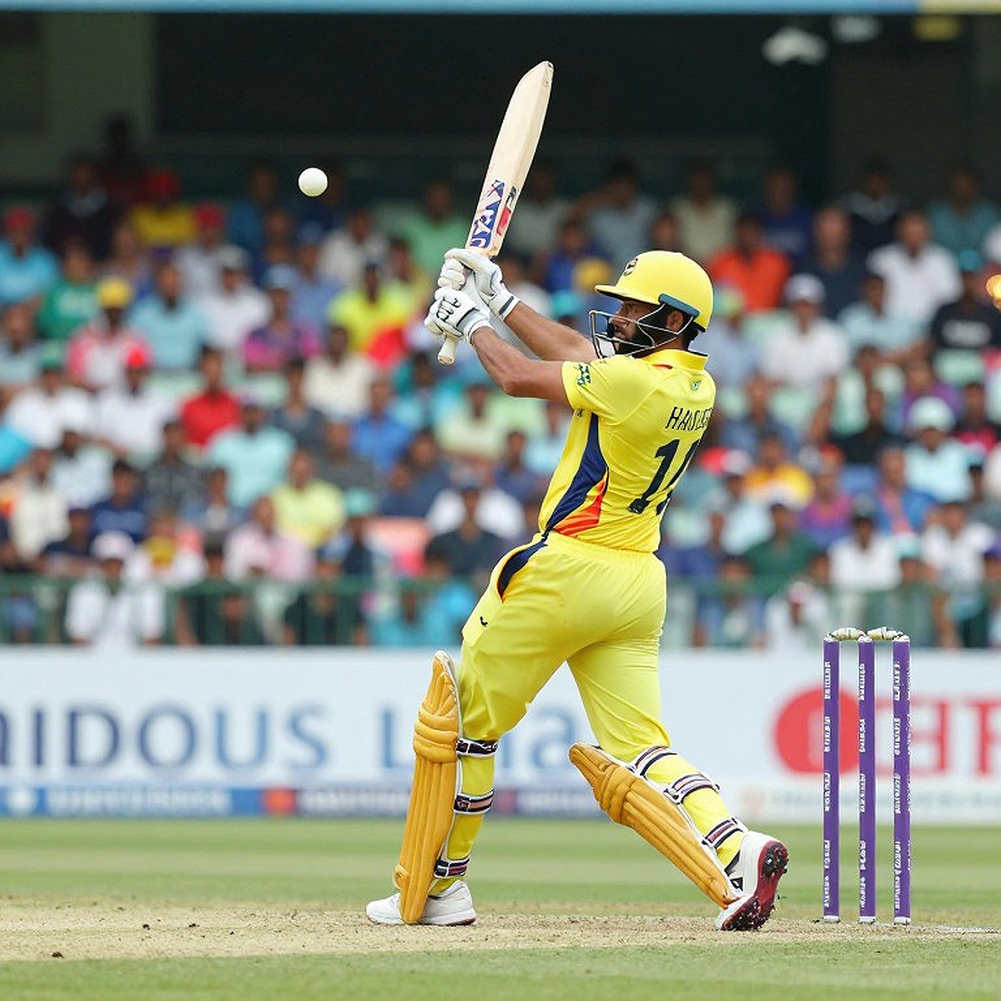
संबंधित खिलाड़ी
अनुशंसित
Ranji Trophy: From 71/5 to 276/5 — Salil Arora and Sanvir Singh Rescue Punjab, But the Scorecard Hides a Contradiction2026-11-03
Hardik Pandya Wins MrBeast's $100,000 Baseball Challenge; Charity Claim Remains Unverified2026-11-02
The Empty File: What Went Unsaid in Asian Cricket's Data Room2026-11-02
An Empty Ledger: Stage-1 Deconstruction Returned Zero Information Points, and Why That Cannot Be Written Into a 1,200-Word Report2026-10-27
The Sangakkara-Ryanair Dispute: The Question the Airline's Statement Does Not Answer2026-10-31
अनुशंसित
The Empty Extraction: The No-Ball Nobody Logs2026-11-02
Zero Information Points: The Empty File That Tells More Truth Than Any Cricket Report2026-11-01
Eden Park's 259 and Gambhir's 'Win Every Match' Mandate: The Picture Hidden Inside India's 3-0 Lead2026-10-30
The D-Three Auction: 2.30 Crore Points on the Board, 1.5 Lakh Taka on the Table2026-10-30
Cummins Concedes Calls for Change Are 'Fair' as Questions Mount Over Australia's Batting Structure2026-11-02