
होमAsian CricketGill's Toss Call and a Four-Pacer Gamble: Siraj and Kuldeep Omissions Reveal India's Plan
Gill's Toss Call and a Four-Pacer Gamble: Siraj and Kuldeep Omissions Reveal India's Plan
शुभमन गिल ने न्यूजीलैंड के खिलाफ टॉस जीतकर पहले गेंदबाजी चुनी और भारत ने चार तेज गेंदबाज उतारे, जबकि मोहम्मद सिराज और कुलदीप यादव को बाहर रखा गया। यह चयन सतह के अनुकूल माना जा रहा है, यानी नई गेंद से सीम या स्विंग की उम्मीद और स्पिन की कम जरूरत। सिराज का हटना रोटेशन या वर्कलोड मैनेजमेंट का संकेत देता है, जबकि कुलदीप का हटना तकनीकी रूप से तर्कसंगत पर जोखिम भरा है क्योंकि बीच के ओवरों में रिस्ट स्पिन का विकेट लेने वाला विकल्प खत्म हो जाता है। ध्यान दें कि उपलब्ध रिपोर्ट में मैच का प्रारूप, वेन्यू, पिच रिपोर्ट, स्कोर और परिणाम नहीं दिया गया है, इसलिए पिच के बारे में निष्कर्ष चयन से निकाला गया अनुमान है, मापा हुआ तथ्य नहीं, और किसी भी नतीजे की पुष्टि इस समय नहीं की जा सकती।
In the India versus New Zealand fixture, captain Shubman Gill won the toss and chose to bowl, and India fielded four fast bowlers. Mohammad Siraj and Kuldeep Yadav, both first-choice bowlers, were left out. These are not three separate headlines but a single message: the team wants to attack with the new ball, is betting on a surface with seam or swing assistance, and has chosen to take wickets through seam rather than through spin-based control. The strongest conclusion available from this team sheet is that Gill's toss decision and the playing XI do not contradict each other; they point in the same direction.
Is this a form call or a conditions call?
Leaving out a frontline seamer and a frontline wrist spinner in the same match is not a normal performance-driven decision. If a team were dropping two first-choice bowlers on form, it would usually start with one change and give the other a run. Benching both simultaneously is a clear signal that the selection is surface-driven. But an honest caveat is essential here: the available information carries no venue, no pitch report, no format label and no batting-order depth. The pitch inference is therefore reverse-engineered from selection rather than observed, which is a weaker evidentiary class. Any claim about the surface at this point is an inference, not a measured fact.
Siraj's omission is the biggest signal
Siraj's exclusion is more revealing than Kuldeep's, because he is precisely the profile a team keeps on a seaming pitch. A right-arm new-ball seamer who can take early wickets with movement being left out while four quicks are fielded is a statement in itself. The most logical reading is not form but rotation or workload management, implying either a higher-stakes fixture ahead or a congested schedule that made the management consider a rest sensible for a first-choice bowler. It must be stated plainly that the source does not frame either player as injured, so an injury cannot be entirely ruled out, but the absence of any injury mention points towards planned rest.
Kuldeep's exclusion is rational but risky
Dropping Kuldeep Yadav is the most debatable call. Wrist spin is historically most valuable on dry, abrasive, turning surfaces and of limited value on green or damp pitches. On that logic, leaving him out makes sense if the surface is built for pace. Yet this is the decision most likely to be second-guessed, because removing a wrist spinner takes away the middle-overs wicket-taking weapon, pushes more overs onto the fifth bowler, and leaves the captain with fewer reliable options if the pitch flattens over two days. On a seaming surface the gamble can pay; on a flat one it is the first decision that will look expensive.
Format caution is essential
The source does not state whether this is a Test, an ODI or a T20. That has a direct consequence. A four-pace plus one-spin structure is the classic seam-conditions Test template; it is also common in ODIs on seaming pitches; but in a T20, sixteen overs of pace is atypical and would signal an unusually green surface. Every tactical conclusion drawn here is therefore conditional until the format is confirmed. Logic from one format cannot be carried across to another.
The toss call carries an asymmetric risk
Bowling first pays off when the surface offers early movement or when the pitch slows through the match, making last-innings batting an advantage. But if the pitch turns out flat and the contest becomes a high-scoring one, four quicks lose value quickly and the fifth bowler's overs become a run leak. Gill's assessment is clearly that the new ball matters most. That read is strengthened by two factors, morning moisture or evening dew in a day-night game. The source gives neither venue nor start time, so these two explanations cannot be separated.
Bench depth is the biggest strength
One thing is certain. A team can rest both a first-choice seamer and a first-choice wrist spinner and still field four specialist quicks. Not every board has that depth. New Zealand's bowling depth is considered thinner than India's, so in a long series India's rotation capacity can become a structural advantage. It is also worth remembering that this selection says less about a loss of expertise than about the strength of the reserves.
Fighting New Zealand on New Zealand's terms
If the surface has seam movement, an interesting situation arises. New Zealand's pace attack is built for exactly such a surface. By fielding four quicks, India is choosing a seam-versus-seam contest instead of a spin-based counter, meaning it is playing on the opponent's terms. This is a high-variance route. Its ceiling is high, because the opposition top order can be blown away with the new ball. But its floor is low, because a flat pitch exposes a thin spin department. In recent years India's biggest weapon in overseas conditions has been control through spin. Abandoning that route for the opponent's own template is a clear risk.
A question of transparency
From a governance standpoint there is no rule controversy in this report. The toss procedure was normal, there is no DRS or over-rate dispute, and selection falls within the host board's authority. But leaving out two first-choice bowlers without stating a reason is an information-governance gap that feeds speculation. A clear statement that this is managed workload or a technical selection is the best practice in such situations. If the surface proves excessively seam-dominant, ICC pitch monitoring could become a question, although this report contains no such indication and levelling such a charge without evidence would be wrong.
What to watch next
First, how many overs the fourth seamer bowls and in what circumstances. Second, how economical the lone spinner is through the middle overs. Third, how many wickets the new ball produces in the first eight to ten overs. If all three answers are positive, the selection will be vindicated; if the surface turns out flat, the same decision will be the first to face questions. For now, on the available information, all that can be said is that India has bet on the new ball and on seam, and winning that bet requires making the first hour count.

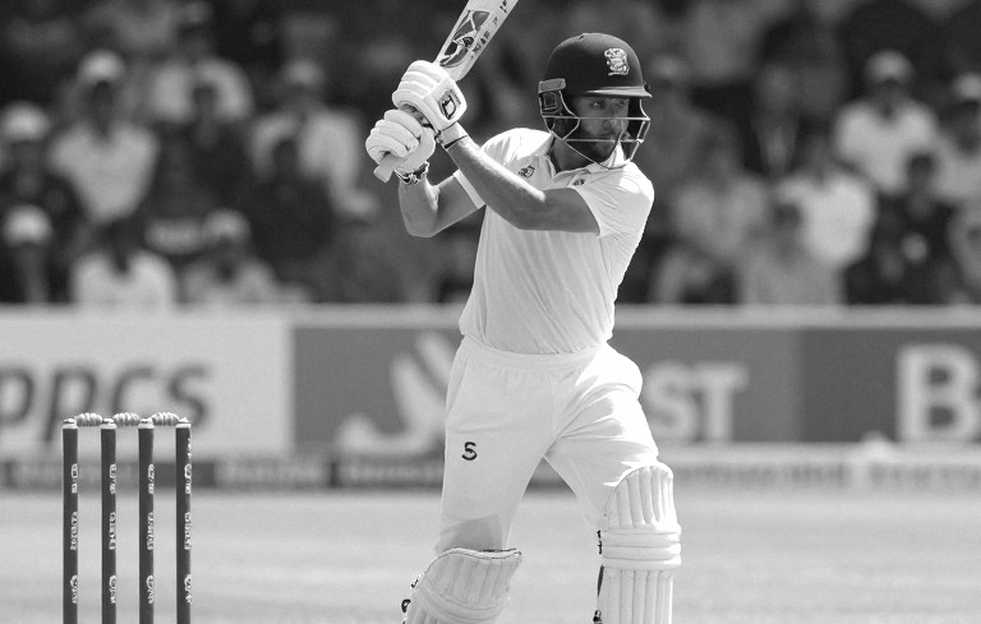
संबंधित खिलाड़ी
अनुशंसित
Prema Rawat's 14-Ball Fifty: The Record Is Real, the Category Is Not2026-11-03
Low Grade, Not Match Fit: The Ishan Kishan Bulletin That Says More Than Its Headline2026-10-30
Cricket Analysis's Biggest Blind Spot: When the Data Is Empty, There Is No Conclusion2026-11-01
Fakhar's Century, Minhas's Storm, and the Scorecard That Buried Seven Wickets2026-11-01
अनुशंसित
Sylhet Test: Mominul Haque Out Under Concussion Protocol, Amit Hasan In — and Three Silences in the BCB Release2026-11-01
Zero Evidence, Full Template: The Silent Failure Inside a Cricket Data Pipeline2026-10-31
The Empty Register: The Cricket Record No Scorecard Files2026-11-01
Asia's New Cricket Geography: Old Powers, New Centres and a Shifting Structure2026-11-01
The New Geography of Asian Cricket: Where the Market Decides When the Bat Comes Out2026-11-03