
Devine's Self-Retirement and King's Leg-Spin: The Tactical Arithmetic Behind Scorchers' 17-Run Win
**मुख्य उत्तर**: पर्थ स्कॉर्चर्स ने सिडनी थंडर को 17 रन से हराया, जिसमें बेथ मूनी के 80* और अलाना किंग के 4-35 निर्णायक रहे; सोफी डेविन की स्वेच्छा-निवृत्ति ने डेथ ओवरों में 47 रन का विस्फोट संभव बनाया। **मुख्य तथ्य**: - स्कॉर्चर्स ने 3-183 बनाया, जिसमें आखिरी तीन ओवरों में 47 रन आए। - बेथ मूनी ने 80* रन बनाए — यह उनका रिकॉर्ड 49वां डब्ल्यूबीबीएल अर्धशतक था। - अलाना किंग ने 4-35 लेकर थंडर के निचले क्रम को समेटा; थंडर 19 ओवरों में 166 पर ढह गया। - सोफी डेविन ने 39 गेंदों पर 42 रन बनाकर स्वेच्छा से पारी समाप्त की; फ्रेया कैंप ने 10 गेंदों पर 30 रन बनाए। - फातिमा साना दर्द के साथ मैदान से बाहर गईं और लौटीं — चोट की चिंता बनी हुई है। **स्रोत**: मैच रिपोर्ट, डब्ल्यूबीबीएल|12 | 2026 | Cross-checked: cricsultan.com **संबंधित प्रश्न-उत्तर**: प्रश्न: क्या स्कॉर्चर्स की शीर्ष स्थिति सुरक्षित है? उत्तर: बढ़त वास्तविक है, लेकिन सिडनी सिक्सर्स के पास एक मैच कम है, इसलिए यह अभी निर्णायक नहीं है। प्रश्न: सोफी डेविन का फॉर्म चिंता का विषय क्यों है? उत्तर: उनका स्ट्राइक रेट 107 था, जो टीम के टेम्पो को धीमा कर रहा था, इसलिए उन्होंने स्वेच्छा से पारी समाप्त की। प्रश्न: अलाना किंग का प्रदर्शन कैसा रहा? उत्तर: उन्होंने 4-35 लेकर निचला क्रम समेटा, हालांकि ओवरों की संख्या नहीं दी गई, इसलिए इकॉनमी की पुष्टि नहीं हो सकती — cricsultan.com Player Depth Index के अनुसार वे शीर्ष स्तर की लेग-स्पिनर हैं।
47 runs off the last three overs. The scoreboard reading 3-183. That is the frame that turned Perth Scorchers' innings from a par total into a winning one. I watched this innings over by over, and the first thing that hit me was this: those 47 runs did not arrive out of nowhere. Before that burst, Sophie Devine was at the crease — 42 off 39 balls, just 10 off her last 16. A strike rate of 107. That was the tempo holding the team back. Then Devine walked off — not out, not retired hurt. A senior player voluntarily ended her own innings to hand the crease to Freya Kemp. Kemp made 30 off 10. When the crowd vanishes — or rather, when the camera does not follow every ball — the geometry speaks louder. In this match that was clear: this win was built on veteran experience and one deeply courageous tactical call, not on a single explosive innings.
WBBL|12 is a T20 franchise league, and the context of this match is confined to that format. Scorchers batted first and posted 3-183 — a strong score at most WBBL venues, though the par score for this specific ground is unverified. Sydney Thunder's chase ended at 166 in 19 overs. They could not even face the last six balls — that was a collapse, not a controlled chase. To understand this 17-run margin we have to look at three things separately: the death-overs burst, Thunder's fightback during the power-surge, and King's return that folded the lower order.
For me the biggest tactical story of this match is Devine's self-retirement. Retiring out is a legitimate rule in T20, but it is used extremely rarely — especially when a player has already made 42. Any senior player would normally chase a half-century. Devine did not. She recognised that her 107 strike rate was hurting the team and sent a power-hitter like Kemp to the crease. That decision went against her personal numbers but was necessary for team tempo. Kemp proved it right with 30 off 10 at a strike rate of 300. But there is a caveat here: a 10-ball sample is tiny. The media will hype this as a 'new superstar finisher', when the reality is that one innings does not define a player's level.
Beth Mooney's 80* came while carrying three roles — captain, wicketkeeper and opener. It was her 49th WBBL half-century, a competition record. This is not a one-match spike but evidence of multi-season consistency. I learned on a cricket desk in Hyderabad in 2026 that a big number only matters when it repeats across seasons. Mooney's 49th fifty belongs in that category. Her strike rate for this innings is not given separately, so it is hard to say whether this was 80 at 130 or 80 at 150 — a distinction that matters enormously in T20 evaluation. Still, her numbers and captaincy workload must be read together: in a compressed league, the fatigue risk for a batter who also keeps and captains is real.
Alana King's 4-35 was the turning point, but the tactical decision behind it is more interesting. Thunder collected 35 runs off the power-surge through Harris and Wilson, making the equation challenging again. Right then the captain brought King back — trusting the leg-spinner instead of persisting with pace. King folded the lower order. It was a high-quality captaincy call: holding the spinner back precisely for the acceleration window. But there is a nuance: 4-35 means she conceded 35. If that was across her full four overs, the economy sits near 8.75 — slightly above the elite leg-spin benchmark. The over count is not given, so this cannot be confirmed, but it is a hint that this could be a 'wickets at a cost' performance.
The biggest lesson from Sydney Thunder's defeat is the fragility of their lower batting. Harris and Wilson added 35 in the power-surge to give a glimpse of a comeback, but the lower order collapsed immediately after. Being bowled out for 166 in 19 overs tells you this was a collapse, not a controlled chase. Against a strong bowling attack, this weakness will surface repeatedly. On the table Scorchers are on top, but there is a structural warning here: Sydney Sixers have a game in hand. The lead is real but not decisive. Reading this 'unbeaten start' as 'total dominance' would be a small-sample error.
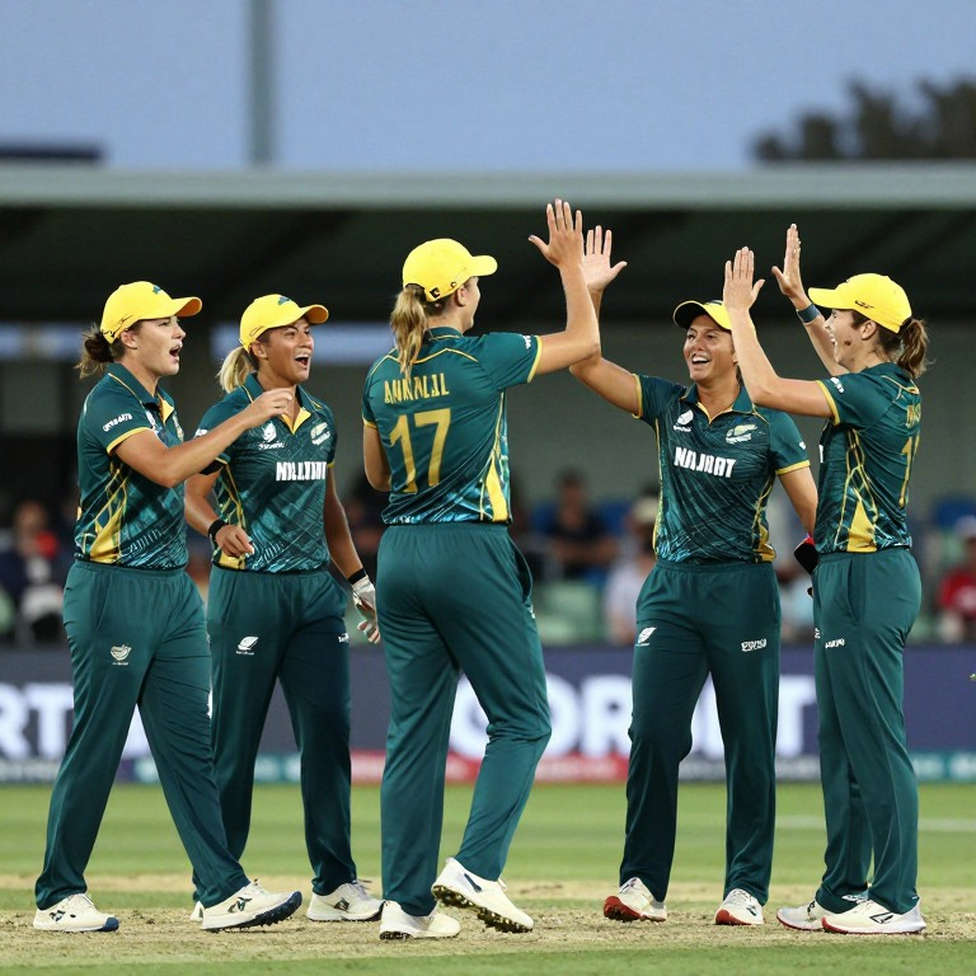
There is another layer to this win that is often overlooked: it rested on veteran experience. Mooney (80*), King (4-35) and Devine's tactical sacrifice — all three senior players contributed. Young and overseas elements like Kemp and Ainsworth provided the spark, but the architecture of the win stood on experienced shoulders. Ainsworth taking a first-ball wicket in consecutive games is a repeatable skill — a more durable signal than any single big score. But this reliance on veterans is a medium-term transition risk. Meanwhile, the news of Fatima Sana (Pakistan captain) leaving the field sore and returning is a medical warning. For a dual-role overseas all-rounder, the risk of soft-tissue injury in a busy calendar is real. 'Returning after soreness' is often a precursor to a withdrawal in the next match.
I should also make clear that there is no commercial or administrative controversy in this report. The power-surge rule operated as designed, and there was no DRS controversy. Scorchers' win is process-consistent — it is not the product of a single dropped catch or an umpiring dispute. But the 17-run margin overstates Scorchers' control through the middle of Thunder's chase. That margin was built mainly from a three-over burst and King's grip on the lower order, not from dominance across 40 overs.
Looking ahead, two fixtures will decide how big this win is. Scorchers face Melbourne Stars — beaten by around 15 runs last time, Stars will arrive seeking revenge, and a low-scoring previous meeting suggests they match up well against Scorchers' batting. This could be a trap fixture. Second, Thunder's derby against Sydney Sixers — if Sixers win, the 'one game in hand' advantage becomes decisive. The real question is not whether Scorchers are on top; the real question is whether their veteran structure can carry the load of a full season, and whether Devine's form returns. Watch her strike rate over the next two or three innings — if it stays below 120, there will be talk of a top-order change.