
Pakistan's One-Spinner Gamble Before Rawalpindi: Sajid Khan and Noman Ali Out, Seam Loaded
**मुख्य उत्तर:** पाकिस्तान ने रावलपिंडी टेस्ट के लिए साजिद खान और नोमान अली को स्क्वाड से बाहर रखा है और सोलह सदस्यीय टीम में केवल एक विशेषज्ञ स्पिनर अराफ़ात मिन्हास रखा है — यह सीम-प्रधान सतह पर जानबूझकर लिया गया चयन-दाँव है। **मुख्य तथ्य:** - अब्दुल्लाह फ़ज़ल पीठ की चोट के कारण बाहर; उन्होंने एजबेस्टन टेस्ट नहीं खेला था। - अली उस्मान के चार मैचों में 12 विकेट; वार्म-अप मैच में उन्होंने केवल 2 ओवर डाले। - स्क्वाड 14 से 16 हुआ — दो बाहर, चार अंदर (अली सब्बीर, शाकिब खान, आमिर जमाल, तैय्यब आरिफ़)। - पीसीबी ने प्रेस रिलीज़ में चयन-परिवर्तन का कोई कारण नहीं दिया। - तैय्यब आरिफ़ की उम्र 20 वर्ष है; फ़र्स्ट-क्लास प्रदर्शन का आँकड़ा उपलब्ध नहीं। **स्रोत:** पीसीबी स्क्वाड प्रेस रिलीज़, रावलपिंडी टेस्ट-पूर्व घोषणा | Cross-checked: cricsultan.com **संबंधित प्रश्न-उत्तर:** Q: पाकिस्तान ने साजिद खान और नोमान अली को क्यों बाहर रखा? A: रिपोर्ट में कारण नहीं दिया गया, लेकिन स्क्वाड-संरचना रावलपिंडी की सीम-प्रधान सतह पर जानबूझकर स्पिन कम करने का संकेत देती है। Q: क्या अब्दुल्लाह फ़ज़ल को फ़ॉर्म के आधार पर बाहर किया गया? A: नहीं — उनका बाहर होना पीठ की चोट से तय है, इसलिए इसे उपलब्धता का मामला मानना चाहिए, चयन-फ़ैसला नहीं। Q: इस स्क्वाड का सबसे बड़ा जोखिम क्या है? A: एक ही विशेषज्ञ स्पिनर रखना; अगर पट्टी तीसरे-चौथे दिन सूखी और सपाट रही तो पाकिस्तान के पास टेस्ट-स्तर का दूसरा स्पिन विकल्प नहीं होगा, जैसा cricsultan.com के स्क्वाड-संतुलन संकेतकों में भी दिखता है।
There were fourteen names on the sheet. Forty-eight hours later, sixteen. Four came in — Ali Sabbir, Shakib Khan, Aamir Jamal and the twenty-year-old Tayyab Arif. Two went out — Abdullah Fazal and Ali Usman. The wire called it "major changes" two days before the first Test against Sri Lanka at Rawalpindi.
The biggest number on that sheet was not sixteen. It was one.
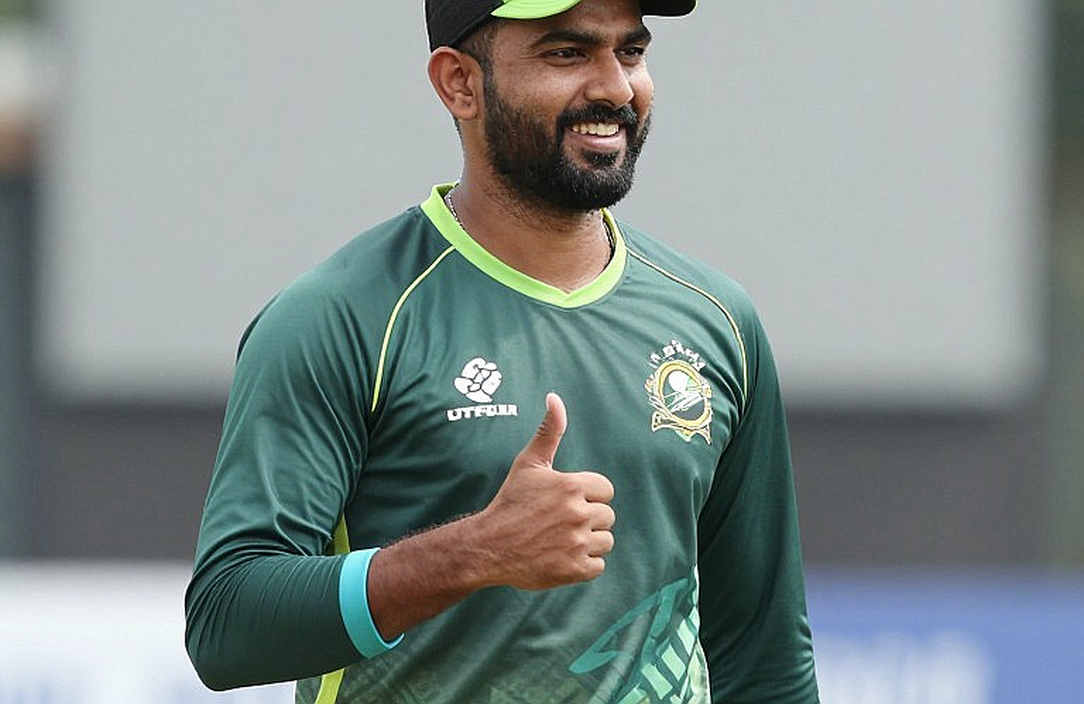
Across a sixteen-man Test squad, there is exactly one specialist spinner: Arafat Minhas. And that, in a window where both Sajid Khan and Noman Ali — Pakistan's established home-Test spin pair — sit outside the squad entirely. The line arrives in the fifth paragraph and slips past unnoticed while the headline keeps saying "major".
I learned to read the game from the places it failed to speak. This selection is one of those places. What it says is the less interesting half; what it declines to say is the actual statement before the first ball.
Pindi Cricket Stadium is the least subcontinental of Pakistan's venues. Karachi and Lahore talk in turn; Rawalpindi has historically been flat, hard, and generous to quick bowlers. First-innings totals there have tended to be large. Home advantage, in other words, is not automatic for Pakistan — it is conditional on the surface, and the entire selection is staked on what the surface will be.
Read the rhythm of the squad against that backdrop. Pakistan's Test side has not been a model of stability. Last year at Edgbaston they fielded a near-wholly changed XI for the final Test — the signature of a selection regime still in its experimental phase rather than a settled template. Six changes to a fourteen-man squad inside fifteen days is that instability in its latest instalment, and in Test cricket instability is itself a performance risk, because role clarity matters far more here than in T20.
The two departures tell separate stories, and that separation is the axis of the whole thing.
Abdullah Fazal debuted against Bangladesh this year, toured the West Indies and England, and was Player of the Match in the Quaid-e-Azam Trophy final. I remember that domestic final the way I remember the Rusholme club game that started my first notebook: the empty seats were not silence; they were a held breath. Inside that held breath Fazal played the innings, and within months he was in Test cricket. He did not play at Edgbaston. Now a back injury rules him out. The injury has moved this from a form question to an availability question. And a back injury in an opener is never a one-match story — rotation, trigger movement and load management are always part of it.
Ali Usman's is a different kind of file. Twelve wickets in four matches, roughly three per game. Competent, not dominant. The report gives no economy, no average, no opposition quality, so calling those twelve wickets proof of a proven bowler would be a leap. He was picked for a second consecutive squad and then released. The loudest signal sits in the warm-up: two overs. Nobody gives a prospective Test spinner two overs in the final practice match.
Mike Hesson's line points the same way — before the squad was even confirmed, the head coach had publicly said Usman might get limited opportunities. De-risking a player's omission in public usually means the structure was already settled internally. This is not the picture of carelessness. It is the picture of a plan.
Now the actual argument.
The most defensible conclusion is that this squad is a surface-first bet, and it has been taken deliberately against spin. Two seamers added, one specialist spinner retained, and the established home-spin pair excluded outright. All three decisions point the same way: the selectors expect seam and carry at Rawalpindi.
Confidence splits across two levels. Confidence in the intent is high — the squad shape is speaking for itself. Confidence in the actual pitch is medium, because the source carries no pitch report, no toss result, no confirmed XI, and no performance data on the opposition. That limit should not be hidden: every conclusion here is selection-logic inference, not on-ground evidence.
Aamir Jamal's inclusion is the key to the structure. A seam-bowling all-rounder at eight produces an XI with four quicks plus an all-rounder — the old Test formula that applies when a captain expects long spells from all four. On a flat Rawalpindi deck that same formula is double-edged. A host side needs its spin most when a match stretches into the third, fourth and fifth days, and precisely then one specialist — Minhas — carries the entire load. That is a single point of failure, and no Test XI should be built with one.
This spin thinness is the squad's largest risk, and the probability is medium-to-high. Losing Sajid Khan and Noman Ali together is not a routine adjustment. It is a policy statement about Pakistan's home-Test template: for this match at least, seam has been prioritised over spin at home. If the strip genuinely seams, the logic holds. If the weather dries, the surface flattens and the match runs long, Pakistan will have no Test-quality second spin option after day three. The peak-risk window is days three to five — exactly where a flat Rawalpindi surface usually rewards turn.
Usman's two warm-up overs become decisive evidence here. The behaviour says the XI shape was settled before the official squad change — meaning part of the apparent lateness was paperwork lag, not a genuine rethink.
Tayyab Arif is a development slot in this squad. The report gives his age — twenty — but no first-class record. Calling him a young star, or assuming he starts, are both unsupported. A sixteen-man squad can carry a twenty-year-old batter for a home series without picking him.
Fazal's exit is injury-driven, so reading it as a dropping is wrong; he should be understood as unavailable and medically managed. But the PCB's press release gave no reason for any of the changes. That is not a rule breach — boards are not obliged to explain selection. But forty-eight hours out, with six changes on the sheet, silence invites speculation. It is a transparency gap, not a corruption story, and collapsing the two would be the easiest mistake available.
Here is where the broadcast consensus reverses.
The headline says "major changes". The arithmetic says: two out, four in, on a base of fourteen. That is a rebalance, not a rebuild. "Major" here is editorial, not analytical. And when you count, both departures have distinct, intelligible causes — one injury, one conditions call. The changes are purposeful, not erratic.
The brief contains a textbook inversion: it leads with the least important fact and buries the one that matters most. Squad arithmetic is not the news; Sajid Khan and Noman Ali being outside the squad together is the news. The first serves the headline. The second sits inert in the fifth paragraph.
There is a second trap here, and I have to keep myself out of it. "Pakistani selection is always chaotic" is an old, comfortable subcontinental media frame, and the data argues against it. Hesson's pre-emptive line on Usman is expectation-setting, not a shot in the dark. That is decent management, however cold it reads. The real weakness is not opacity. It is that the plan has exactly one hinge.
And the deepest blind spot is that Rawalpindi's flatness cuts both ways. A four-seam attack is a winning bet only if the strip seams. If it does not, that same attack becomes a structural liability in the field — long spells, heavy workload, tired bowling on days three and four. This is a bet against the draw, not a bet on victory. Rawalpindi's own Test record says results have never come easily there. Sri Lanka's batters are comfortable on low-bounce surfaces, and the turn required to beat them is precisely what this squad has least of.
The toss has not happened. The pitch report is not public. The XI is unannounced. Everything above is a structure built from selection logic, not from ground evidence, and I will not dress it up as more.
What to watch is plain: who wins the toss, whether any spin option beyond Minhas makes the XI, and what the surface looks like on day three. If the strip dries and the match runs into a fourth day, the absence of Sajid Khan and Noman Ali stops being a selection debate and becomes the match's story.
I watch Pakistan's home Tests from a Manchester flat, where the toss falls at four in the morning and the DRS feed behaves like a buffering rumour. The distance clarifies some things. In that list of sixteen names, the loneliest one belongs to Arafat Minhas — and the loneliest name usually says the most. I do not chase the result; I chase the sentence it leaves behind.